Shipping Container Prices in the USA: 2026 Guide by Size and Condition
Compare shipping container prices by size, condition, and region. Real 2026 price ranges for 20ft and 40ft units in WWT, Cargo Worthy, and one-trip grades, with delivered quotes from suppliers near you.
About the host Andy is a container industry professional with 15+ years of experience and the creator of Andy knows Containers, an independent YouTube channel focused on helping buyers make informed container decisions.
Current prices
Current container prices at US depots
The most requested sizes and grades with today’s starting prices and the typical range across US metro areas. Every card leads to delivered quotes for your ZIP code.
Prices updated November 8, 2026 from our monthly price index
Prices are median asking prices from our monthly price index. Delivery, sales tax and local fees are extra and depend on your ZIP code. Your supplier confirms the final price in your quote.
Shipping container prices in the US depend on four things: container size, condition grade, how close you are to a port or depot, and how far the unit has to be trucked to your site.
This guide gives you the real 2026 price ranges for the most common sizes and grades, so you can set a realistic budget before you start requesting quotes. For current asking prices by metro, browse shipping containers for sale. For the full breakdown of what drives those prices beyond the base figure, see the 7 factors that affect shipping container cost.
US shipping container prices by size and condition
The table below shows depot price ranges across the US market in 2026. These are base container prices before delivery. Actual prices you are quoted depend on local supplier stock, current market conditions, and how far you sit from the nearest depot.
Container Type
WWT (Used)
CW (Used)
One-Trip (Near-New)
10ft Standard
$2,800 to $3,800*
$3,500 to $4,500*
$4,500 to $6,500*
20ft Standard
$1,443 $915 to $2,677
$2,050 $1,095 to $2,413
$2,737 $2,625 to $3,281
20ft High Cube
$1,500 to $2,300*
$2,000 to $2,800*
$3,926 $3,597 to $4,732
40ft Standard
$2,126 $1,795 to $2,777
$2,500 $1,465 to $2,907
$5,256 $5,012 to $5,343
40ft High Cube
$2,374 $1,895 to $3,097
$2,638 $1,555 to $4,100
$3,840 $3,603 to $4,063
45ft High Cube
$2,800 to $4,000*
$3,500 to $5,000*
$5,500 to $7,500*
53ft High Cube
$8,500 to $10,500*
$9,000 to $12,000*
$15,000+*
National medians from our Shipping Container Price Index for November 2026, with the range across metros underneath. The figures update every month with the index; figures marked * are typical ranges for sizes and grades with too little index data. Market conditions, depot stock levels, and delivery distance change the final number. Always request a local quote for an accurate delivered price.
Use Cases
What different shipping container budgets get you
Backyard or residential storage: budget $1,250 to $2,500
Why:
For homeowners and small businesses storing tools, gardening equipment, or seasonal inventory, a used WWT 20ft container is the most cost-effective option. A WWT 20ft from a port-adjacent depot can land closer to $1,500 before delivery. Add $350 to $750 for delivery within 50 miles. Total typical out-the-door: $1,850 to $2,850.
Construction site storage: budget $2,000 to $3,500
Why:
For active jobsites, a used 40ft CW container gives you double the storage of a 20ft for only 30 to 60 percent more in base price. Expect $2,000 to $3,250 for the container plus $350 to $1,000 for delivery in most US metros. Most contractors choose CW over WWT for the cargo-worthy certification, which preserves resale value when the project ends.
Farm and agricultural storage: budget $1,500 to $3,500
Why:
Farms and ranches typically buy WWT for the value, in either 20ft or 40ft depending on what needs to fit inside. Rural delivery is the cost variable. A WWT 40ft can land at $2,500 in Texas or Iowa near a depot, or $4,200 once you add the truck leg to a rural address 150 miles out. Budget the delivery line separately and ask suppliers for delivered, not depot, pricing.
Container home or modification base: budget $3,700 to $5,125
Why:
The 20ft ISO container is one of the two global standards for sea freight,
used alongside the 40ft for international cargo transport. For US buyers
shipping goods overseas or using intermodal rail, Cargo Worthy (CW) rated
20ft units are the standard specification.
Cold storage or refrigerated use: budget $3,000 to $9,000
Why:
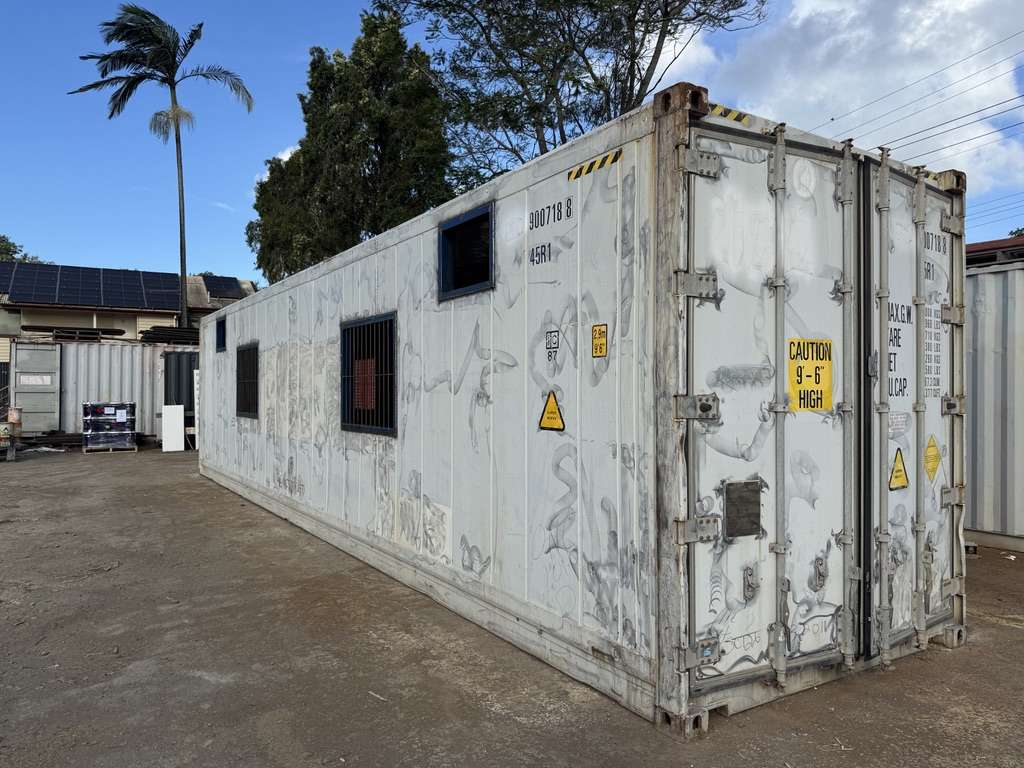
Refrigerated (reefer) containers are a different price tier because of the integrated cooling unit. A used 40ft HC reefer in cargo-worthy condition runs $3,000 to $6,500 depending on the age of the Carrier or ThermoKing unit. A new 20ft reefer prices around $6,000 to $9,000. Running costs add $15 to $40 per day on electricity. Best for food, pharma, or event cold storage with a need beyond 12 months.
Free monthly email
Andy’s Container Report
Container prices for your city, rule changes in your state, Andy’s newest videos and stock deals when we have them. One email a month, unsubscribe any time.
Shipping container prices by size
10ft shipping container price
A 10ft shipping container runs $2,800 to $3,800 for WWT, $3,500 to $4,500 for CW, and $4,500 to $6,500 for one-trip in 2026. Counter-intuitively, the 10ft is the most expensive size per linear foot. The reason is supply: most 10ft units are not standard ISO production. They are cut down from longer containers, which adds cost and limits availability. If a 10ft fits your site, expect to pay a premium versus the equivalent 20ft. For even tighter spaces, an 8ft shipping container is the smallest standard option.
20ft shipping container price
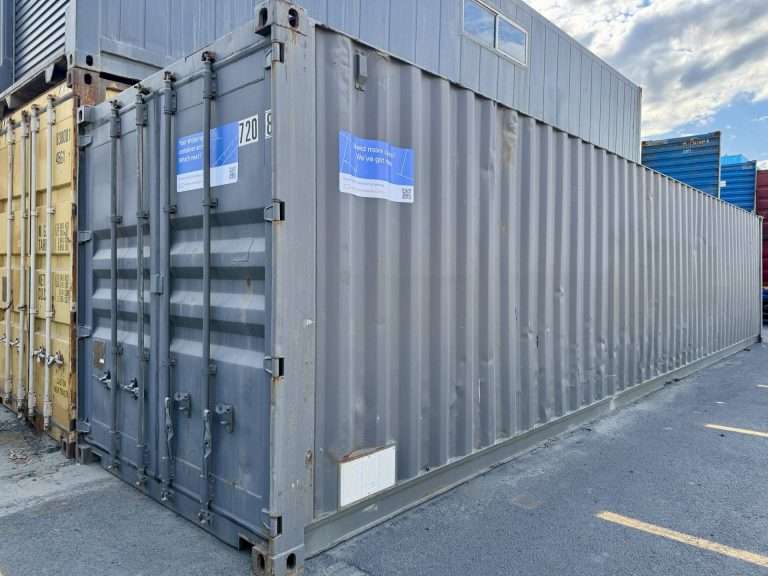
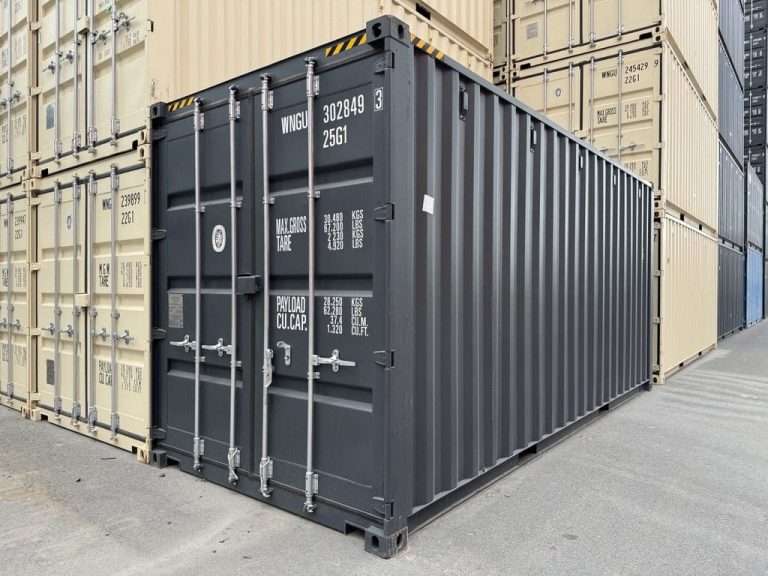
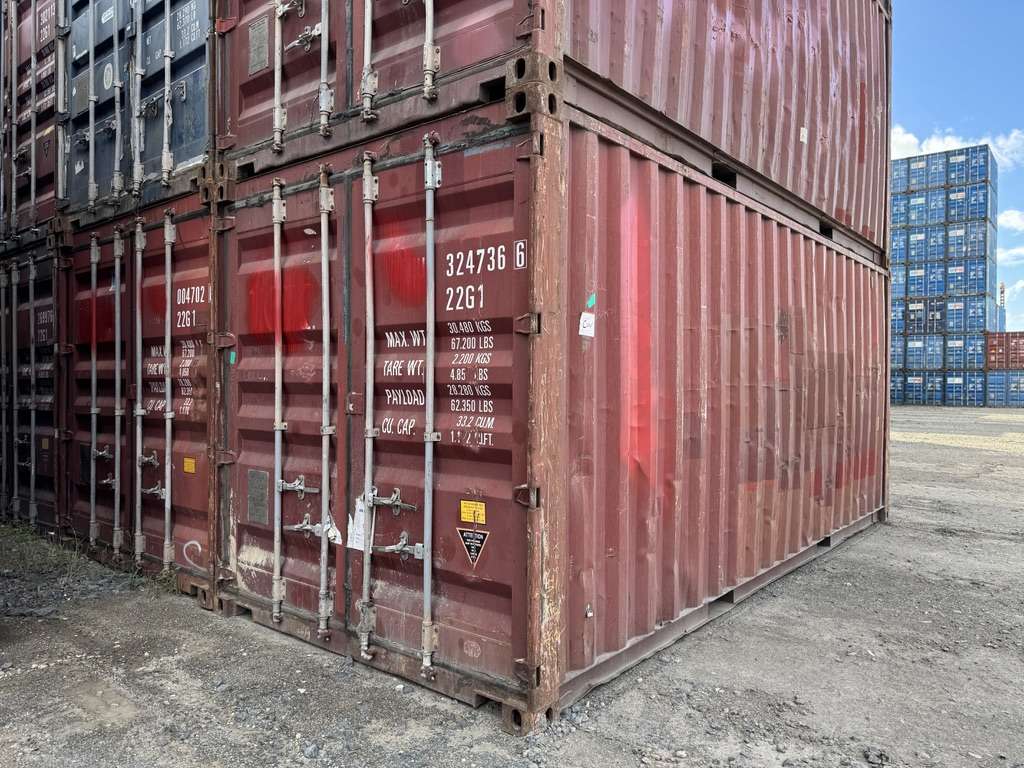
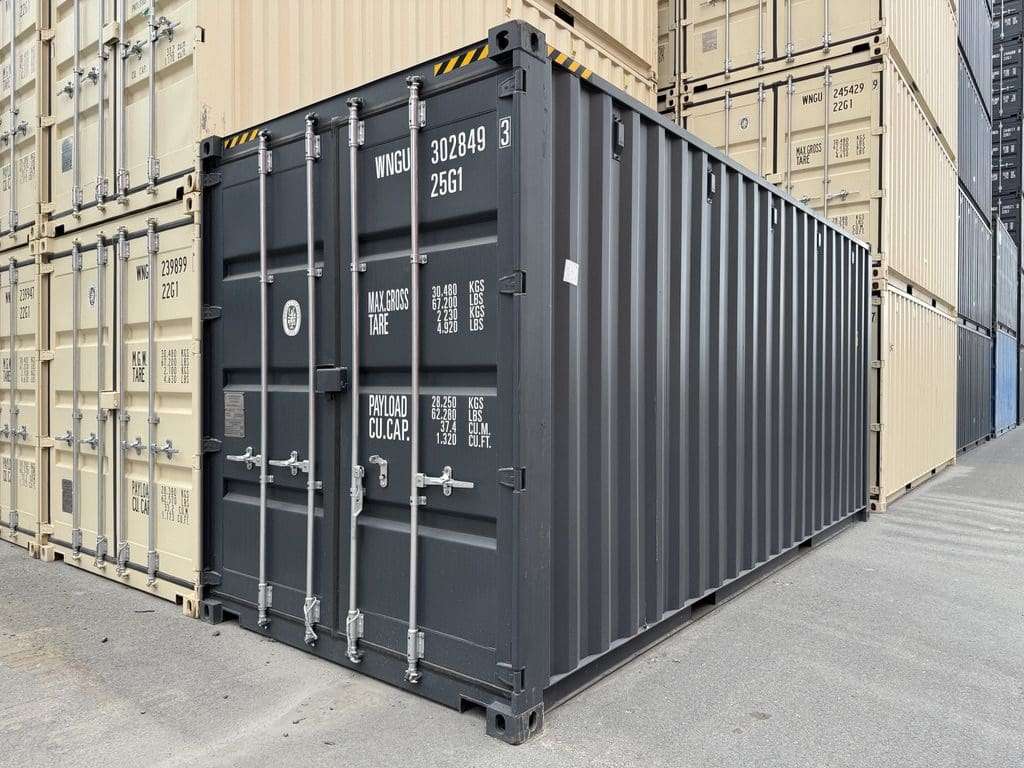
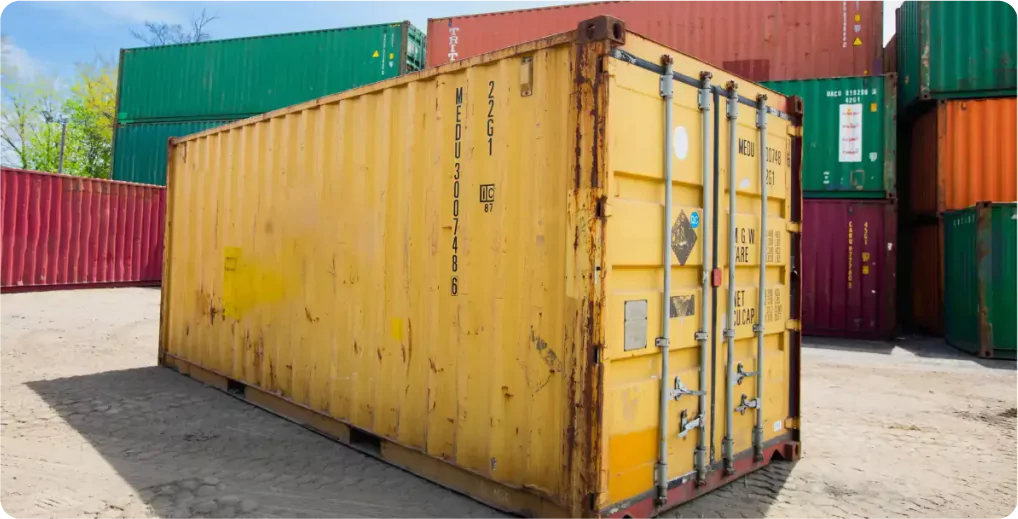
A 20ft shipping container is the most widely sold size in the US market. A used WWT 20ft runs about $1,443 at depot (November 2026 national median). A used CW 20ft is typically $2,050. A one-trip 20ft sits at $2,737 depending on factory options, color, and depot location. For full specs, see the 20ft shipping container details.
40ft shipping container price
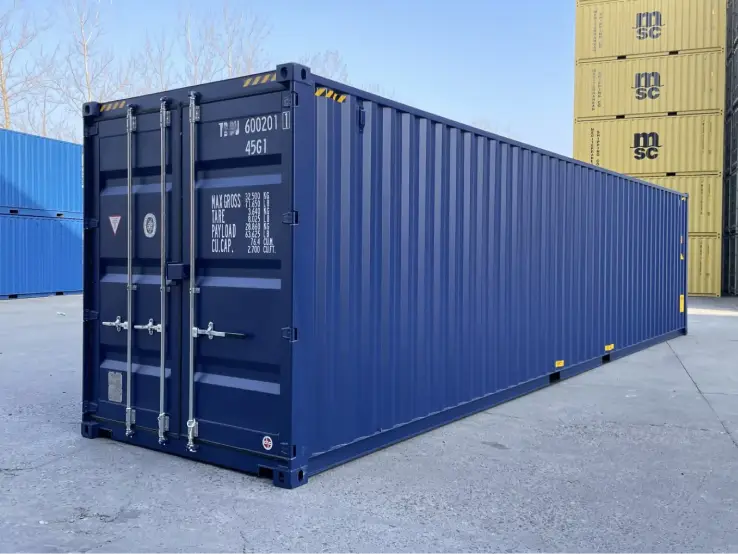
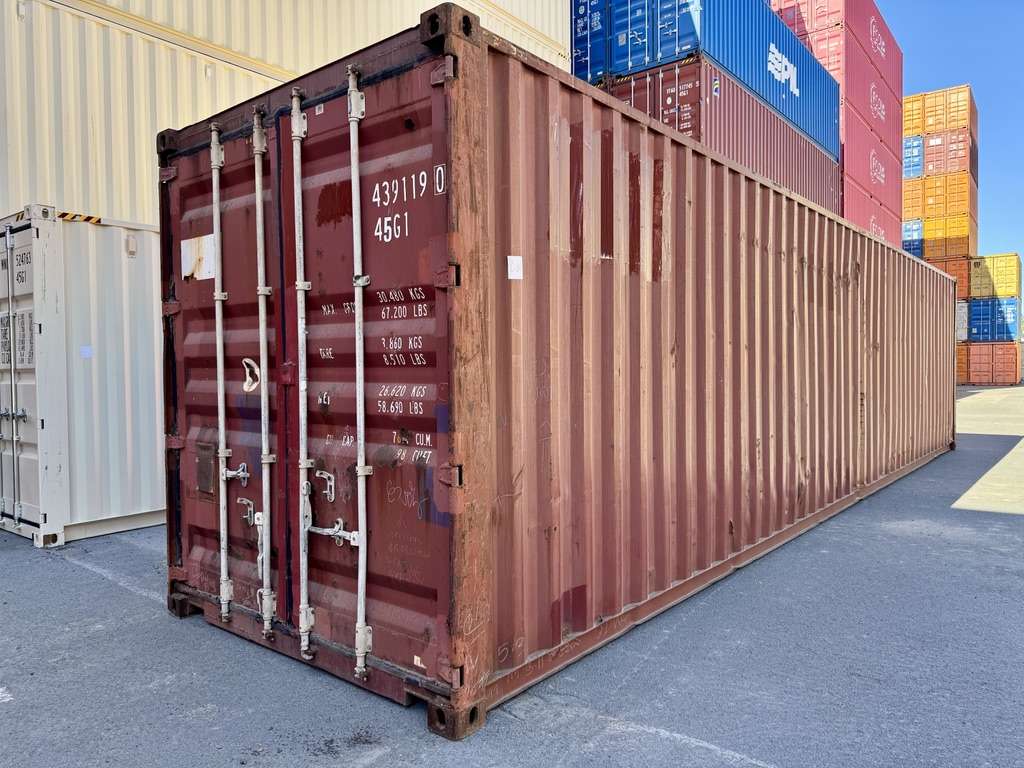
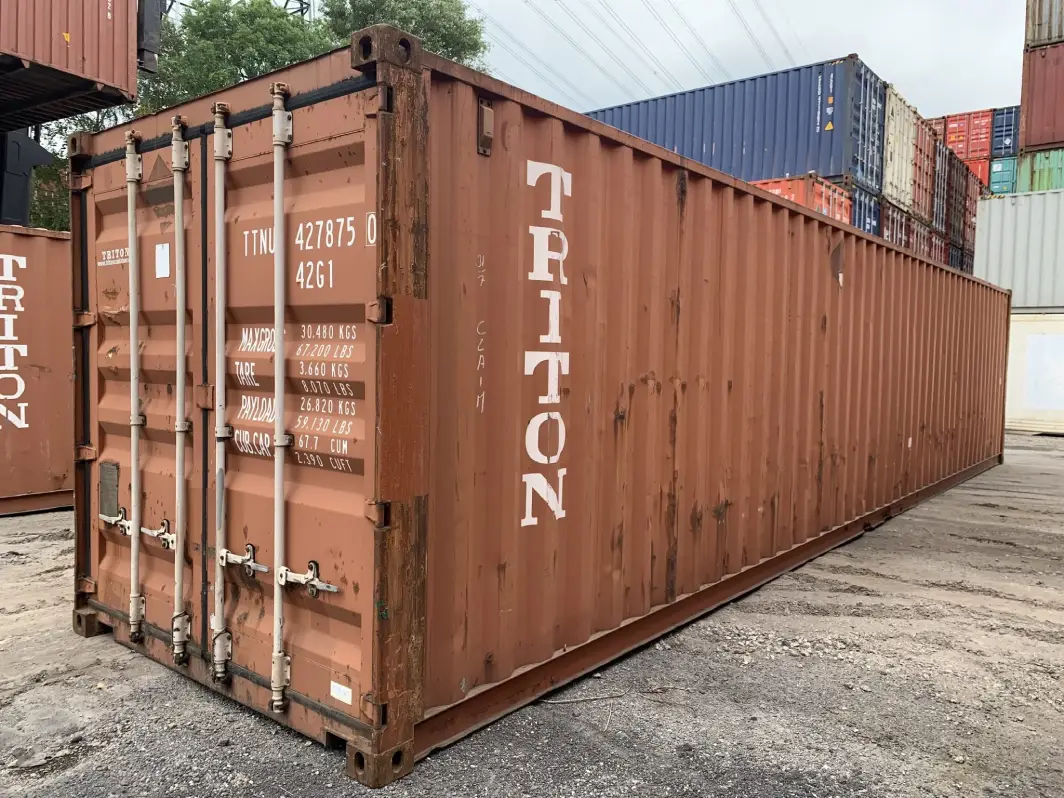
A 40ft shipping container gives you roughly double the floor area of a 20ft for only 30 to 60 percent more in base price. Used WWT 40ft runs about $2,126. Used CW 40ft sits at $2,500. One-trip 40ft units run $5,256. The 40ft High Cube, which adds about a foot of internal height, costs roughly $200 to $500 more than a standard 40ft at the same grade and is the most popular configuration nationally. For full specs, see the 40ft shipping container details.
45ft shipping container price
A 45ft High Cube container adds 5 feet of length over a standard 40ft HC at the same width and height. Used CW 45ft sits at $3,500 to $5,000. One-trip 45ft runs $5,500 to $7,500. Supply is limited compared to 20ft and 40ft, so prices have less competitive pressure and vary more between regions. Best suited to buyers who need maximum floor area in a single unit and have the site access for the longer footprint.
53ft shipping container price
A 53ft High Cube is the largest intermodal container available in the US, used primarily for domestic over-the-road and rail service. It is 13 feet longer and 6 inches wider than a standard 40ft, giving roughly 60 percent more interior volume. Used 53ft prices are far higher than 40ft. Expect $8,500 to $10,500 for WWT and $9,000 to $12,000 for CW. New one-trip 53ft units are rare and run $15,000 and up when available. Supply is limited, delivery requires specialized tilt-bed trailers, and many depots cannot accommodate them. A 53ft needs at least 120 to 135 feet of straight-line ground clearance to unload. If a 40ft will do the job, a 40ft will almost always be the better economics.
Container prices are not uniform across the US. Buyers near major ports like Houston, Los Angeles, Newark, Miami, Savannah, and Seattle generally see lower base prices and broader supplier choice, because the containers arrive there in the first place. Inland and rural buyers pay more for the truck leg even when the depot price is identical.
Houston in particular is one of the cheapest US markets for used containers. In our monthly shipping container price index, used 20ft containers in Houston usually sit among the lowest prices in the country. That price gap follows the container all the way to your yard.
Regional demand also moves the price. Markets with active construction or agricultural buyers, like Texas, Florida, and the Midwest farm belt, sometimes see tighter stock and higher prices during peak season. When yards are full, prices ease. When stock is tight, the same WWT 20ft can run $400 more than it did a month earlier. This is normal market behavior, not supplier games.
Buying in Canada? Our guide to shipping container prices in Canada lists median prices in Canadian dollars for Toronto, Vancouver, Calgary, Edmonton, Ottawa and Halifax.
Depot price versus delivered price: what to compare
The most common mistake first-time buyers make is comparing depot prices instead of delivered prices. Two suppliers can quote you the same $2,100 for a 20ft used unit, then one charges $400 for local delivery and the other charges $1,200 because their depot is further away. The cheaper depot price became the more expensive container in your yard.
Distance from depot
Typical delivery cost
Under 50 miles
$350–$750
50–100 miles
$500–$1,000
100–200 miles
$800–$1,600
200–300 miles
$1,200–$2,000
300+ miles
Per mile, often $3.50–$5 per mile plus offloading
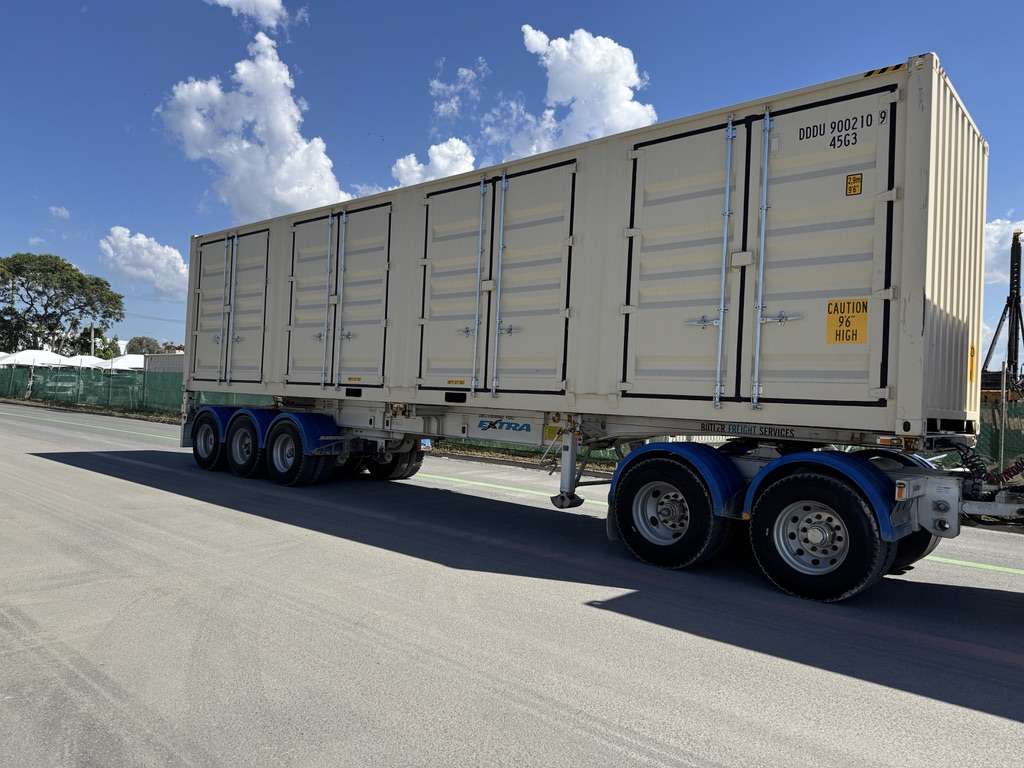
Per-mile rates, truck types and extra fees are explained in our guide to shipping container transport cost. A standard tilt-bed truck handles most residential and commercial deliveries. Sites without straight-line ground clearance for the truck need a crane offload, which is an additional cost. Container companies that attempt delivery but cannot complete it (because of site access or no one available to receive) typically charge a dry run fee, so make sure your site is ready before the truck arrives.
The number that matters is total delivered price. Always ask suppliers for the complete delivered figure, not the depot quote, and always compare those total figures against each other.
Why 2026 prices look the way they do
Container prices follow global steel markets, container production in China, and the balance of import and export container flows through US ports. During the 2021 to 2022 supply chain crunch, new container prices nearly doubled. By late 2024 and through 2025, prices normalized The 2026 market sits at one of the better buying windows in recent years.
Used inventory in Cargo Worthy and WWT condition is plentiful at most US ports. One-trip prices have come down from their peak. Whether that holds through the rest of the year depends on steel prices, trade policy, and shipping volumes, all of which can move the market within weeks.
For a deeper breakdown of every variable that drives what you actually pay, see the 7 factors that affect shipping container cost.
Shipping container tips, buyer guides, and market insights from the US market.
Can You Put a Shipping Container on Your Property? Permits, Zoning and Placement
Most people who buy a shipping container for storage put it on their own land: a backyard, a driveway, a farm or a business lot. Whether that is allowed is…
How to Compare Shipping Container Quotes: What a Good Quote Includes
A shipping container quote is only useful if you can compare it with the next one. Two suppliers can quote the same 20ft container hundreds of dollars apart, and the…
Shipping Containers Under $1,000: What You Can Really Buy
Searches for shipping containers under $1,000 are common, and so are fake listings at that price. This guide uses our monthly price data to show what containers cost in November…
Grade labels drive a large part of the price difference. Andy explains why terms like cargo worthy or A grade mean little until you check the container itself.
A used WWT 20ft shipping container runs $1,250 to $2,000 at depot in 2026. A used 40ft is $2,000 to $3,250. One-trip units start at $2,500 for a 20ft and run up to $5,125 for a 40ft High Cube. Delivery is extra.
02
A used 20ft container is typically $1,250 to $2,500 depending on grade. A one-trip 20ft is usually $2,500 to $3,500. Delivery adds $350 to $1,000 for most US locations within 100 miles of a depot.
03
A used 40ft container is typically $2,000 to $3,250 depending on grade. One-trip 40ft units run $3,700 to $5,125. A 40ft High Cube adds about $200 to $500 over standard height at the same grade. The 40ft HC One-Trip is the most in-demand size nationally in 2026.
04
A used 53ft High Cube runs $8,500 to $10,500 for WWT and $9,000 to $12,000 for CW in 2026. New one-trip 53ft units are rare and start around $15,000. The 53ft is the largest intermodal container in the US, primarily used for domestic rail and road freight. Stock is limited, delivery is specialized, and not all depots can handle them.
05
Genuinely useful WWT or CW units rarely come in under $1,000 in the US market in 2026. Listings at that price are usually As-Is units with structural issues, units at a remote depot with no buyer demand, or scrap. For a reliable storage container, budget at least $1,250 for a used WWT 20ft from a real supplier.
06
Location, depot inventory, container grade, delivery distance, and current market conditions all create variation. The same WWT 20ft can land in your yard at $2,000 from a local depot or $3,500 from a depot two states away. Always compare total delivered prices, not depot prices.
07
By total price, a 20ft As-Is unit at $1,200 to $1,800 is the cheapest entry point, but you accept the risk of structural issues. By value, a used WWT 20ft at $1,250 to $2,000 is the smartest entry-level buy because you get a weathertight unit with a known condition standard.
08
Most depot prices do not include delivery. A few national retailers quote delivered prices upfront, but most quote container and delivery separately. A local haul under 50 miles runs $350 to $750. Longer deliveries 100 to 200 miles out add $800 to $1,600 to the total.
09
For a used WWT 20ft, expect to pay $1,250 to $2,000 at depot. For a used WWT 40ft, $2,000 to $2,800. CW grade adds $500 to $750 over WWT at the same size. Anything significantly above these ranges usually reflects long delivery distance or premium options. Anything significantly below should make you ask questions about condition.
10
For storage needs longer than 12 to 18 months, buying is cheaper than renting. A used WWT 20ft purchased for $2,100 delivered breaks even against a $150 per month rental in roughly 14 months. After that you own the asset, with a resale value of $1,250 to $1,800 if you sell later. For short-term needs under 6 months, renting usually wins.
Need a real price for your project? Let's talk.
Hello! I’m Andy – Container Specialist, how can I help you?
Whether you are comparing a used WWT to a one-trip, sizing up a 40ft High Cube against a 45ft, or trying to set a realistic budget for a quote, get direct guidance from someone who has worked in the container market for 15+ years.
Can You Put a Shipping Container on Your Property? Permits, Zoning and Placement
Most people who buy a shipping container for storage put it on their own land: a backyard, a driveway, a farm or a business lot. Whether that is allowed is…
How to Compare Shipping Container Quotes: What a Good Quote Includes
A shipping container quote is only useful if you can compare it with the next one. Two suppliers can quote the same 20ft container hundreds of dollars apart, and the…
Shipping Containers Under $1,000: What You Can Really Buy
Searches for shipping containers under $1,000 are common, and so are fake listings at that price. This guide uses our monthly price data to show what containers cost in November…