How New York handles shipping container homes: the 2025 Uniform Code, NYC ancillary dwelling units, container laws in Buffalo, Sweden and Coxsackie, Adirondack Park review, septic and modular approval.
Use case
Farm Storage
Client: Mixed-use agricultural property
Category: Farm storage, machinery shelter and hay protection
Project overview
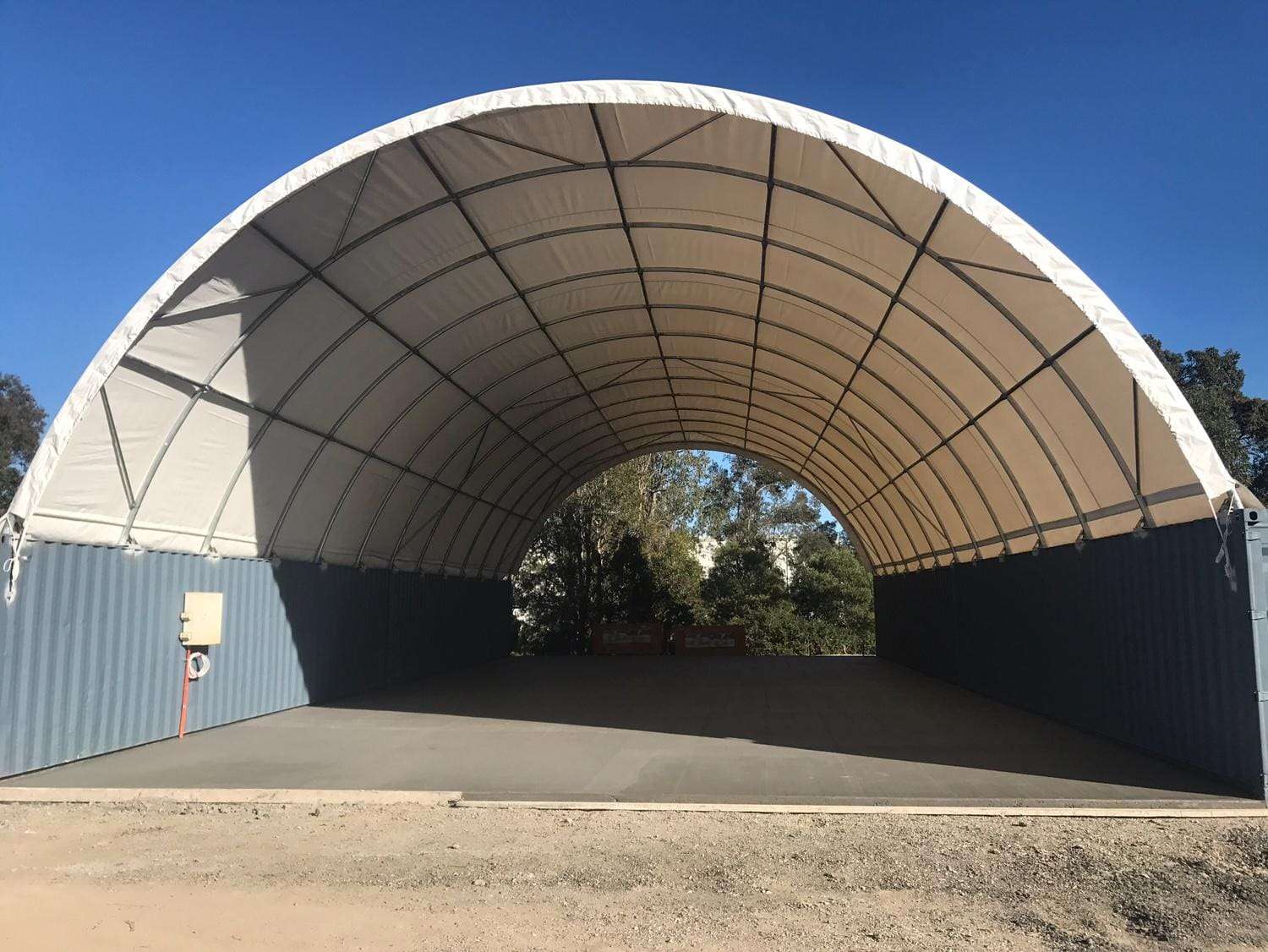
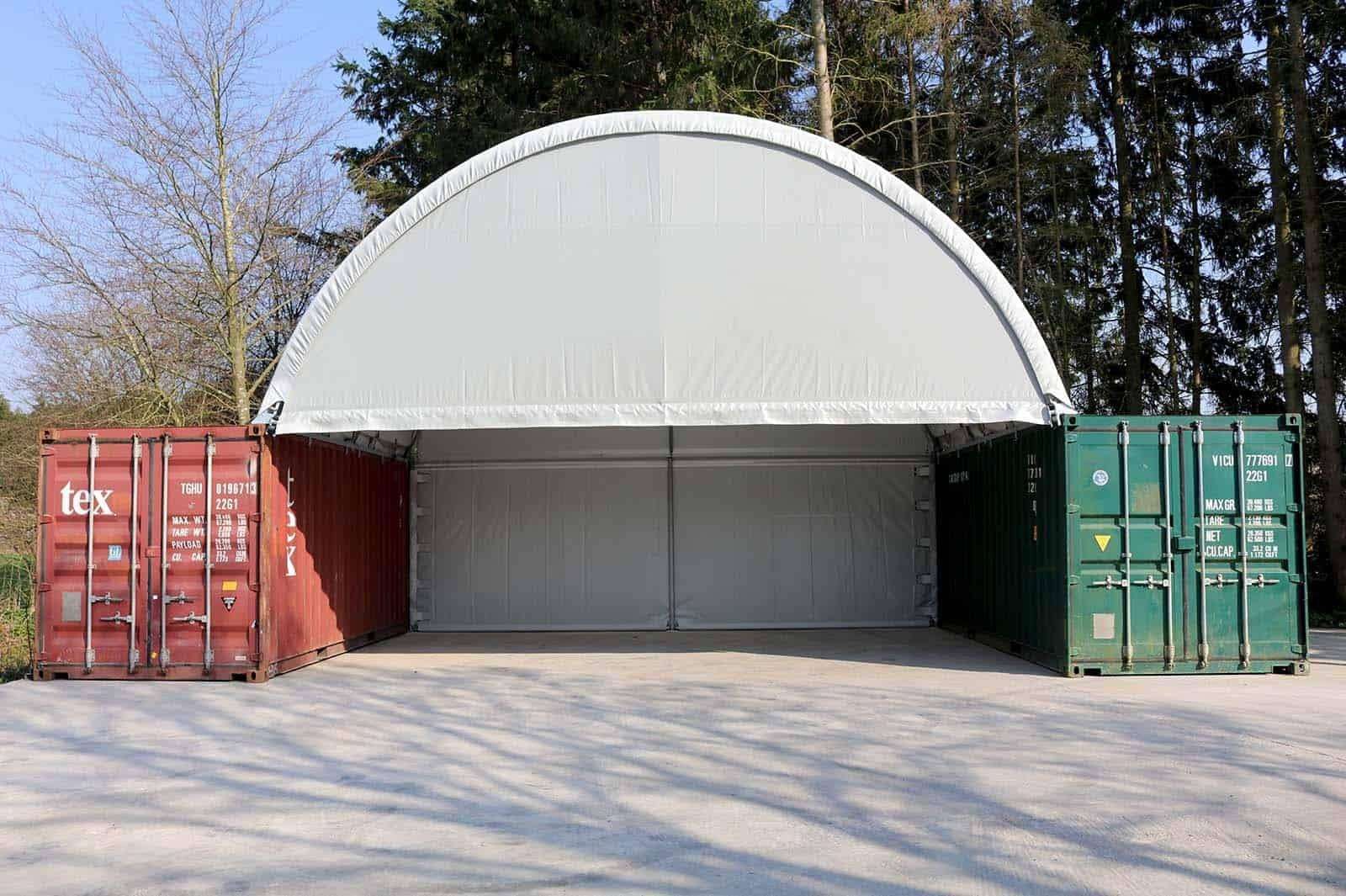
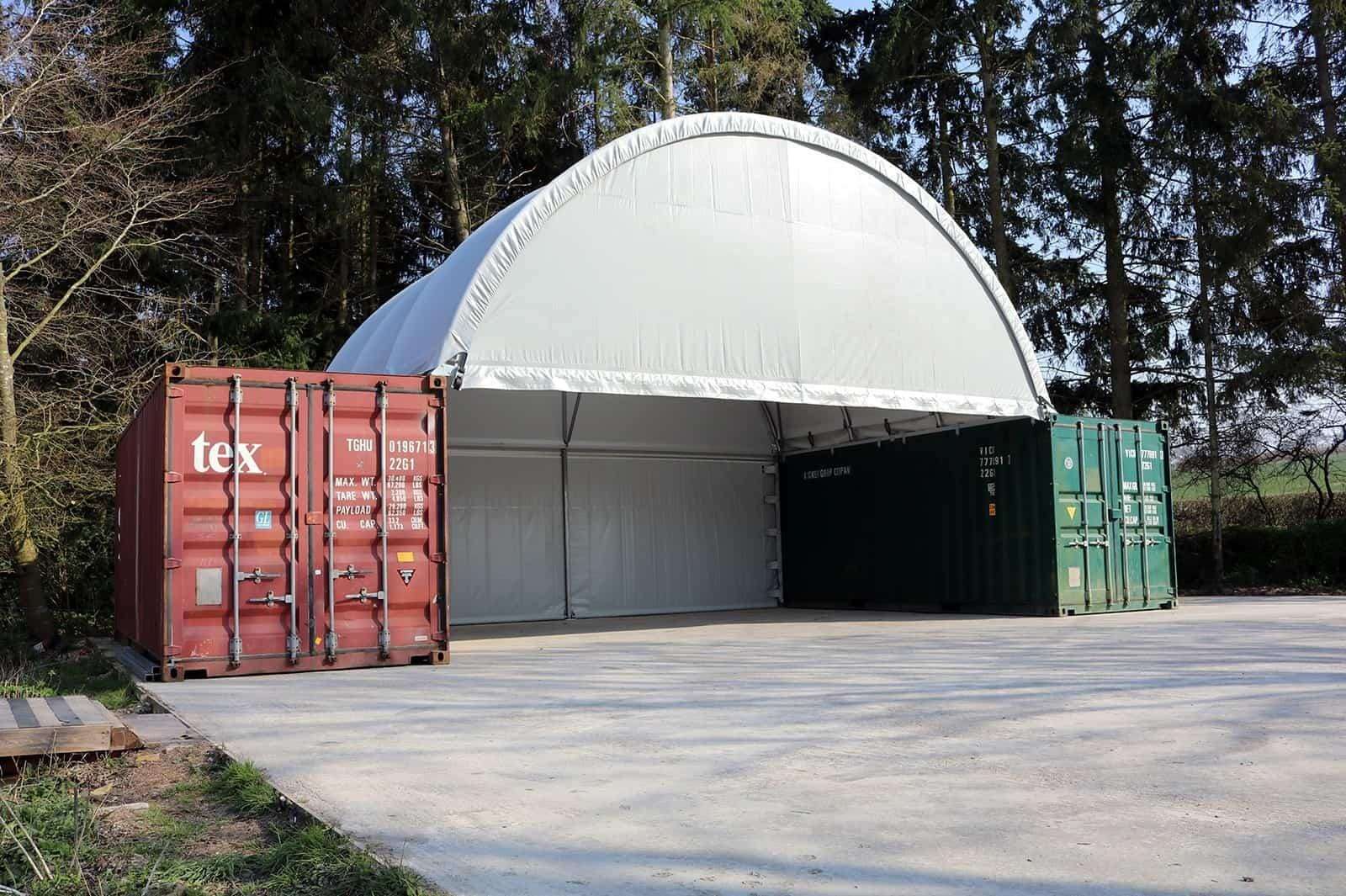
To keep hay, straw and farm machinery out of the weather, this farm built a low-cost shelter from two shipping containers with an arched roof cover stretched between them. The containers form the walls, the roof spans the gap, and the result is a covered, drive-through barn without a permanent building.
Setup details
- Two 40ft standard containers
Placed parallel about 20 feet (6 m) apart to create a wide covered zone between them. Each container also gives enclosed, lockable storage for tools, fuel drums and spare parts. - Heavy-duty container shelter
An arched, UV-resistant fabric roof is mounted across both containers, creating a drive-through area for tractors, balers and hay bales. - Multi-purpose use
The covered area keeps hay and straw dry and farm vehicles ready to use, while the containers double as walls and wind breaks. - Quick to install, easy to move
With no permanent footings, the shelter went up quickly and can be relocated or extended as the farm changes. Many US counties treat agricultural structures differently from residential buildings, but the rules vary, so check with your county before you build.
Result
Two containers and a container shelter created a low-maintenance, high-volume barn that protects feed and equipment year round and grows with the farm.
A pair of 40ft shipping containers is the usual starting point for this kind of setup, and used shipping containers in wind and watertight grade keep the cost down.
Got a project like this? Let's talk.
Whether you’re planning storage, a conversion or a full custom build, get direct guidance from someone who has worked with containers for 15+ years.