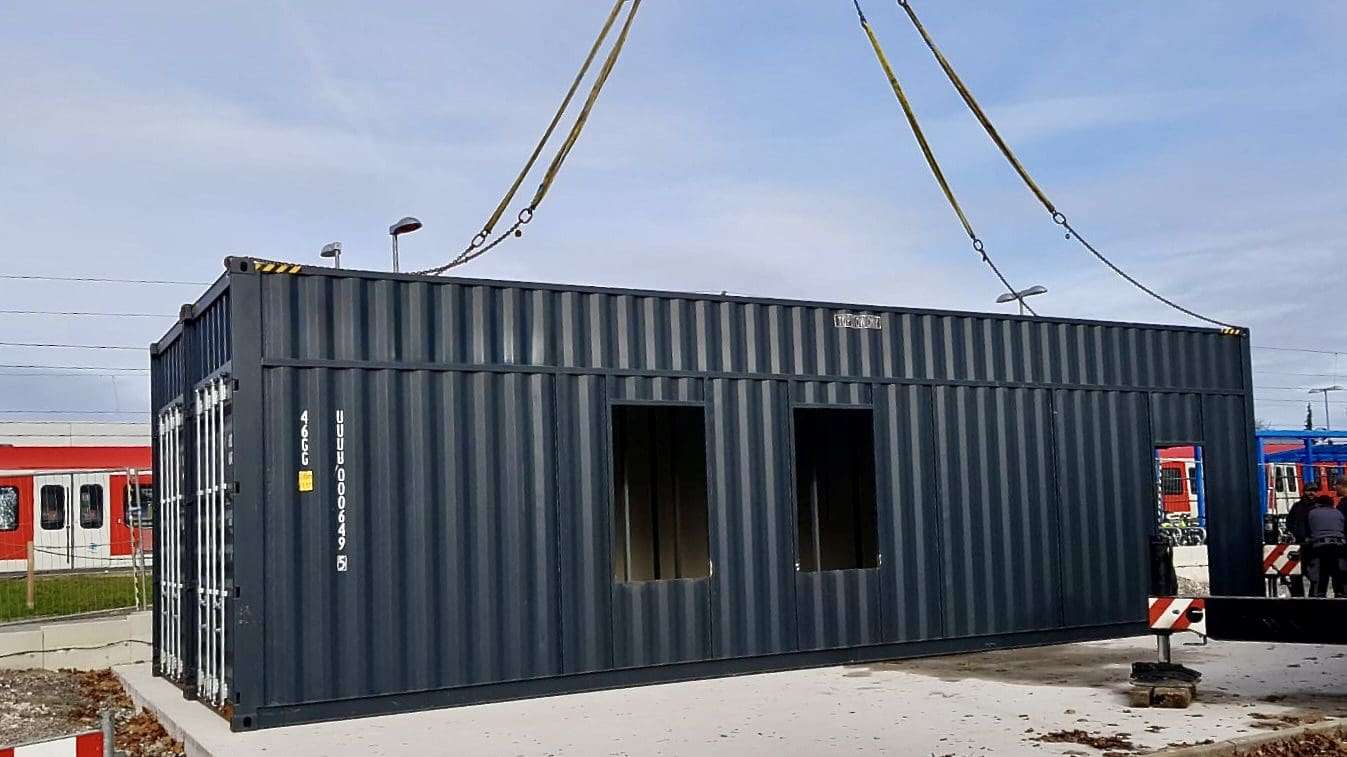
How Washington handles shipping container homes: the 2021 state codes, Pierce, King and Ferndale container rules, the two-ADU state law, the energy code wall U-factor and the L&I factory-assembled program.
In Washington the state code applies everywhere, the state energy code gives a fixed number for the wall, and the Department of Labor and Industries has published guidance on using shipping containers for buildings. Local rules still vary, from Pierce County, which treats a container home like a stick-built home, to Sedro-Woolley, which keeps containers out of residential zones.
This page collects what we could confirm from state agencies, state law and city and county sources. For costs, layouts and the build itself, see our guide to shipping container homes, and for the comparison with other states see which states allow shipping container homes.
Key takeaways
The 2021 IBC and IRC are in force. The 2024 editions have a listed effective date of May 3, 2027.
The state building code applies in every county and city, including unincorporated areas.
Pierce County says container homes are reviewed the same way as stick-built homes. King County requires a permit for a container used as a dwelling.
Urban growth areas must allow two ADUs per lot with no owner-occupancy rule, with exceptions such as critical areas.
The energy code requires steel-frame walls to meet the Table R402.1.2 U-factor of 0.056, so plan the insulation before you buy a container.
State building code
Washington’s commercial code in force is the 2021 International Building Code as amended in chapter 51-50 WAC, effective March 15, 2024, and its residential code is the 2021 International Residential Code as amended in chapter 51-51 WAC, effective March 16, 2024. The State Building Code Council has not put the 2024 codes into force yet. Its page lists final adoption of the 2024 building, residential, mechanical, fire and plumbing codes as targeted for October 16, 2026 and an effective date of May 3, 2027, and as of October 20, 2026 the page had not been updated to show a completed vote. It lists a further Council meeting on October 30, 2026. Check the council’s page before you submit plans in 2027.
The state building code applies in every county and city, so there is no part of Washington without a building code. The list of Chapter 31 amendments in chapter 51-50 WAC does not include section 3115, the model code section on intermodal shipping containers, and the state amendment to IRC section R301 does not replace section R301.1.4, which points to it. Seattle’s 2021 residential code keeps R301.1.4, which requires repurposed intermodal containers to be designed to the structural provisions of IBC Section 3115. Under the state’s IRC amendments, each local jurisdiction sets its own climatic and geographic design criteria, such as snow, wind, frost and seismic values.
Rules by place
Place
What we found
Pierce County (unincorporated)
Container homes are permitted and reviewed like stick-built homes and must meet the current residential and energy codes. Engineering is required for any modification to the container structure. Storage-only containers in rural zones need 2.5 acres or more, with screening.
King County (unincorporated)
Its bulletin dated January 2019 says a container used as a building needs a building permit, and structural calculations are required for altered or connected containers. Residential accessory storage containers under 200 square feet are exempt only if they are unheated and not habitable space.
Tacoma
Containers are not a permitted accessory building in residential districts, but are allowed with a Conditional Use Permit if not stacked, set back like the main building and screened. In 2023 city planning documents said housing use would be discussed at a later date, and we did not find a later rule.
Ferndale (Whatcom County)
Expressly allows a container as a permanent structure if it complies with all applicable codes, city regulations and design standards.
Sedro-Woolley (Skagit County)
Containers are not allowed in residential zones, except a one-time temporary permit of up to 180 days at a building site.
SeaTac
The container chapter covers commercial and industrial zones, and allows one container on residential property, with more needing a Conditional Use Permit.
Seattle
ADU page does not mention containers. A lot can have no more than two ADUs.
Andy explains permit and rule questions for container homes in the United States.
ADUs and middle housing
Washington law requires cities and counties that plan under the Growth Management Act to allow at least two accessory dwelling units on all lots in urban growth area zoning districts that allow single-family homes. The requirement does not apply to lots with critical areas or their buffers, or to certain listed reservoir watersheds. They may not require the owner to live in either the ADU or the main home, may not set a size cap below 1,000 square feet of gross floor area, and may not charge impact fees above 50 percent of the fees for the principal unit. Cities may not require off-street parking for an ADU within one-half mile walking distance of a major transit stop, with listed exceptions. These rules apply only inside urban growth areas. Rural ADU rules are set by each county, and local ordinances take effect with the jurisdiction’s next periodic comprehensive plan update.
The 2023 middle housing law, HB 1110, requires cities of 75,000 or more to allow at least four units per lot on residential lots, and cities of 25,000 to under 75,000 to allow at least two, with compliance due at the city’s next periodic comprehensive plan update, or later for cities that reach the population threshold after 2020.
Energy code and insulation
The residential energy code in force is the 2021 Washington State Energy Code, chapter 51-11R WAC, effective March 15, 2024, with a 2024 edition still in rulemaking. It requires steel-framed walls to meet the U-factor requirements of Table R402.1.2. That table has a single column for the whole state, with an above-grade wall U-factor of 0.056, ceiling 0.024, floor 0.029, fenestration 0.30 and a slab-on-grade F-factor of 0.54. We found no state guidance that treats a container wall separately, so the steel-frame provision is the closest rule. Confirm with your building department and an energy code consultant. Even on the prescriptive path, every dwelling unit must also comply with the additional energy credits in Section R406.
Washington leaves the design values to each jurisdiction, and the differences are large. These are the ones we confirmed from local documents. Always ask your building department for the sheet that applies to your parcel.
Place
Ground snow
Wind
Frost depth
Seismic
Seattle
20 psf
98 mph
12 inches
D2
Snohomish County
25 psf minimum roof snow load
110 mph
18 inches
D2
Poulsbo (Kitsap)
30 psf
110 mph
12 inches
D2
Spokane County
39 psf
110 mph
24 inches
portions in B
Okanogan County
40 to 105 (unit not stated)
not listed
24 inches
C
Chelan County
57 psf at or below 950 ft
110 mph
24 inches
D0
Washington has not adopted the International Wildland-Urban Interface Code statewide. Chapter 51-55 WAC is reserved until statewide wildfire hazard maps are complete, and cities and counties may adopt the code themselves. For flood, the state rule has no amendment at the IRC flood section, so elevation requirements come from the model code and the local floodplain ordinance. Foundations are covered in our foundation guide.
Factory-built and L&I
The Department of Labor and Industries runs the Factory Assembled Structures program. Its container guidance, revised in December 2021, says shipping containers may be converted into regulated factory-assembled structures using the alternate methods of construction provisions of the building code. L&I does not regulate on-site conversion, which is permitted and inspected by the local building department. For used containers converted off site, the engineer or architect must send L&I a structural observation letter confirming that the containers were inspected and are suitable for the intended use. Cargo-style padlockable hardware is not acceptable on any exit door, and structural steel welding must be inspected under the special inspection requirements of the building code. A factory-built modular building must be approved by L&I and carry an L&I insignia before it ships from the factory, and after occupancy inspections are done by the local enforcement agency.
Septic, water and owner-builders
Onsite septic is permitted by the local health officer. Anyone installing, repairing, modifying or expanding an onsite sewage system must obtain a permit before construction under chapter 246-272A WAC, which the local health officers administer jointly with the state Department of Health. A building permit for a building that needs potable water requires evidence of an adequate water supply, and a county or city may add conditions such as connecting to an existing public water system. State groundwater law exempts a single or group domestic well from a water right permit up to 5,000 gallons a day, with stock watering and a lawn or noncommercial garden of up to one-half acre also exempt. In the watersheds covered by RCW 90.94.030, new permit-exempt domestic wells are subject to an annual average of 950 gallons per day per connection.
Washington’s contractor registration law exempts a person working on his or her own property, but not when the work is done to sell, demolish or lease the property.
What containers cost in Washington
These are median depot prices from our October 2026 price index. Seattle and Tacoma are priced as one metro with three independent suppliers. Delivery is not included, and transport cost depends on distance from the depot.
Container (Seattle and Tacoma)
Median price
Used 20ft
$1,915
Used 40ft high cube
$2,190
New 20ft
$3,445
New 40ft high cube
$3,990
Listings
Containers for Washington builds available now
Most container homes start with high cube containers, new or in premium used condition. Starting prices come from current inventory at US depots. Pick a container and vetted local suppliers send delivered quotes for your ZIP code.
Starting prices at the depot, based on current inventory at major US container depots. Delivery, sales tax and local fees are extra and depend on your ZIP code. Your supplier confirms the final price in your quote.
Container prices for your city, rule changes in your state, Andy’s newest videos and stock deals when we have them. One email a month, unsubscribe any time.
FAQs
Container homes in Washington: frequently asked questions
01
Yes, where they meet the code. Pierce County states that shipping container homes are permitted and reviewed in the same way as stick-built homes, and Ferndale expressly allows a container as a permanent structure if it complies with all applicable codes, city regulations and design standards. Other places are stricter. Sedro-Woolley does not allow containers in its residential zones, and Tacoma generally prohibits them as accessory buildings in residential districts without a Conditional Use Permit.
02
The 2021 International Building Code and 2021 International Residential Code, as amended in chapters 51-50 and 51-51 WAC, effective March 2024. The State Building Code Council is working on the 2024 editions, with an effective date of May 3, 2027 listed on its page. The state code applies in every county and city, including unincorporated areas.
03
The residential energy code requires steel-framed walls to meet the U-factor requirements of Table R402.1.2, which sets an above-grade wall U-factor of 0.056 for the whole state. We found no state guidance that treats a container wall separately, so the steel-frame provision is the closest rule. Every dwelling must also earn the additional energy credits in Section R406, so have an energy code consultant check the design.
04
Cities and counties planning under the Growth Management Act must allow at least two ADUs on lots in urban growth areas that allow single-family homes. They cannot require the owner to live on the lot, cannot cap ADU size below 1,000 square feet, and cannot charge impact fees above 50 percent of the principal unit. On rural land the county sets the rules.
05
L&I does not regulate on-site container conversion, which is permitted and inspected by the local building department. Containers converted in a factory can become regulated factory-assembled structures through the alternate methods of construction provisions of the code, with an L&I insignia before shipping. For used containers, the engineer must send L&I a structural observation letter.
06
In the October 2026 price index, the Seattle and Tacoma median depot price was $1,915 for a used 20ft container, $2,190 for a used 40ft high cube and $3,445 for a new 20ft. Delivery is extra.
Andreas Atrott is the founder of CUBX - shipping-containers.com and its sister sites shipping-containers.com.au in Australia and containerbasis.de in Germany. He has spent more than 15 years in the container industry, across sales, modifications, and custom builds, and shares what he has learned on his YouTube channel, Andy Knows Containers. That practical experience shapes how the platform helps US buyers match the right container to their project.
A shipping container is the ultimate blank canvas. The design is clever, but at its core a container is a big steel box you can adapt almost any way you...
A standard shipping container, but taller: the premise behind ‘high cube’ units might be simple, but it makes this type of container particularly well suited to a range of applications....
Shipping containers are good for far more than moving freight across oceans. With the right accessories, you can turn a plain steel box into a storage unit, a site office,...
February 17, 2026
About Us
shipping-containers.com is an independent platform that makes buying a shipping container simple and transparent. Tell us what you need once, and vetted local suppliers across the US send you their quotes. One request, multiple quotes, no fees.
Got questions? Let’s chat.
We are here to make container buying simple. Talk to a real expert, get advice, and find your perfect fit, fast.
Hi, I'm Andy. 15+ years in containers. How can I help?
Shipping Container Homes in New York: Codes, NYC ADUs and Local Bans
How New York handles shipping container homes: the 2025 Uniform Code, NYC ancillary dwelling units, container laws in Buffalo, Sweden and Coxsackie, Adirondack Park review, septic and modular approval.
Shipping Container Homes in California: Codes, ADUs and City Rules
How California handles shipping container homes: the 2025 state codes, the LADBS conversion bulletin, San Diego rules, state ADU law, HCD approval for factory-built units and counties that allow containers only for storage.
Shipping Container Homes in Washington: Codes, ADUs and L&I Rules
How Washington handles shipping container homes: the 2021 state codes, Pierce, King and Ferndale container rules, the two-ADU state law, the energy code wall U-factor and the L&I factory-assembled program.