Blocks, railroad ties, gravel pads, piers, slabs or screw piles: which foundation your container needs, and how to level and anchor it.
A shipping container is built to sit on its four corners. That is how it rides on ships, trains and trucks, and it is how it should sit on your property too. Get the foundation right and the doors swing smoothly for decades. Get it wrong and you get doors that bind, water under the floor and rust from below.
Here are the six common foundation options, what each one suits and how to choose the right one for your container.
Key takeaways
Containers carry their weight through the four corner castings. The foundation has to support those corners, firm and level.
For storage, solid concrete blocks, railroad ties or a compacted gravel pad are usually enough.
For offices, homes and anything permanent, piers, a slab or screw piles are the norm, and a permit is usually required.
Keep the container off the soil. Airflow underneath prevents rust and rot.
A container that is out of level twists, and the doors are the first thing to tell you.
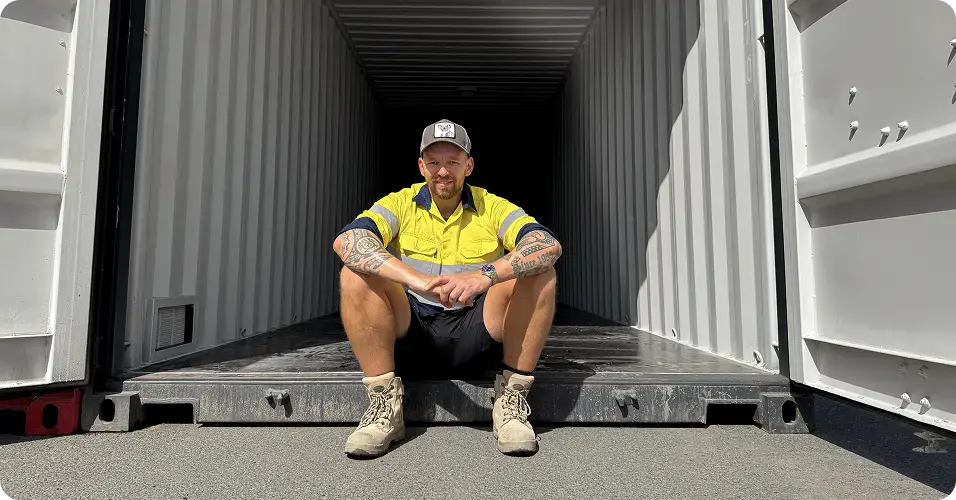
Andy shows how to place a container correctly so it stays level, the doors keep working and the floor stays out of standing water.
Does a shipping container need a foundation?
For short-term storage on firm, level concrete or asphalt, a container can sit directly on the surface. On anything else it needs support. Grass and bare soil hold moisture against the steel frame, settle unevenly and, after rain, can let one corner sink. Even a storage container lasts longer and works better a few inches off the ground on a level base.
For a container you will work or live in, a proper foundation is not optional. Local building codes generally treat an occupied container like any other structure, with rules for footings, frost depth and anchoring. Check with your local building department before you plan the base.
How a container carries its weight
The steel frame of a container, meaning the corner posts and the top and bottom rails, carries the load. The corrugated walls stiffen the box, and the floor sits on cross members between the bottom side rails. At each corner is a cast steel block, the corner casting, built to carry the weight of fully loaded containers stacked on top.
That is why most foundations support the corners. A 20ft container is usually supported at its four corners. A 40ft container should also be supported at the midpoint of each long side, so the bottom rails do not sag over time.
The right foundation also depends on where the container goes and how it is delivered. If you already know the size and your delivery ZIP code, vetted local suppliers can send you delivered prices. One request, several quotes, no fees.
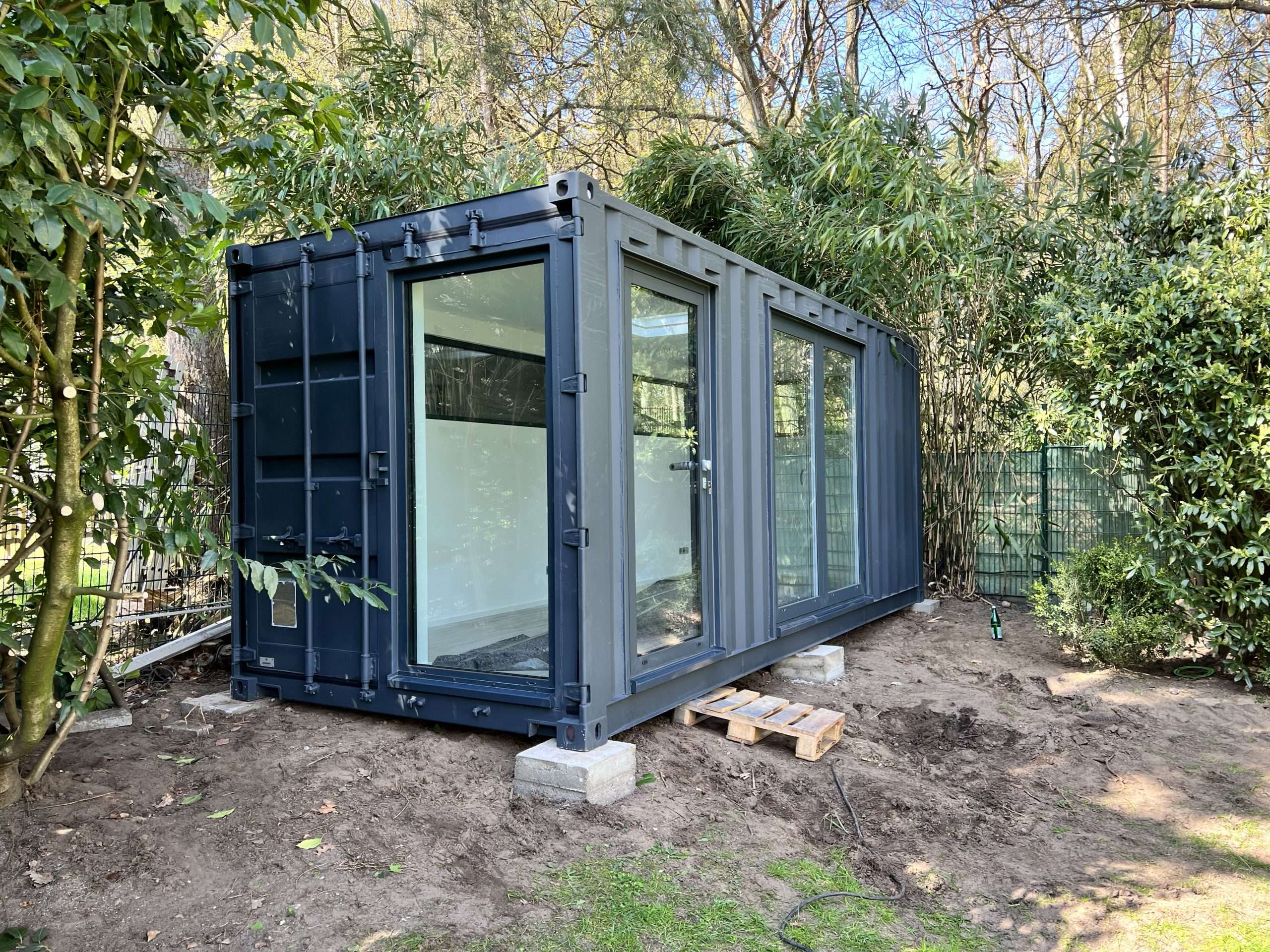
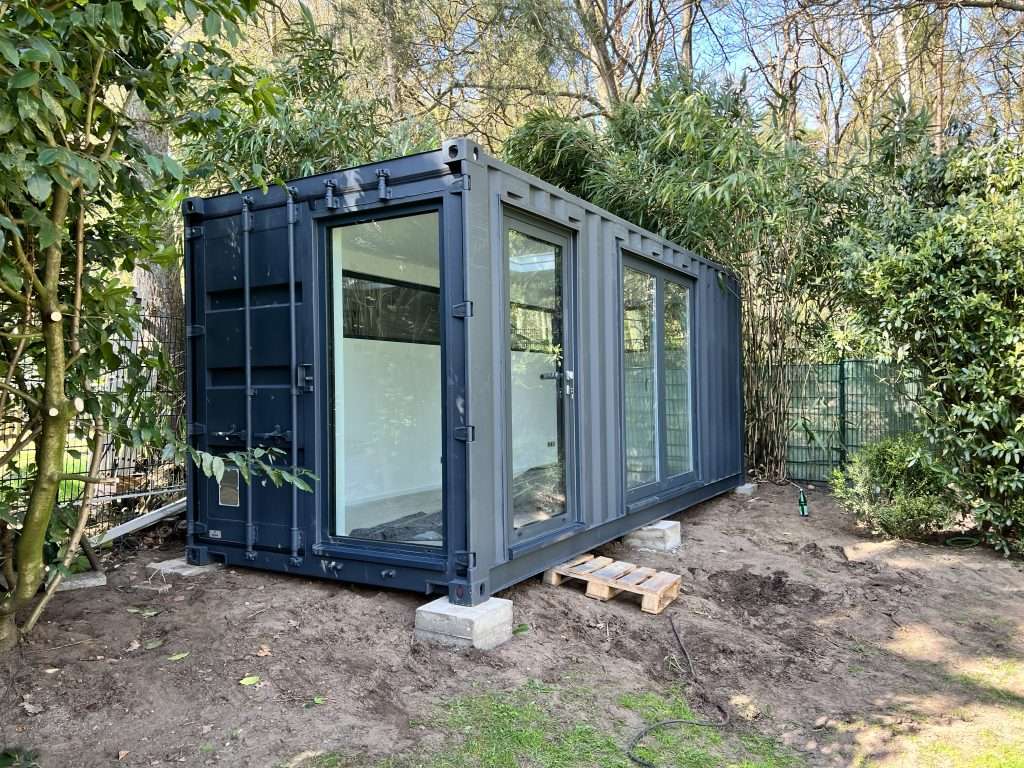
Solid concrete blocks or pavers under each corner are the most common choice for storage containers. They are inexpensive, quick to set and easy to level. Use solid blocks rather than hollow cinder blocks, and set them on compacted gravel or firm soil so they do not sink.
Best for: storage containers and sheds on firm, fairly level ground.
2. Railroad ties or timber beams
Pressure-treated timbers or railroad ties under the corners spread the load over a larger area than blocks, which helps on softer ground. Timber eventually rots, so check it every few years and replace it when needed. Old railroad ties are usually treated with creosote, so think twice before using them near vegetable gardens or play areas.
Best for: storage on softer ground and temporary placements.
3. Compacted gravel pad
A pad of compacted crushed stone, a few inches deep and a little larger than the container, gives you a level, well-drained base. Blocks or timbers on top of the gravel lift the container for airflow. A gravel pad also makes delivery easier, because the truck has a firm spot to unload onto.
Best for: storage containers on lawns or bare soil, and sites with drainage problems.
4. Concrete piers or footings
Poured concrete piers under the corners, and under the midpoints on a 40ft, create a permanent, level base and can go below the frost line in cold climates. Steel plates cast into the top of each pier let you weld or bolt the container down.
Best for: offices, workshops, homes and any container that has to be anchored.
5. Concrete slab
A full slab is the most solid option and gives you a clean, usable surface around the container too. It is also the most expensive and the least flexible, because the container is effectively fixed to that spot. The slab must be level and should drain water away from the container, not toward it.
Best for: permanent buildings, container homes and workshops with heavy equipment.
6. Screw piles (helical piers)
Steel screw piles are driven into the ground by machine and can be adjusted to level. They work well on slopes and poor soils, need very little excavation and can be removed if the container moves later.
Best for: sloped lots, soft or wet ground and sites where you want minimal digging.
Free monthly email
Andy’s Container Report
Container prices for your city, rule changes in your state, Andy’s newest videos and stock deals when we have them. One email a month, unsubscribe any time.
Foundation options compared
Foundation
Effort
Permanence
Best for
Concrete blocks
Low
Temporary
Storage on firm ground
Railroad ties or timbers
Low
Temporary
Storage on softer ground
Compacted gravel pad
Medium
Semi-permanent
Storage with better drainage
Concrete piers
High
Permanent
Offices, workshops, homes
Concrete slab
High
Permanent
Homes, heavy equipment
Screw piles
Medium
Permanent but removable
Slopes and poor soil
How to choose the right foundation
Use: storage only, or will people work or live in it? Occupied buildings usually need engineered footings and a permit.
Soil: firm clay or rock, or soft, sandy or wet ground? Weak soil needs wider support or piles.
Slope: on a slope, piers or screw piles are usually easier than building up a level pad.
Climate: in cold regions, frost can lift shallow supports unevenly, so permanent foundations usually go below the local frost line. In hurricane and high-wind areas, such as coastal Florida and Texas, anchoring is often required.
Future plans: will you move it later? Blocks, timbers and screw piles leave the most options open.
Leveling, drainage and anchoring tips
Level the supports, not just the ground. Check each corner support with a long level or a laser before delivery. A container that is out of level twists and the doors start to bind.
Space the supports to the container. Measure from the external length: 20ft (6.06 m) or 40ft (12.19 m) outside edge to outside edge, and 8ft (2.44 m) across.
Lift it for airflow. A gap of a few inches under the frame keeps moisture away and lets you spot rust early.
Keep water moving. Make sure rain runs away from the container, not under it.
Anchor where wind matters. Weld plates, twist locks or tie-down kits secure the corner castings to the foundation.
Have it ready for delivery. The driver sets the container straight onto your supports, so they need to be in place and level. See how shipping container delivery works for the full site checklist.
Frequently asked questions
Can I put a shipping container on grass?
For a short time on firm, dry ground, yes, but grass is not a good long-term base. It holds moisture, the soil settles unevenly and corners can sink after rain. Put blocks or a gravel pad down first.
Do I need a permit for a container foundation?
It depends on your city or county and on how the container will be used. A storage container on blocks often needs no building permit, though zoning rules can still apply. Permanent foundations and containers people work or live in usually need one.
How level does a shipping container need to be?
As level as you can practically get it. Small errors show up quickly as doors that stick or will not latch. Check the corners with a level before you load anything inside.
What is the cheapest shipping container foundation?
Solid concrete blocks under the four corners, set on firm, compacted ground. For a 40ft, add a block under the middle of each long side.
Foundation planned? Compare 20ft and 40ft shipping containers or browse all shipping containers for sale. shipping-containers.com is an independent platform, not a dealer. Tell us your ZIP code, the container you need and a few details about your site once, and vetted local suppliers respond with delivered prices. One request, multiple quotes, no fees.
Andreas Atrott is the founder of CUBX - shipping-containers.com and its sister sites shipping-containers.com.au in Australia and containerbasis.de in Germany. He has spent more than 15 years in the container industry, across sales, modifications, and custom builds, and shares what he has learned on his YouTube channel, Andy Knows Containers. That practical experience shapes how the platform helps US buyers match the right container to their project.
A shipping container is the ultimate blank canvas. The design is clever, but at its core a container is a big steel box you can adapt almost any way you...
A standard shipping container, but taller: the premise behind ‘high cube’ units might be simple, but it makes this type of container particularly well suited to a range of applications....
Shipping containers are good for far more than moving freight across oceans. With the right accessories, you can turn a plain steel box into a storage unit, a site office,...
February 17, 2026
About Us
shipping-containers.com is an independent platform that makes buying a shipping container simple and transparent. Tell us what you need once, and vetted local suppliers across the US send you their quotes. One request, multiple quotes, no fees.
Got questions? Let’s chat.
We are here to make container buying simple. Talk to a real expert, get advice, and find your perfect fit, fast.
Hi, I'm Andy. 15+ years in containers. How can I help?
Shipping Container Homes in New York: Codes, NYC ADUs and Local Bans
How New York handles shipping container homes: the 2025 Uniform Code, NYC ancillary dwelling units, container laws in Buffalo, Sweden and Coxsackie, Adirondack Park review, septic and modular approval.
Shipping Container Homes in California: Codes, ADUs and City Rules
How California handles shipping container homes: the 2025 state codes, the LADBS conversion bulletin, San Diego rules, state ADU law, HCD approval for factory-built units and counties that allow containers only for storage.
Shipping Container Homes in Washington: Codes, ADUs and L&I Rules
How Washington handles shipping container homes: the 2021 state codes, Pierce, King and Ferndale container rules, the two-ADU state law, the energy code wall U-factor and the L&I factory-assembled program.