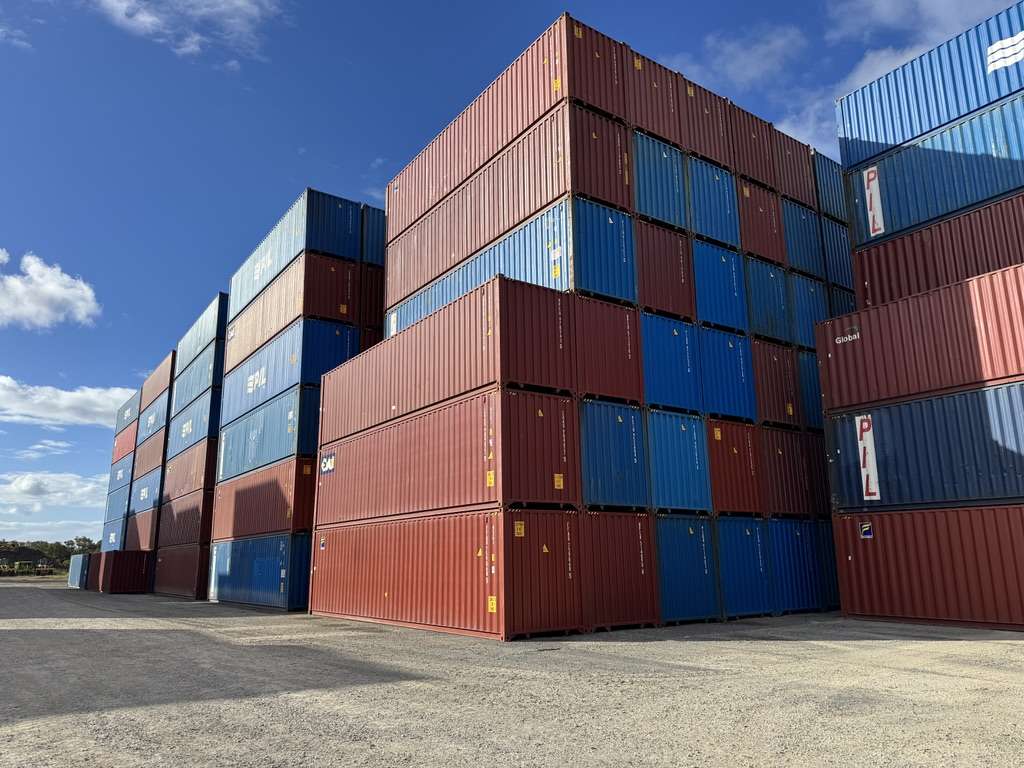
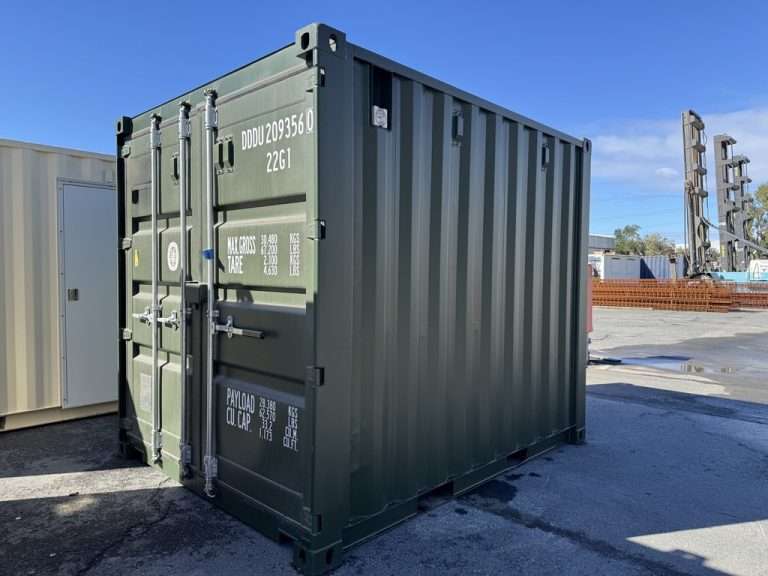
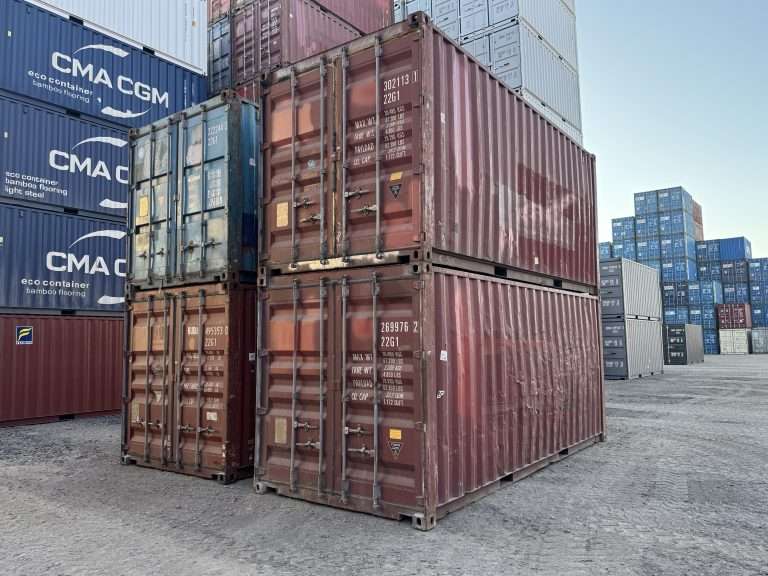
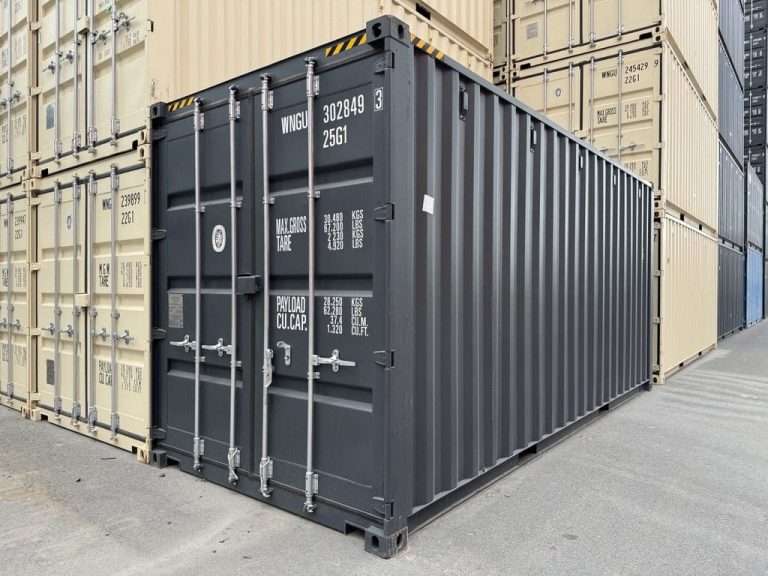
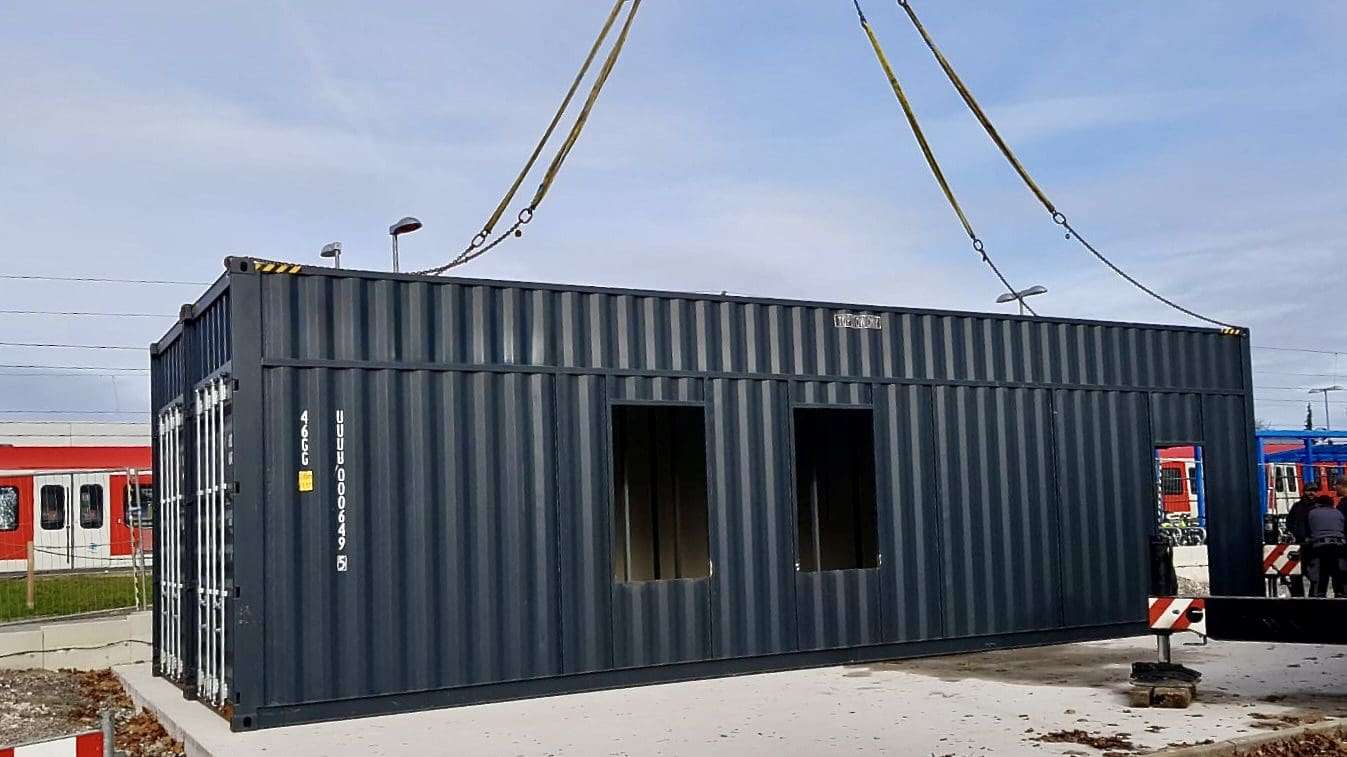
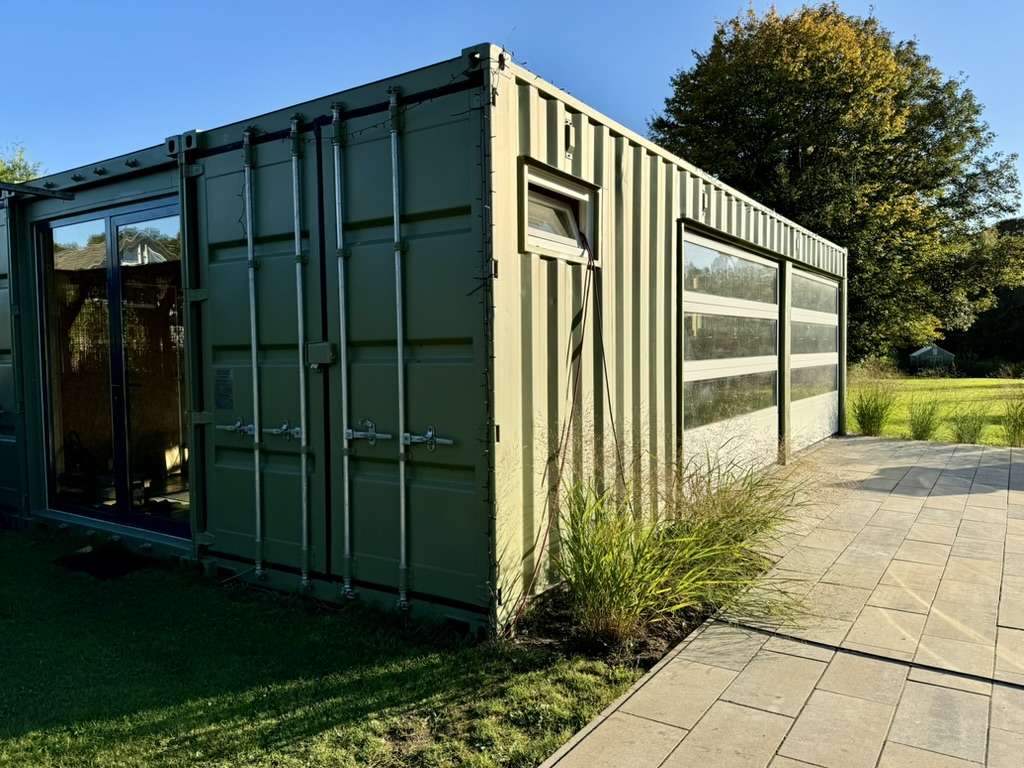
Shipping containers come in a handful of standard sizes: 10ft, 20ft, 40ft and 45ft, plus small 8ft units. All of them are 8 feet wide, and most come in standard or high cube height. This guide helps you choose the right size for storage, a workshop, an office or a home.
Andy compares the common container sizes and what each one realistically holds.
Listings
Every common size available now
From compact 10ft units to 40ft high cubes, with starting prices from current inventory at US depots. Pick a size and vetted local suppliers send delivered quotes for your ZIP code.
Starting prices at the depot, based on current inventory at major US container depots. Delivery, sales tax and local fees are extra and depend on your ZIP code. Your supplier confirms the final price in your quote.
9 US pallets, the contents of a 1 to 2 bedroom home
Home and jobsite storage, workshops, small offices
20ft high cube
20ft x 8ft x 9ft 6in
about 150 sq ft
Same floor as a 20ft, one foot more height
Tiny homes, offices, tall equipment
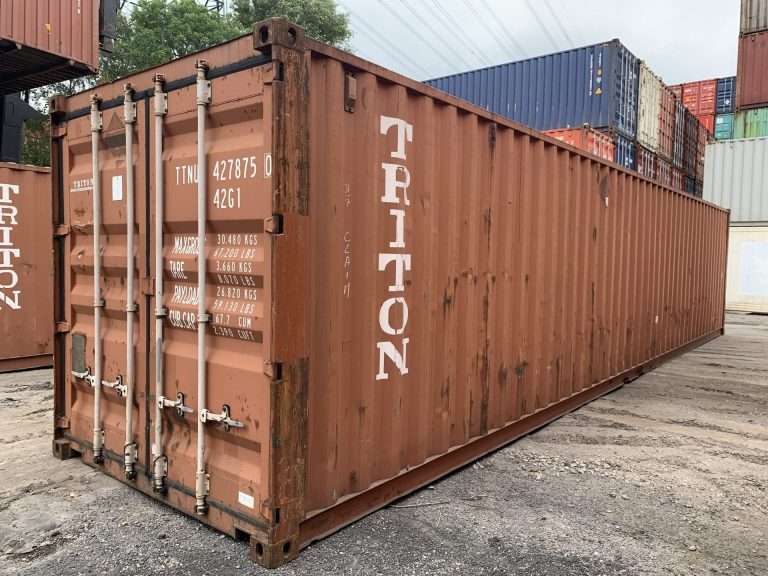
40ft standard
40ft x 8ft x 8ft 6in
about 300 sq ft
20 US pallets, the contents of a 3 to 4 bedroom home
Farm and business storage, vehicles
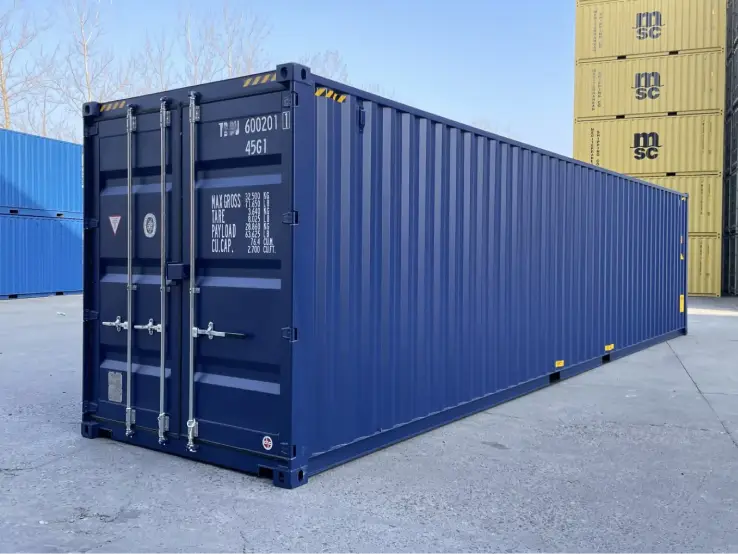
40ft high cube
40ft x 8ft x 9ft 6in
about 300 sq ft
Same floor as a 40ft, one foot more height
Container homes, large workshops, bulky goods
45ft high cube
45ft x 8ft x 9ft 6in
about 340 sq ft
The most floor space of any ISO container
Long items, maximum storage
Floor space is the inside floor, rounded. For inside measurements, door openings, tare weights and cubic capacity, see our guide to shipping container dimensions.
How to choose the right size
Start with what you need to store or build
Measure the largest items, count pallets or furniture, and leave room for an aisle if you need to reach everything. As a rule of thumb, a 20ft container holds the contents of a one or two bedroom home and a 40ft the contents of a three or four bedroom home. A car fits in a 20ft, but with little room to open the doors. For palletized goods, see how many pallets fit in a shipping container.
Check your site and delivery access
The container has to reach your site and fit on it. A tilt bed delivery needs about 60 feet of straight clearance for a 20ft and about 100 feet for a 40ft, plus room in front for the doors to swing open. On tight lots, a 10ft or 20ft is often the only size that works. Our guide to shipping container delivery explains what the truck needs.
Bigger is usually better value
A 40ft container gives twice the floor space of a 20ft but does not cost twice as much. At US depots today, a used cargo worthy 20ft starts at about $1,045 and a used cargo worthy 40ft at about $1,395. Delivery for a 40ft costs a little more, but per square foot the 40ft almost always wins if you have the space. Current figures for every size are on our shipping container prices page.
Standard or high cube
A high cube is one foot taller, 9ft 6in instead of 8ft 6in outside, which adds about 13 percent more volume. Choose a high cube for anything people will stand, live or work in, and for tall goods. For plain storage, a standard container is enough and costs a little less. Our guide to standard vs high cube containers compares both in detail.
One large container or two small ones
Two 20ft containers cost more than one 40ft, but they can be placed separately, fit through tighter access and give you two sets of doors. If you choose a 40ft and want to reach the back easily, ask for a double door container with doors at both ends.
Which size for which use?
Use
Usual size
Why
Home storage and decluttering
10ft or 20ft
Fits a driveway or backyard and holds one or two rooms, up to a small home
Moving or renovation storage
20ft
Holds the contents of a one or two bedroom home
Construction site storage
20ft or 40ft
20ft for tools and materials, 40ft for larger sites
Farm and ranch storage
40ft
Feed, equipment and vehicles at the best value per square foot
Small yards take 8ft or 10ft, 20ft is the most popular shed size
Less common sizes
8ft containers are the smallest common size and suit narrow side yards and small business premises. 10ft containers are mostly built new for storage or cut down from 20ft units, because they are rarely used in shipping.
45ft high cubes are the longest ISO containers and come up for sale in some port cities. 53ft domestic containers are 8ft 6in wide and are used by US rail and trucking companies. They occasionally become available for storage, but need even more delivery space.
Andy gives an overview of standard, high cube and special container types.
shipping-containers.com is a marketplace, not a dealer or a builder. Send one request with your ZIP code and the containers you need, and vetted local suppliers respond with delivered prices. One request, multiple quotes, no fees. Browse shipping containers for sale to compare grades, or tell us what you need and get quotes for the right size.
Measuring, delivery, pallets and modifications explained by Andy.
Shipping Container Homes in New York: Codes, NYC ADUs and Local Bans
How New York handles shipping container homes: the 2025 Uniform Code, NYC ancillary dwelling units, container laws in Buffalo, Sweden and Coxsackie, Adirondack Park review, septic and modular approval.
Shipping Container Homes in California: Codes, ADUs and City Rules
How California handles shipping container homes: the 2025 state codes, the LADBS conversion bulletin, San Diego rules, state ADU law, HCD approval for factory-built units and counties that allow containers only for storage.
Shipping Container Homes in Washington: Codes, ADUs and L&I Rules
How Washington handles shipping container homes: the 2021 state codes, Pierce, King and Ferndale container rules, the two-ADU state law, the energy code wall U-factor and the L&I factory-assembled program.
Container prices for your city, rule changes in your state, Andy’s newest videos and stock deals when we have them. One email a month, unsubscribe any time.
In global shipping, 40ft high cubes and 20ft standard containers are the most common. For buyers in the US, 20ft and 40ft containers are the easiest to find and the best value.
02
All standard ISO shipping containers are 8 feet wide outside, from 10ft to 45ft. Only the 53ft domestic containers used on US rail and trucks are wider, at 8ft 6in.
03
A 20ft container fits one car, though there is little room to open the doors inside. A 40ft fits two cars, or one car plus storage.
04
No. In the same grade, a 40ft usually costs only somewhat more than a 20ft, which makes it the better value per square foot if your site has room for it.
05
Yes. 8ft and 6ft containers are built for storage, mostly new. They cost more per square foot but fit where a larger container cannot be delivered.
Not sure which size you need? Ask Andy.
Tell Andy what you want to store or build, and get a straight recommendation on size, height and grade from someone with 15+ years in containers.
Use your phone camera to place the container on your property at its real size. You see how much room it takes and how it sits before you buy.
Size
Grade and color
Scan with your phoneThis page opens straight on your phone.
On your phone, tap “View full size”.
Move the phone slowly over the ground until it picks up the surface.
The container appears about 10 ft in front of you, doors facing you, so you see all of it straight away.
Drag with one finger to bring it closer or move it. Twist with two fingers to turn it. You can also walk around it.
Full-size view is not available on this device. Turn the 3D model above with your finger to see it from every side.
Works on iPhone 6s or newer with iOS 12 or later and on most Android phones from 2018 on with Google Play Services for AR. On other devices you can turn the 3D model above and look at it from every side.
External size 20ft: 20 ft × 8 ft × 8 ft 6 in (6.06 × 2.44 × 2.59 m), length × width × height
"*" indicates required fields
Read the latest posts
Shipping Container Homes in New York: Codes, NYC ADUs and Local Bans
How New York handles shipping container homes: the 2025 Uniform Code, NYC ancillary dwelling units, container laws in Buffalo, Sweden and Coxsackie, Adirondack Park review, septic and modular approval.
Shipping Container Homes in California: Codes, ADUs and City Rules
How California handles shipping container homes: the 2025 state codes, the LADBS conversion bulletin, San Diego rules, state ADU law, HCD approval for factory-built units and counties that allow containers only for storage.
Shipping Container Homes in Washington: Codes, ADUs and L&I Rules
How Washington handles shipping container homes: the 2021 state codes, Pierce, King and Ferndale container rules, the two-ADU state law, the energy code wall U-factor and the L&I factory-assembled program.