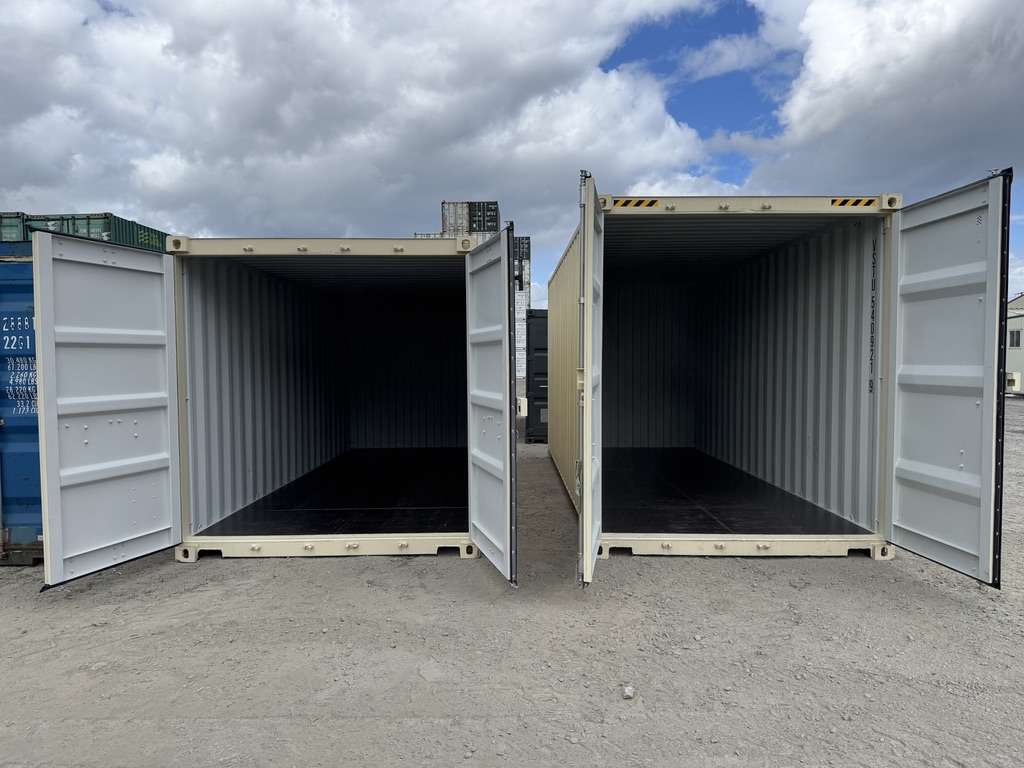
Real pallet counts for 10ft, 20ft and 40ft containers with 48 x 40 US pallets and Euro pallets, plus stacking and weight limits.
Search for this question and you will see the same numbers everywhere: 10 pallets in a 20ft container, 20 or 21 in a 40ft. They are close, but not quite right for the standard American pallet, and the difference matters when you plan storage racks or a full load.
Here is what actually fits on the floor, why, and when weight runs out before floor space does.
Key takeaways
A 20ft container fits 9 standard US pallets (48 x 40 in) on the floor when they are loaded square to the walls, and 11 Euro pallets.
A 40ft container fits 20 standard US pallets and 24 Euro pallets on the floor.
A 40ft high cube has the same floor as a standard 40ft, so the count is the same. The extra foot of height helps with double stacking.
Double stacking only works if the loads are stackable and the total stays within height and weight limits.
On US roads, legal weight limits usually cap a container load long before the payload on the data plate.
Andy compares 10ft, 20ft and 40ft containers and how much each size realistically holds.
Pallets per container at a glance
Container
Internal floor (L x W)
US pallets 48 x 40 in
Euro pallets 1200 x 800 mm
10ft
about 9ft 3in x 7ft 8in (2.83 x 2.35 m)
4
5
20ft
about 19ft 4in x 7ft 8in (5.90 x 2.35 m)
9
11
40ft and 40ft high cube
about 39ft 5in x 7ft 8in (12.03 x 2.35 m)
20
24
Counts are for one layer on the floor, with pallets loaded square to the walls and no overhang. Pallets that overhang slightly or are a little undersized can add one, which is where the 10 and 21 you see elsewhere come from. If your plan depends on that extra pallet, measure your actual pallets first.
Why 48 x 40 pallets fit 9 in a 20ft, not 10
The standard US pallet, often called a GMA pallet, measures 48 x 40 inches. The inside of a standard container is about 92 inches wide. Two pallets side by side with the 48 inch side across would need 96 inches, which does not fit. Two pallets with the 40 inch side across take 80 inches, which fits, but then every pallet uses 48 inches of length.
The most efficient layout combines both: one row of pallets turned with the 48 inch side across, next to a row with the 40 inch side across. Together that is 88 inches wide. Along the roughly 232 inches of floor in a 20ft, the turned row fits 5 pallets and the other row fits 4. That makes 9, and the space left over is too small for a tenth.
In a 40ft, with about 474 inches of floor, the same layout gives 11 plus 9, so 20 pallets.
Euro pallets and other pallet sizes
Euro pallets (1200 x 800 mm, about 47 x 31.5 in) are narrower and use the floor more efficiently. A 20ft takes 11 and a 40ft takes 24. A 25th fits in a 40ft on paper, but with almost no room to spare, so most loaders plan for 24.
Other common US formats behave differently. 42 x 42 inch pallets fit two across, so you get 10 in a 20ft and 22 in a 40ft. Square 48 x 48 inch pallets, common for drums, fit only one across: 4 in a 20ft and 9 in a 40ft.
Double stacking and high cube containers
Stacking doubles the count only when the goods and the pallets can carry the load above them. A standard container has about 7ft 10in (2.39 m) of inside height, but the door opening is a few inches lower, so two stacked loads together need to stay under about 7ft 5in to get through the doors.
A high cube container adds about a foot of internal height, with a door opening of roughly 8ft 5in (2.58 m). That makes double stacking much easier for bulky, lightweight goods, without changing the floor count. For the full set of measurements, see the shipping container dimensions guide.
Weight: the limit you hit first with heavy goods
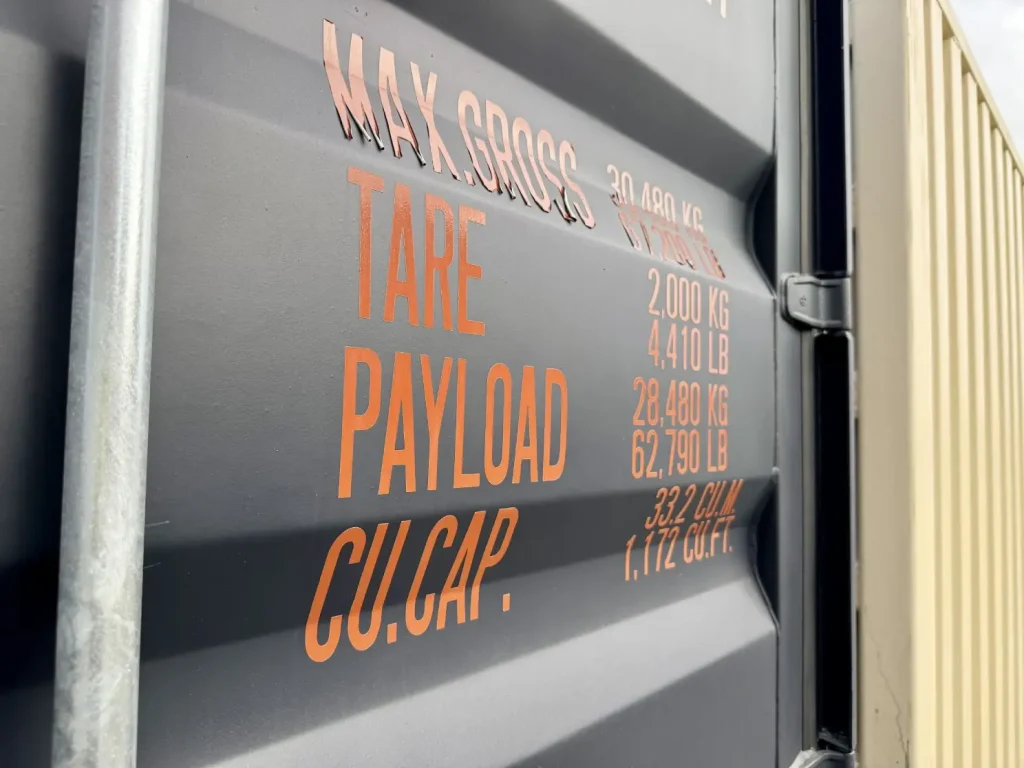
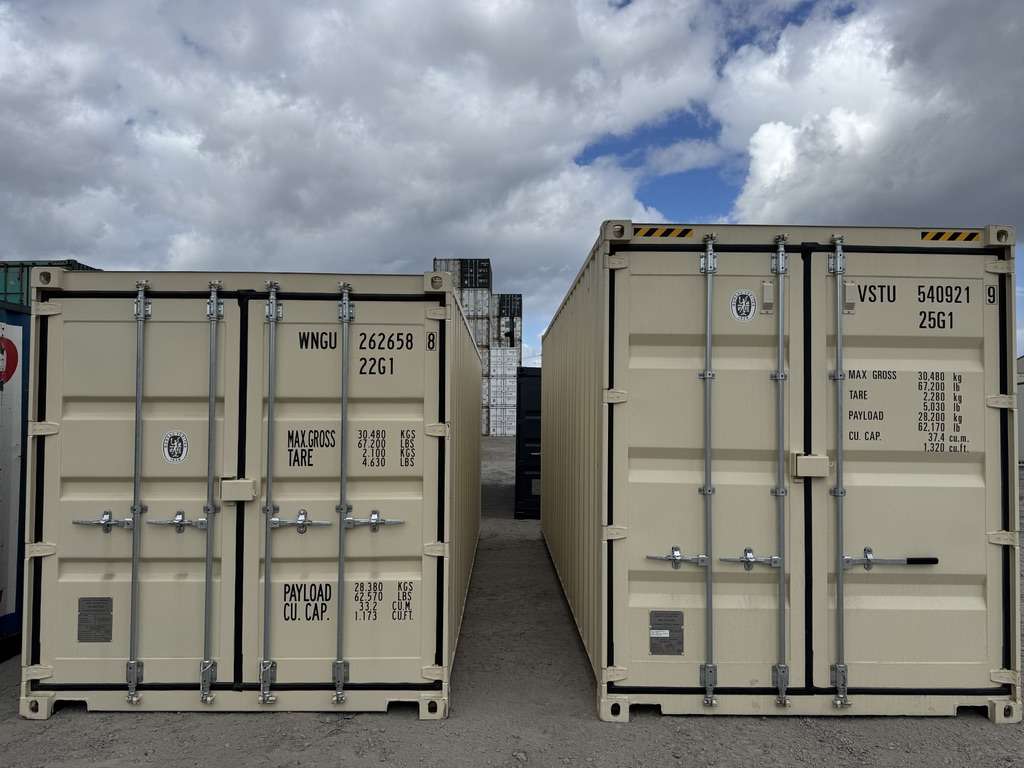
Every container has a data plate on the door that lists its maximum gross weight, tare weight and payload. A standard 20ft is typically rated for a maximum gross weight of 67,200 lb (30,480 kg), which leaves well over 50,000 lb of payload on paper.
On American roads the practical limit is lower. The federal limit for trucks on the Interstate system is 80,000 lb gross, covering truck, chassis, container and cargo together, and some states and routes are stricter. In practice that keeps road loads well below the payload on the plate. With heavy goods such as tile, stone, metal or liquids, you run out of weight long before you run out of floor. Ask your carrier for the legal cargo weight on your route before you load.
For storage on your own property, road limits do not apply, but common sense does: spread very heavy loads evenly across the floor instead of concentrating them in one spot.
Planning pallet storage in a container
Leave an aisle if you need to reach every pallet with a pallet jack. That often costs you one row.
Count the racking, not just the pallets. Racking uprights and beams take floor space and height.
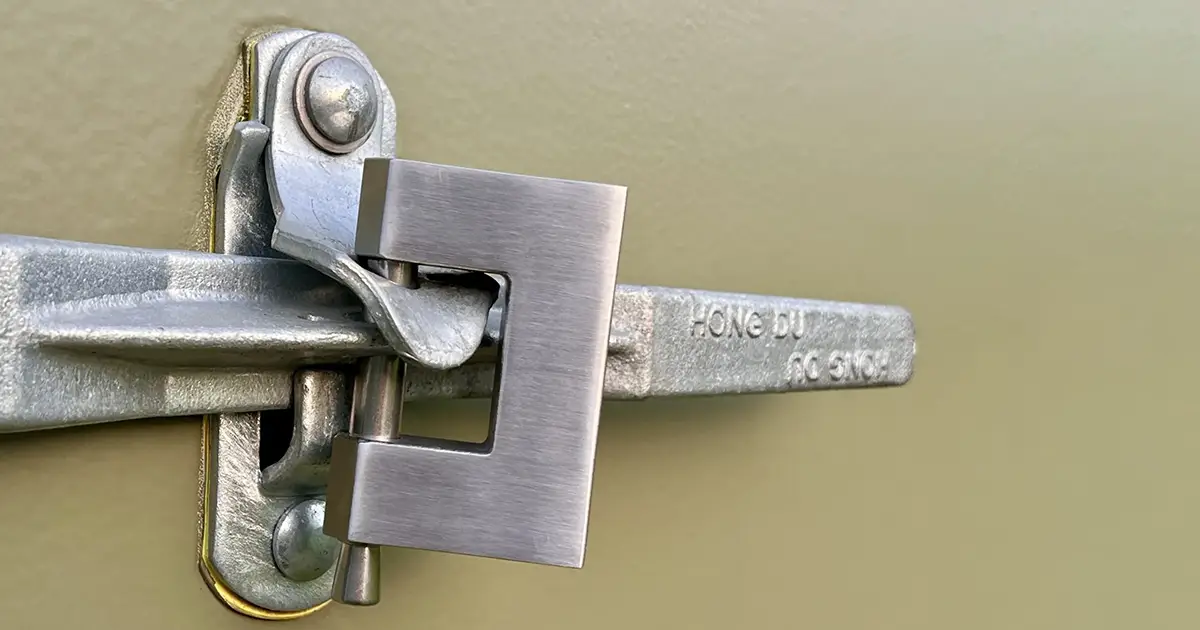
Mind the doors: the door opening is about 7ft 8in wide, slightly narrower than the inside.
Need forklift access along the length? An open side container lets you load from the side instead of only through the end doors.
Frequently asked questions
How many pallets fit in a 20ft container?
9 standard US pallets (48 x 40 in) on the floor, or 11 Euro pallets. With double stacking, up to twice that, as long as the loads are stackable and stay within height and weight limits.
How many pallets fit in a 40ft container?
20 standard US pallets or 24 Euro pallets on the floor. A 40ft high cube has the same floor area, so the floor count is the same, with more height for stacking.
How many pallets fit in a 10ft container?
4 standard US pallets or 5 Euro pallets. A 10ft shipping container works well for a small amount of palletized stock or equipment.
Why do some sources say 10 pallets fit in a 20ft?
Because the 48 x 40 inch pallet almost fits 10 in a 20ft. Loaded square to the walls with no overhang, the geometry allows 9. Slightly smaller pallets or a little overhang can make 10 work, but it is not a number to count on without measuring.
Know your pallet count and ready for a container? Compare 20ft shipping containers and 40ft shipping containers, or see what is available in used shipping containers. shipping-containers.com is an independent platform, not a dealer. Tell us your ZIP code, the container you need and a few details about your site once, and vetted local suppliers respond with delivered prices. One request, multiple quotes, no fees.
Container prices for your city, rule changes in your state, Andy’s newest videos and stock deals when we have them. One email a month, unsubscribe any time.
Andreas Atrott is the founder of CUBX - shipping-containers.com and its sister sites shipping-containers.com.au in Australia and containerbasis.de in Germany. He has spent more than 15 years in the container industry, across sales, modifications, and custom builds, and shares what he has learned on his YouTube channel, Andy Knows Containers. That practical experience shapes how the platform helps US buyers match the right container to their project.
A shipping container is the ultimate blank canvas. The design is clever, but at its core a container is a big steel box you can adapt almost any way you...
A standard shipping container, but taller: the premise behind ‘high cube’ units might be simple, but it makes this type of container particularly well suited to a range of applications....
Shipping containers are good for far more than moving freight across oceans. With the right accessories, you can turn a plain steel box into a storage unit, a site office,...
February 17, 2026
About Us
shipping-containers.com is an independent platform that makes buying a shipping container simple and transparent. Tell us what you need once, and vetted local suppliers across the US send you their quotes. One request, multiple quotes, no fees.
Got questions? Let’s chat.
We are here to make container buying simple. Talk to a real expert, get advice, and find your perfect fit, fast.
Hi, I'm Andy. 15+ years in containers. How can I help?
Shipping Container Homes in New York: Codes, NYC ADUs and Local Bans
How New York handles shipping container homes: the 2025 Uniform Code, NYC ancillary dwelling units, container laws in Buffalo, Sweden and Coxsackie, Adirondack Park review, septic and modular approval.
Shipping Container Homes in California: Codes, ADUs and City Rules
How California handles shipping container homes: the 2025 state codes, the LADBS conversion bulletin, San Diego rules, state ADU law, HCD approval for factory-built units and counties that allow containers only for storage.
Shipping Container Homes in Washington: Codes, ADUs and L&I Rules
How Washington handles shipping container homes: the 2021 state codes, Pierce, King and Ferndale container rules, the two-ADU state law, the energy code wall U-factor and the L&I factory-assembled program.