Can you bury a shipping container as a bunker or storm shelter? Soil loads, groundwater, rust and air explained, plus what a safe underground shelter needs instead.
Burying a shipping container looks like a quick and affordable way to build a bunker or a storm shelter. It is one of the most common container ideas and one of the most dangerous. A container is built to carry heavy cargo inside and to be stacked at its corners. It is not built to hold back soil and groundwater, or to carry the weight of earth on its roof.
This guide explains why a buried container fails, what an underground shelter needs instead, and how a container can still be useful in a preparedness plan.
Key takeaways
A container on its own cannot be buried safely. The roof and walls are not designed for soil loads.
Three feet of soil on the roof of a 40ft container weighs roughly 100,000 pounds.
Underground, the steel stays cold and damp, and rust works from the outside where nobody sees it.
A real underground shelter needs an engineered structure, usually reinforced concrete. A container can only be the interior.
For tornado protection, look for a safe room or storm shelter built to the ICC 500 standard.
Why a buried container collapses
A container carries its loads through the corner posts and the steel rails along the top and the bottom. The walls are corrugated steel about 2 millimeters thick, roughly 14 gauge. They stiffen the box, but they are not a load-bearing wall in the sense a builder means.
Moist soil weighs roughly 100 to 120 pounds per cubic foot. Three feet of cover on the roof of a 40ft container comes to roughly 100,000 pounds, and wet soil weighs more. The container roof is tested for a few hundred pounds on a small area, about what a worker standing on it weighs.
The walls are rated for cargo pressing outward: the side walls for 60 percent of the payload spread evenly, the end walls for 40 percent. Soil pushes inward, it never lets up, and the pressure grows with depth and when the ground is wet. Walls bow, welds crack and the roof sags, often months after the container was buried.
Water, rust and condensation
Underground, the steel stays cold and the soil around it stays damp. Every scratch, weld and edge starts to rust, and on the outside nobody sees it until it comes through. Inside, warm air meets cold walls and condenses, so the interior is wet even when no water gets in. Groundwater adds pressure from below and can lift a container that is not anchored.
Andy shows how moisture trapped against container steel causes hidden rust, the same process that eats a buried container from the outside.
Air and a second way out
An underground room needs ventilation designed for the number of people inside and the time they will spend there. Carbon dioxide builds up quickly in a closed steel box, and generators, heaters and stoves add carbon monoxide. It also needs a second way out in case the main entrance is blocked by debris or water.
What it takes to build an underground shelter properly
If you want an underground shelter, have a structural engineer design it for your soil, your groundwater and the burial depth. In practice that means reinforced concrete walls and a concrete roof slab that carry the soil, waterproofing on the outside, drainage around the structure, engineered ventilation and an emergency exit.
Some builders place a container inside such a concrete shell as a ready-made interior. At that point the container is the cheapest part of the project, and the concrete does all the structural work. Shelters made for burial use thicker steel or curved shapes that carry soil loads, and come with engineering for a specific depth. A standard shipping container does neither.
Storm shelters and safe rooms
For protection from tornadoes and hurricanes, US building codes refer to the ICC 500 standard for storm shelters, and FEMA publishes guidance for residential safe rooms in FEMA P-320. A shelter built to these standards has been tested against wind-borne debris, for tornado shelters a 15-pound two-by-four striking at tornado speed. A standard shipping container has not, so do not rely on one as a storm shelter unless it has been engineered and tested for that purpose.
How a container can help instead
Above ground, on a proper foundation and anchored, a container is excellent secure storage for supplies, water, tools and a generator. It is dry if it is ventilated, it locks well and it can be moved later. Our guide to shipping container foundations explains how to set it up, and our guide to used shipping containers explains the grades.
Andy explains why containers get wet inside and how ventilation keeps stored supplies dry.
Listings
Containers for secure storage above ground
Containers for storing supplies, tools and equipment, with current starting prices at US depots. Vetted local suppliers quote delivery to your ZIP code.
Starting prices at the depot, based on current inventory at major US container depots. Delivery, sales tax and local fees are extra and depend on your ZIP code. Your supplier confirms the final price in your quote.
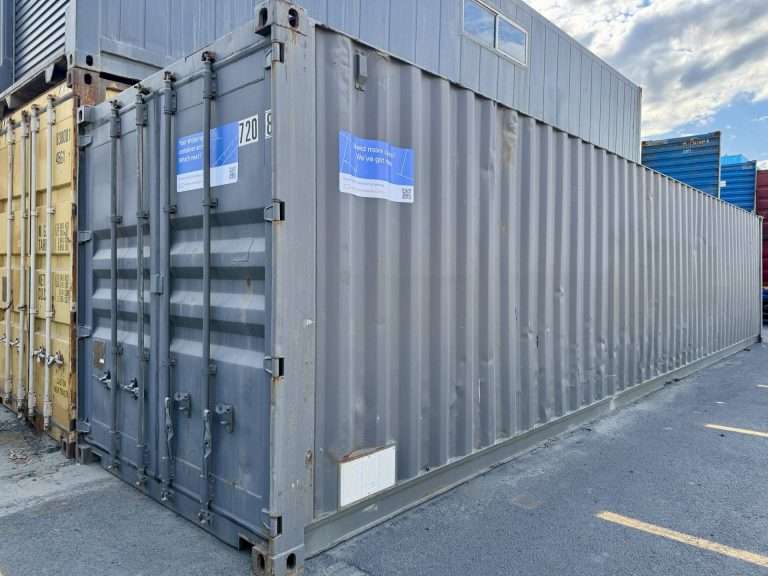
Need more room? A 40ft shipping container gives twice the floor space of a 20ft for not much more money.
Frequently asked questions
Can you bury a shipping container?
Not safely on its own. The roof and walls are not designed for the weight and pressure of soil and groundwater. An underground shelter needs an engineered structure, usually reinforced concrete, that carries those loads.
How deep can you bury a shipping container?
There is no safe depth for a container without a separate structure. Even partial burial puts soil pressure on the walls.
Can I reinforce a container myself to bury it?
Welded steel ribs inside help, but the design has to be engineered for your soil, groundwater and depth. Most engineers end up specifying a concrete structure, with the container as the interior at most.
Can a shipping container be a tornado shelter?
Only if it has been engineered and tested to the ICC 500 standard for storm shelters. A standard container is not, and an unanchored one can be moved by strong winds.
Do I need a permit for an underground shelter?
In most places, yes. An underground structure usually needs a building permit and engineered drawings. Check with your local building department.
shipping-containers.com is a marketplace, not a dealer or a builder. Send one request with your ZIP code and the containers you need, and vetted local suppliers respond with delivered prices. One request, multiple quotes, no fees. Compare sizes and grades on shipping containers for sale.
Container prices for your city, rule changes in your state, Andy’s newest videos and stock deals when we have them. One email a month, unsubscribe any time.
Andreas Atrott is the founder of CUBX - shipping-containers.com and its sister sites shipping-containers.com.au in Australia and containerbasis.de in Germany. He has spent more than 15 years in the container industry, across sales, modifications, and custom builds, and shares what he has learned on his YouTube channel, Andy Knows Containers. That practical experience shapes how the platform helps US buyers match the right container to their project.
A shipping container is the ultimate blank canvas. The design is clever, but at its core a container is a big steel box you can adapt almost any way you...
A standard shipping container, but taller: the premise behind ‘high cube’ units might be simple, but it makes this type of container particularly well suited to a range of applications....
Shipping containers are good for far more than moving freight across oceans. With the right accessories, you can turn a plain steel box into a storage unit, a site office,...
February 17, 2026
About Us
shipping-containers.com is an independent platform that makes buying a shipping container simple and transparent. Tell us what you need once, and vetted local suppliers across the US send you their quotes. One request, multiple quotes, no fees.
Got questions? Let’s chat.
We are here to make container buying simple. Talk to a real expert, get advice, and find your perfect fit, fast.
Hi, I'm Andy. 15+ years in containers. How can I help?
Shipping Container Homes in New York: Codes, NYC ADUs and Local Bans
How New York handles shipping container homes: the 2025 Uniform Code, NYC ancillary dwelling units, container laws in Buffalo, Sweden and Coxsackie, Adirondack Park review, septic and modular approval.
Shipping Container Homes in California: Codes, ADUs and City Rules
How California handles shipping container homes: the 2025 state codes, the LADBS conversion bulletin, San Diego rules, state ADU law, HCD approval for factory-built units and counties that allow containers only for storage.
Shipping Container Homes in Washington: Codes, ADUs and L&I Rules
How Washington handles shipping container homes: the 2021 state codes, Pierce, King and Ferndale container rules, the two-ADU state law, the energy code wall U-factor and the L&I factory-assembled program.