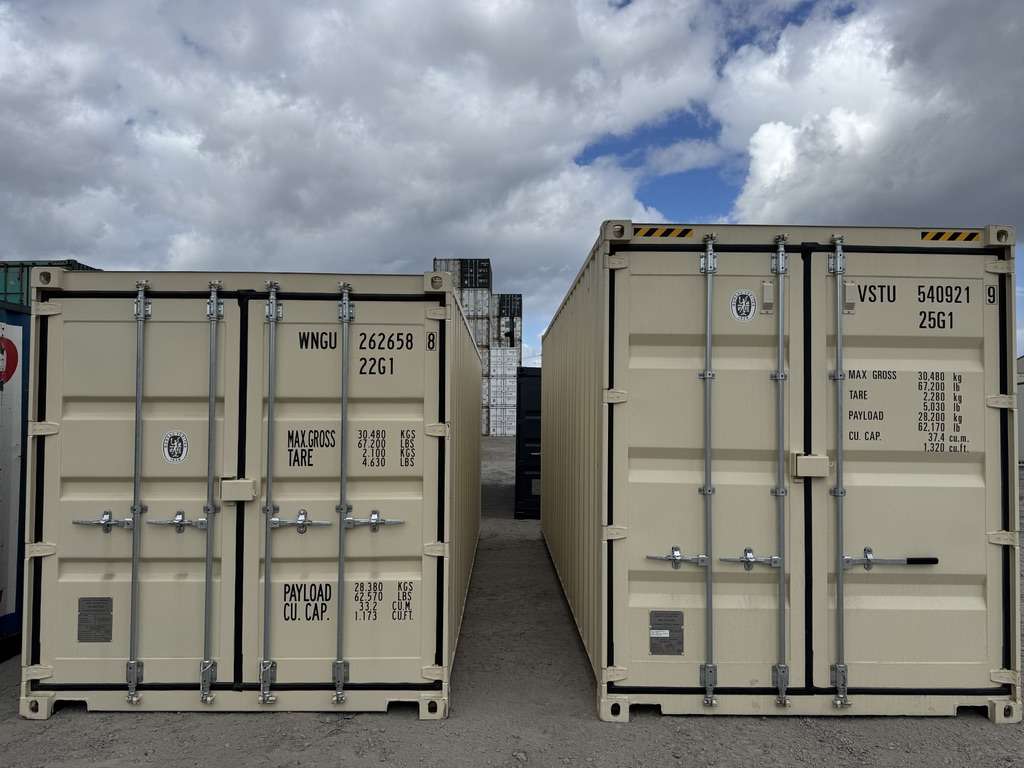
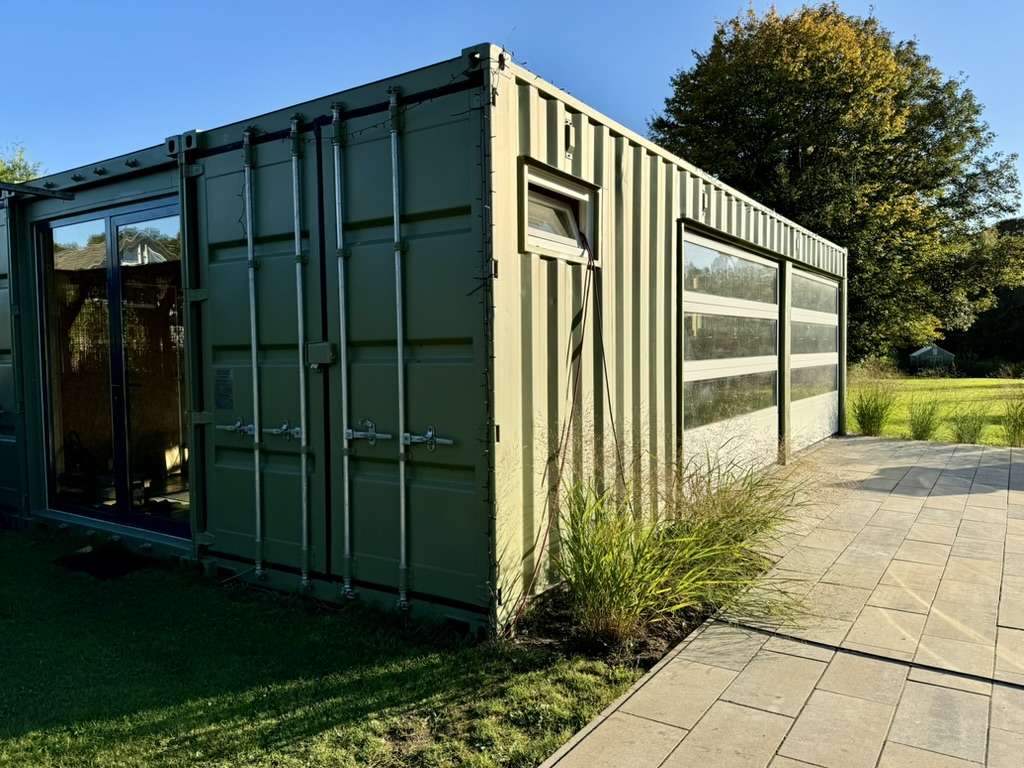
Truck types, clearance, ground prep and what happens on delivery day: everything you need to get a container placed right the first time.
Buying the container is the easy part. Getting a 20ft or 40ft steel box placed exactly where you want it, on ground that can carry it, with a truck that can actually reach the spot, is where projects get delayed.
This guide explains how shipping container delivery works in the US: which truck you will get, how much room the driver needs, how to prepare your site and what drives the delivery cost. Prepare once, and delivery day takes minutes instead of turning into a second trip.
Key takeaways
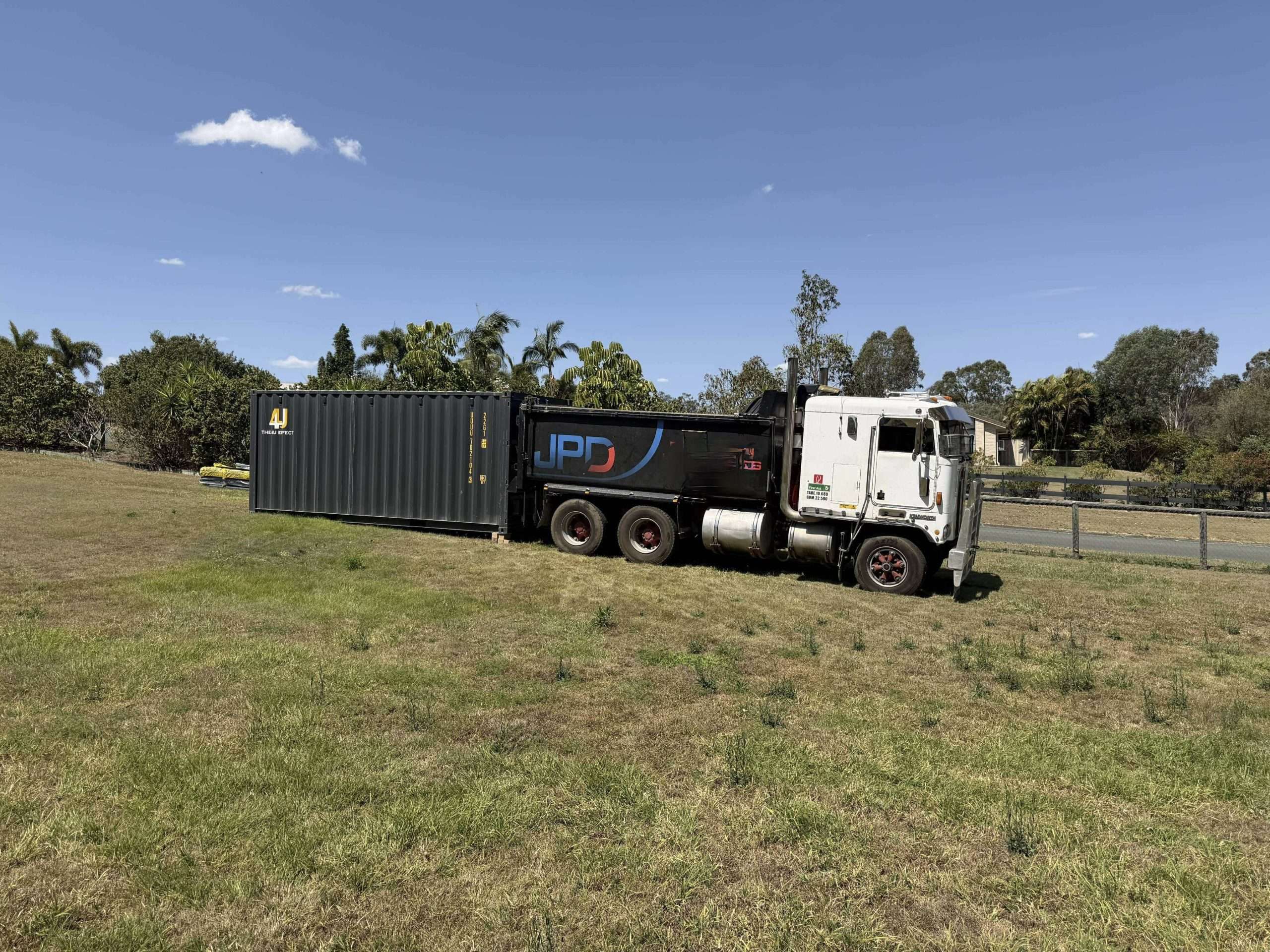
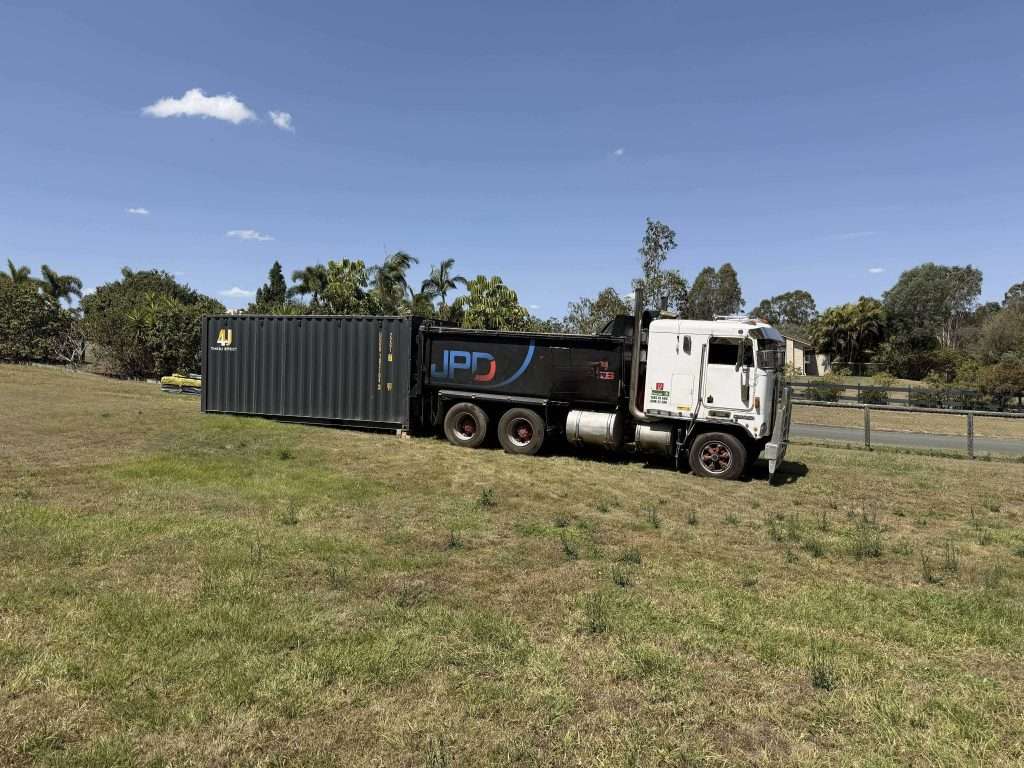
Most containers arrive on a tilt bed truck or trailer that slides the container off the back onto your prepared spot. No crane needed.
Plan about 60 feet of straight, clear access for a 20ft container and about 100 feet for a 40ft.
Keep about 14 feet of clear width and height along the route. The container rises much higher than that while it slides off.
Firm, level, dry ground is the most important part of the prep. Soft lawns and fresh fill are where trucks get stuck.
Delivery cost depends mostly on distance from the depot, truck type and site access. Always compare delivered prices.
Which truck will deliver your container?
There are four common delivery methods in the US. Your supplier chooses based on container size, distance and what your site allows.
Method
Container sizes
How it unloads
Best for
Tilt bed truck (rollback)
Up to 20ft
The bed tilts and the container slides off the back
Most 10ft and 20ft deliveries to homes and businesses
Tilt bed trailer
Up to 40ft and 45ft
The trailer tilts and the container slides off the back
40ft and high cube containers, or two smaller units in one trip
Flatbed truck
Up to 45ft
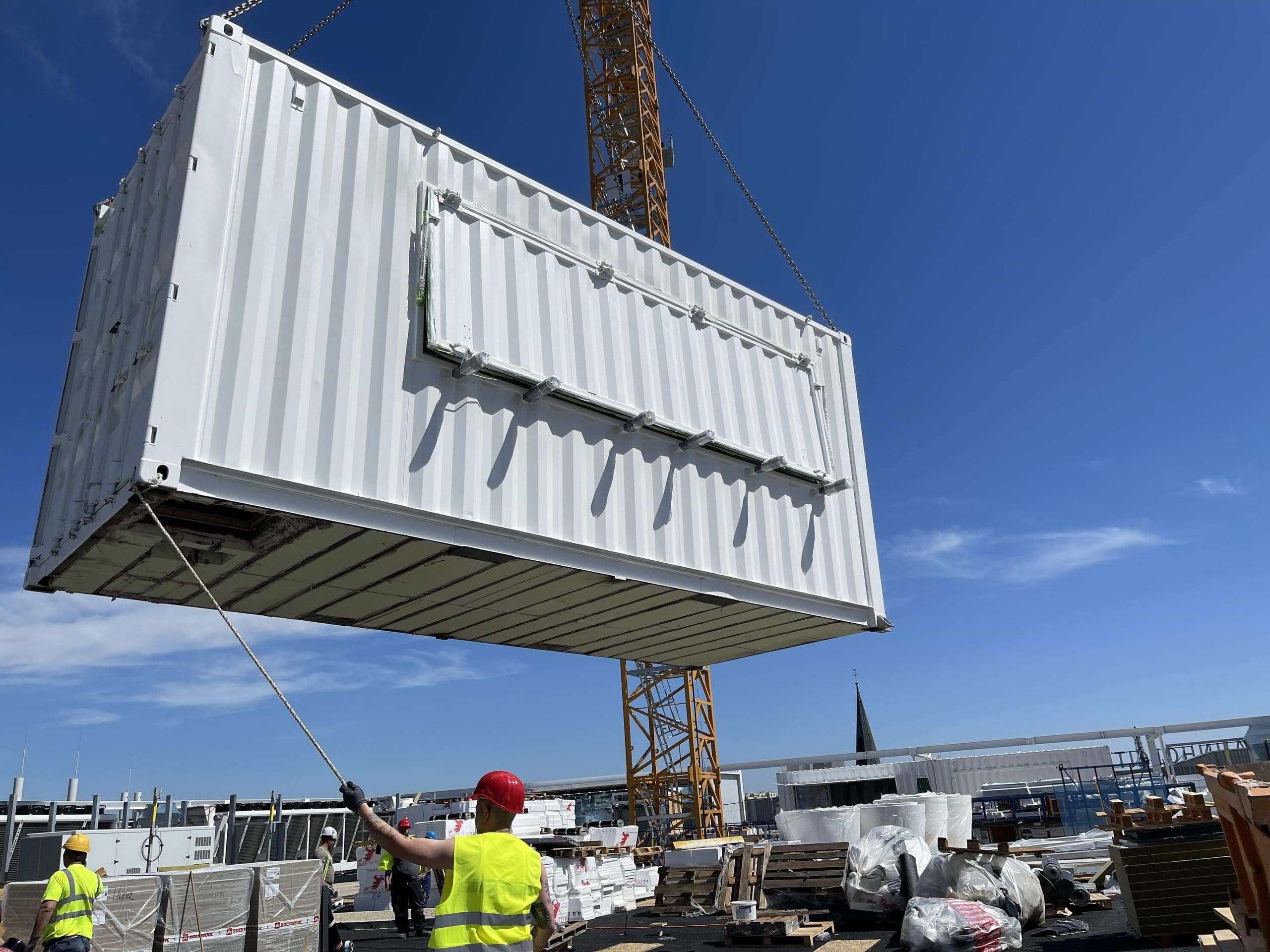
The container stays level and is lifted off by a forklift or crane on site
Long distance deliveries and sites with their own lifting equipment
Crane truck
Usually up to 20ft
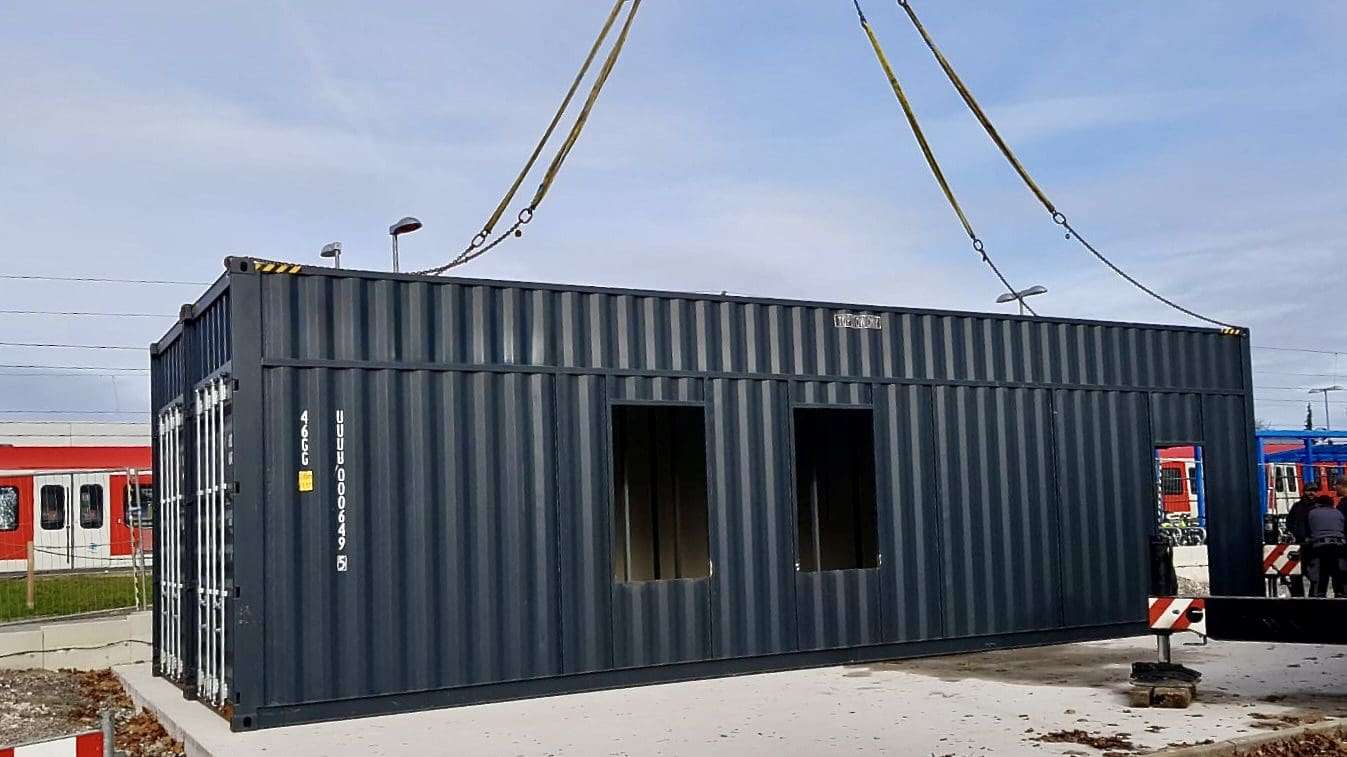
An onboard crane lifts the container and sets it down beside the truck
Placing over a fence or wall, onto a platform or on top of another container
For most private buyers, a tilt bed delivery is the default. It is quick, needs no equipment on your side and puts the container straight onto your foundation. If your site has a tight entrance, a slope or overhead lines, tell your supplier before you order so they can send the right truck.
How much space does the delivery truck need?
A tilt bed delivery needs more room than most people expect. The truck backs up in line with the drop spot, tilts the bed and drives forward slowly while the container slides off the back. So the truck needs a straight run in line with where the container will sit, plus room to pull away.
Straight clearance: about 60 feet for a 20ft container and about 100 feet for a 40ft, measured in a straight line from the drop spot. The truck cannot turn while it unloads.
Width: about 14 feet of clear width along the access route and at the drop spot. Gates, fence posts and parked cars are the usual problems.
Height: about 14 feet of clear height along the route. While it unloads, the front of the container rises much higher, so look up for branches, eaves and power or phone lines above the spot.
Turning room: the truck has to get in and back out. A tight cul-de-sac or a narrow private road may need a smaller truck or a different plan.
Not sure your site works? Measure the access with a tape and take photos of the route and the drop spot from the road. Suppliers see sites like yours every day and can tell you quickly whether a standard delivery works.
How to prepare your site
The container will sit on your ground for years, so the spot you prepare now matters more than the delivery itself.
1. Check the rules first
Many cities, counties and HOAs regulate where a container can sit, how long it can stay and whether it needs a permit. Setbacks from property lines and visibility from the street are the common issues. A quick call to your local planning or zoning office before delivery is far cheaper than moving the container afterward.
2. Pick firm, level ground
The drop spot and the path the truck uses should be firm, dry and as level as possible. Concrete, asphalt and compacted gravel are ideal. Soft lawn, fresh fill, sand and mud are where delivery trucks get stuck, and most of them are not four-wheel drive. After heavy rain, it is often smarter to move the delivery date than to risk your lawn and the truck.
3. Prepare the foundation
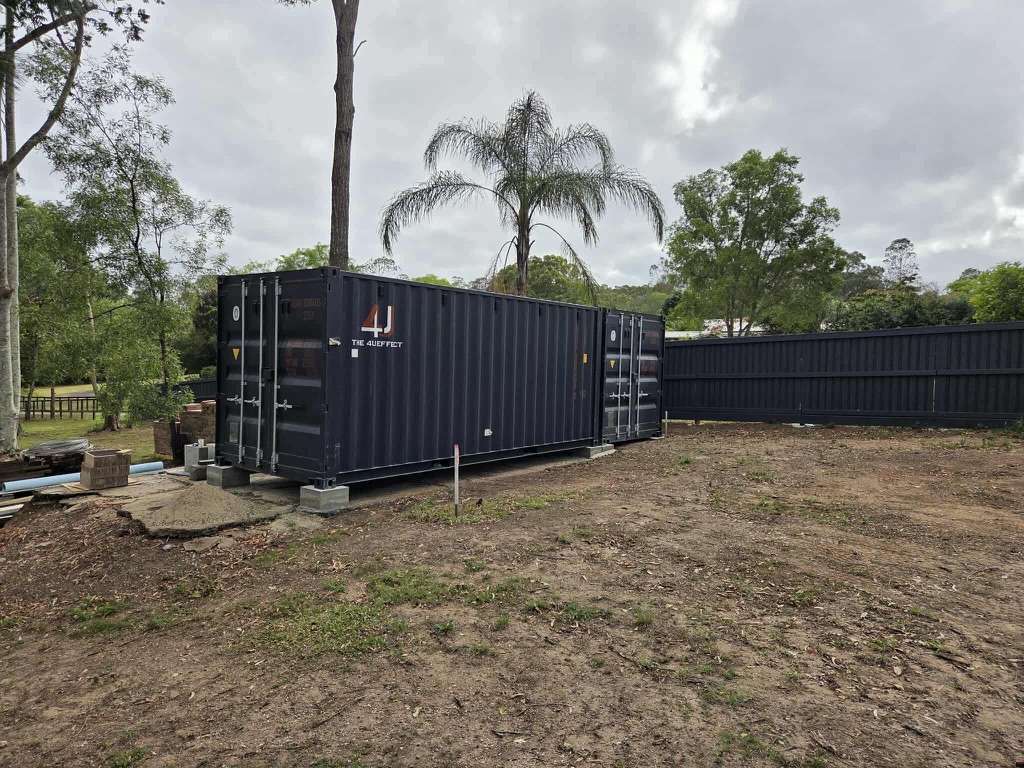
A container should rest level on its four corner castings, with air underneath. Solid concrete blocks, railroad ties or a gravel pad all work for storage. Our guide to shipping container foundations compares the options. Have the blocks in place and level before the truck arrives so the driver can set the container straight onto them.
4. Decide which way the doors face
Tell your supplier whether the doors should face the truck cab or the rear of the truck. On a tilt bed delivery the container comes off the back, so the door direction is decided when it is loaded at the depot, not on your site. Leave enough room in front of the doors to swing them fully open.
5. Clear the route and mark the spot
Move vehicles, trailers and anything else on the access path, and trim low branches. Mark the corners of the drop spot with stakes or spray paint so there is no guessing on the day.
What happens on delivery day
Your supplier or the trucking company confirms a delivery window, usually a day ahead, and the driver calls before arrival.
Someone who knows the plan should be on site to show the driver the drop spot and the door direction.
The driver checks the access and the spot, backs the truck into line and tilts the bed or trailer.
The container slides off in a controlled way as the truck creeps forward. The rear end touches down first, then the front settles as the truck pulls clear.
With clear access, the drop itself is usually done well within an hour.
Before the driver leaves, walk around the container. Check that the doors open, close and latch properly, look at the roof and floor from inside and note any damage on the delivery paperwork. Photos with a timestamp make any later conversation with the supplier much easier.
What drives the cost of delivery?
Delivery is priced separately from the container, and it can make a real difference to your total. Typical prices by distance are in our guide to shipping container transport cost. The main factors are:
Distance from the depot: many suppliers charge a base fee plus a rate per mile beyond a set radius. Depots near ports and rail hubs, such as in Houston, Dallas and Miami, usually mean shorter trips.
Truck type: a tilt bed trailer for a 40ft, a flatbed with crane offload or a crane truck costs more than a standard 20ft tilt bed delivery.
Site access: tight access, waiting time or a second attempt because the site was not ready all add cost.
Extras: multiple containers, exact placement on piers or a fixed delivery time.
About 60 feet (20ft container) or 100 feet (40ft container) of straight access measured
About 14 feet of clear width and height along the route
Firm, level ground and foundation blocks in place
Door direction agreed with the supplier
Drop spot marked, route cleared and someone on site
Frequently asked questions
Can a shipping container be delivered to my backyard?
Often, yes, if the truck can get a straight run to the spot. Backyards behind a house usually fail on width, overhead lines or soft ground. In that case a crane truck may be able to lift the container over a fence or wall, or you can place it in the driveway or the front of the lot where local rules allow.
How long does shipping container delivery take?
Lead times depend on availability and distance. Local deliveries from stock are often scheduled within days, while remote areas or specific units can take longer. Ask for a delivery window when you request quotes.
Do I need to be there for the delivery?
It is strongly recommended. The driver needs someone to confirm the exact spot and door direction. If nobody is there, the driver has to make that call, or the delivery may be rescheduled.
Can the driver place the container exactly where I want it?
With straight access and firm ground, drivers can usually place a container very close to your marks. It can only go where the truck can line up with it, so plan the spot with the truck’s path in mind.
Can a container be moved after delivery?
Yes, but it takes another truck and another delivery fee. It pays to get the spot right the first time. If you are still choosing a size, compare the 20ft shipping container and the 40ft shipping container with your site in mind.
shipping-containers.com is an independent platform, not a dealer. Tell us your ZIP code, the container you need and a few details about your site once, and vetted local suppliers respond with delivered prices. One request, multiple quotes, no fees. To see the depot hubs closest to you, use our shipping containers near me finder.
Container prices for your city, rule changes in your state, Andy’s newest videos and stock deals when we have them. One email a month, unsubscribe any time.
Andreas Atrott is the founder of CUBX - shipping-containers.com and its sister sites shipping-containers.com.au in Australia and containerbasis.de in Germany. He has spent more than 15 years in the container industry, across sales, modifications, and custom builds, and shares what he has learned on his YouTube channel, Andy Knows Containers. That practical experience shapes how the platform helps US buyers match the right container to their project.
A shipping container is the ultimate blank canvas. The design is clever, but at its core a container is a big steel box you can adapt almost any way you...
A standard shipping container, but taller: the premise behind ‘high cube’ units might be simple, but it makes this type of container particularly well suited to a range of applications....
Shipping containers are good for far more than moving freight across oceans. With the right accessories, you can turn a plain steel box into a storage unit, a site office,...
February 17, 2026
About Us
shipping-containers.com is an independent platform that makes buying a shipping container simple and transparent. Tell us what you need once, and vetted local suppliers across the US send you their quotes. One request, multiple quotes, no fees.
Got questions? Let’s chat.
We are here to make container buying simple. Talk to a real expert, get advice, and find your perfect fit, fast.
Hi, I'm Andy. 15+ years in containers. How can I help?
Shipping Container Homes in New York: Codes, NYC ADUs and Local Bans
How New York handles shipping container homes: the 2025 Uniform Code, NYC ancillary dwelling units, container laws in Buffalo, Sweden and Coxsackie, Adirondack Park review, septic and modular approval.
Shipping Container Homes in California: Codes, ADUs and City Rules
How California handles shipping container homes: the 2025 state codes, the LADBS conversion bulletin, San Diego rules, state ADU law, HCD approval for factory-built units and counties that allow containers only for storage.
Shipping Container Homes in Washington: Codes, ADUs and L&I Rules
How Washington handles shipping container homes: the 2021 state codes, Pierce, King and Ferndale container rules, the two-ADU state law, the energy code wall U-factor and the L&I factory-assembled program.