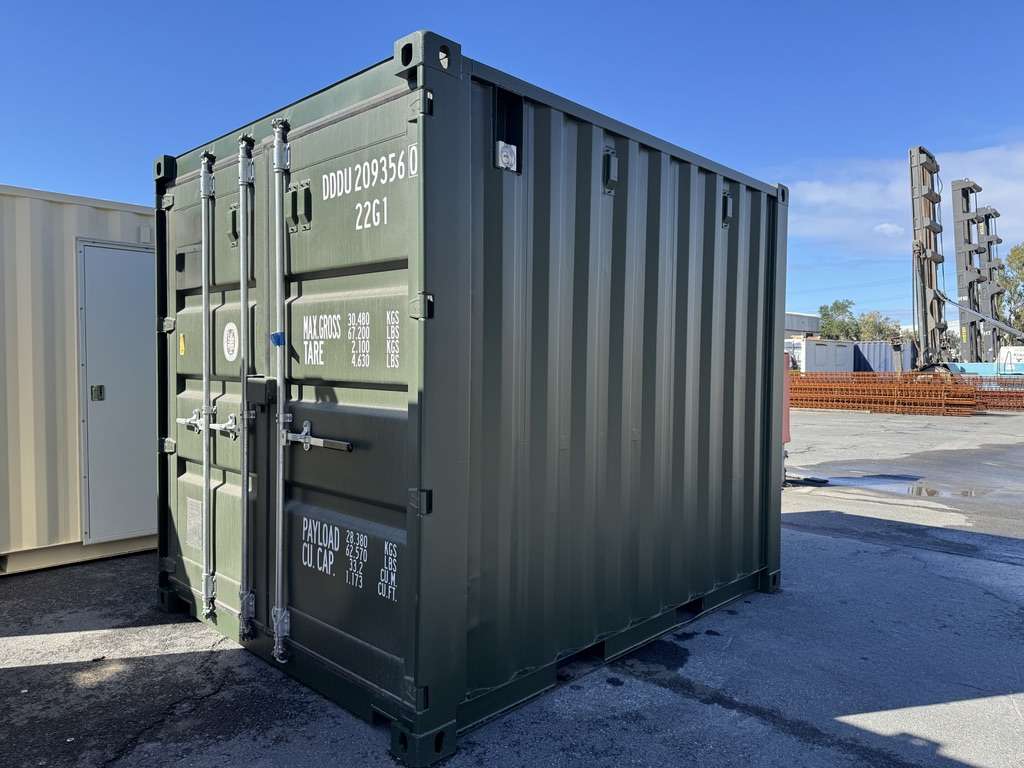
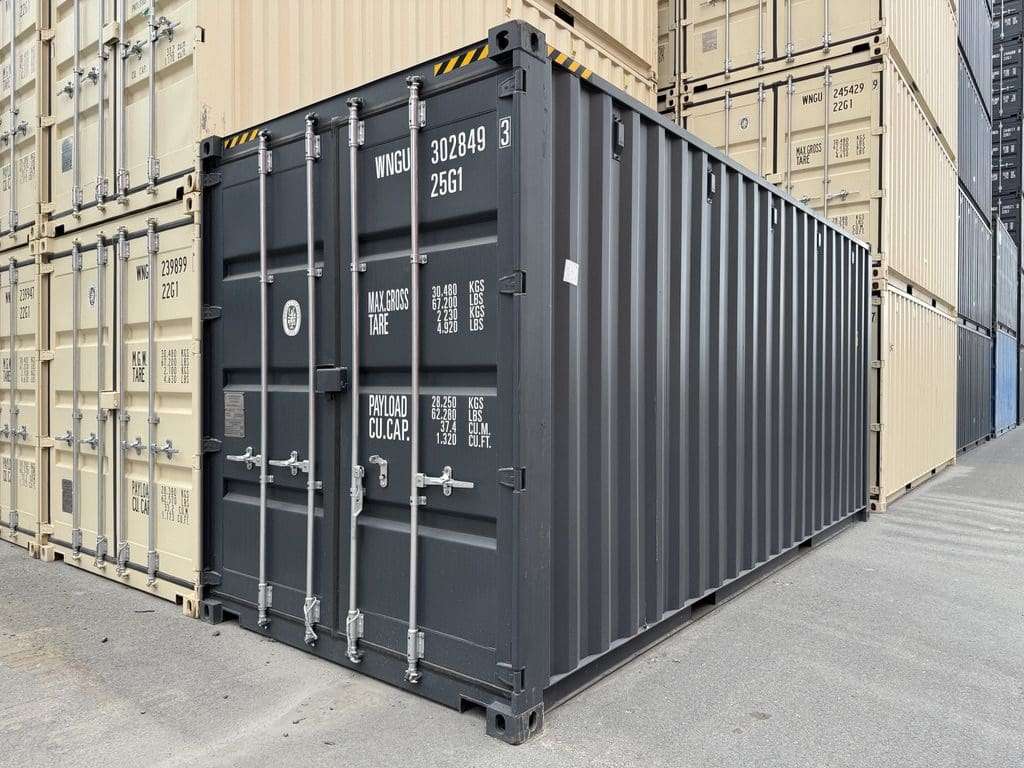
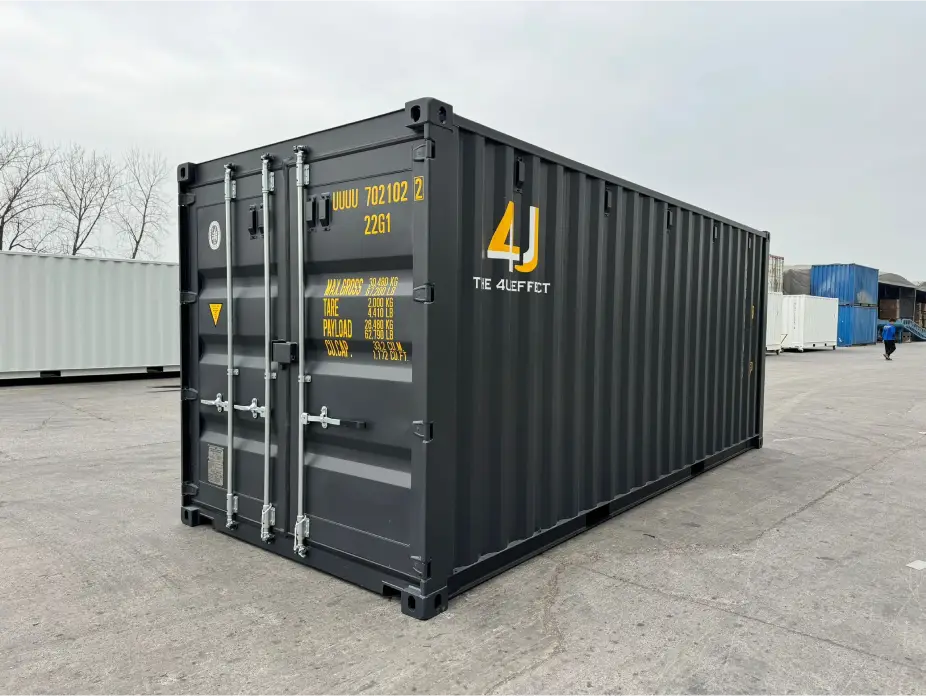
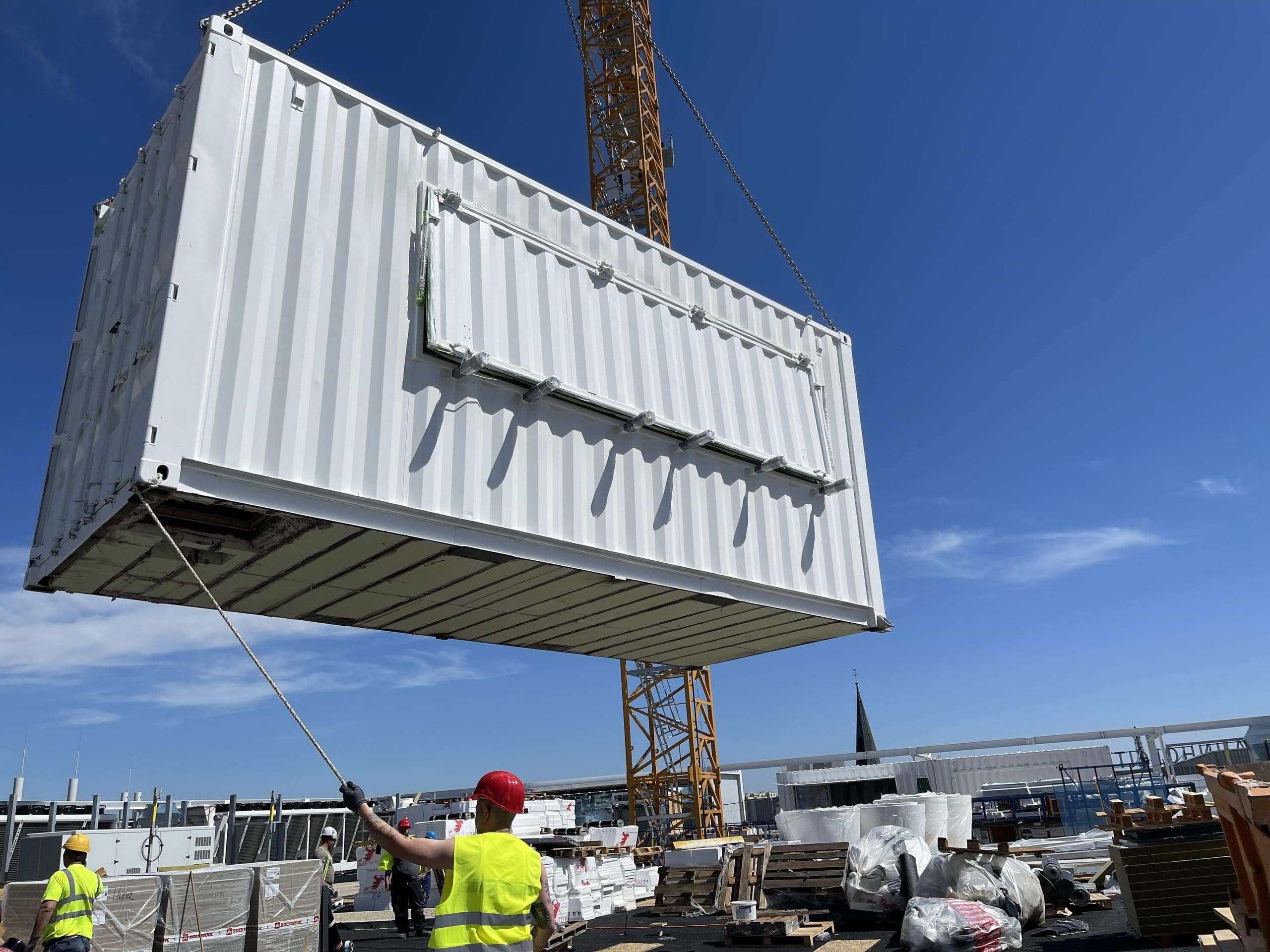
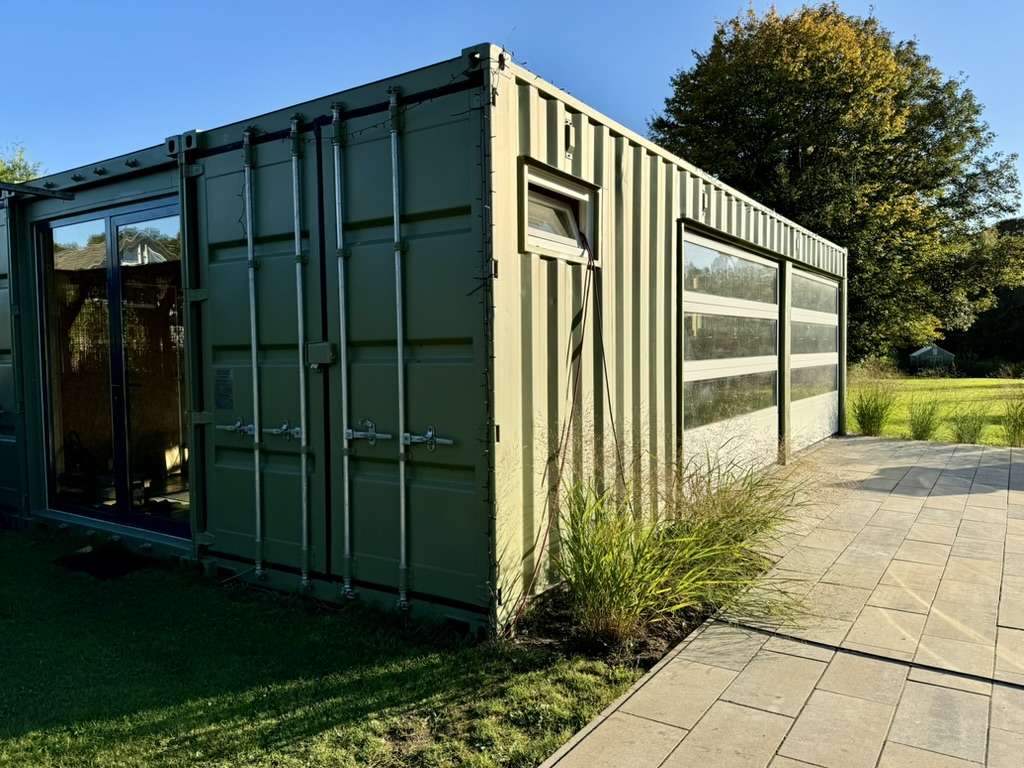
Site office, backyard office or multi-container workspace: which size fits your team, what a proper fit-out includes and what to know about permits.
A shipping container office gives you a private, secure workspace in weeks instead of months. Construction crews use them as site offices, businesses add them as extra space on a lot, and more and more people put one in the backyard to finally work from home without working at the kitchen table.
This guide covers which size fits how many people, what a proper fit-out includes, what to know about permits and whether to buy or rent.
Key takeaways
A 10ft container fits one desk, a 20ft works for two to four people and a 40ft fits a small team or an office with a meeting area.
Insulation, windows, a personnel door, heating and cooling and electrical turn a steel box into a comfortable office.
High cube containers add about a foot of ceiling height, which matters once insulation and lighting go in.
A container people work in usually needs a building permit and has to meet local codes.
Several containers can be joined into larger offices and meeting rooms.
Insulating a container office? Andy explains the insulation mistake that traps moisture and causes hidden rust.
Popular types of container offices
Construction site office
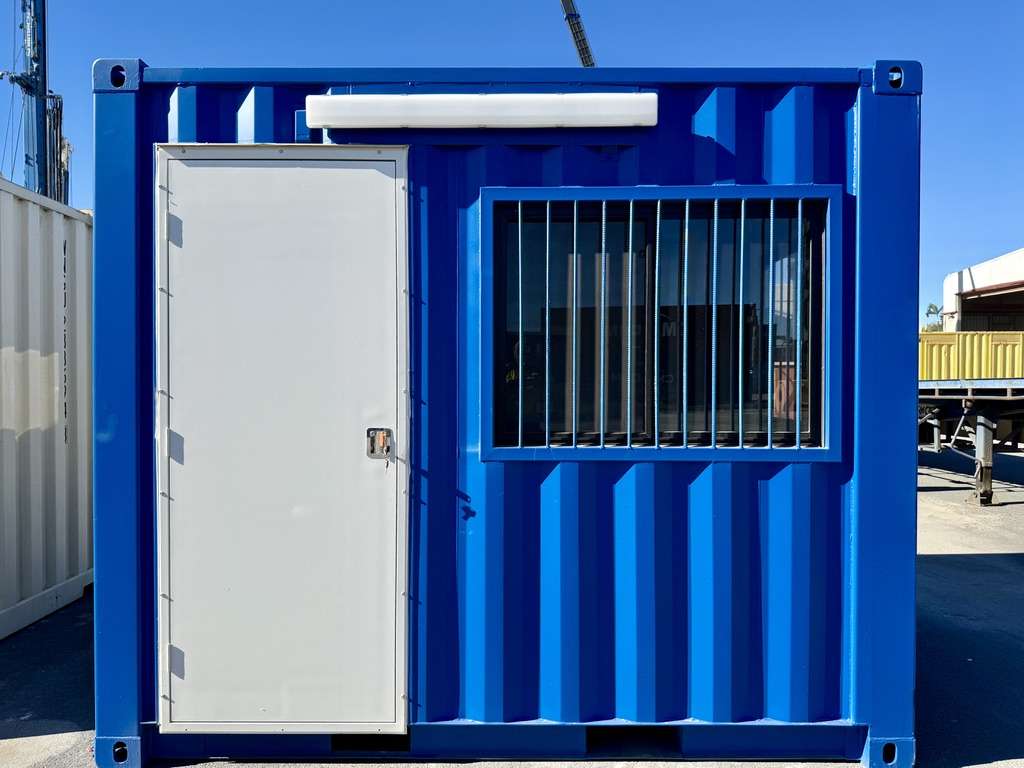
The classic: a 10ft or 20ft container with a personnel door, a barred window, lighting, power and a desk. It locks up tight at night, moves from site to site and doubles as a secure store for drawings and tools.
Backyard home office
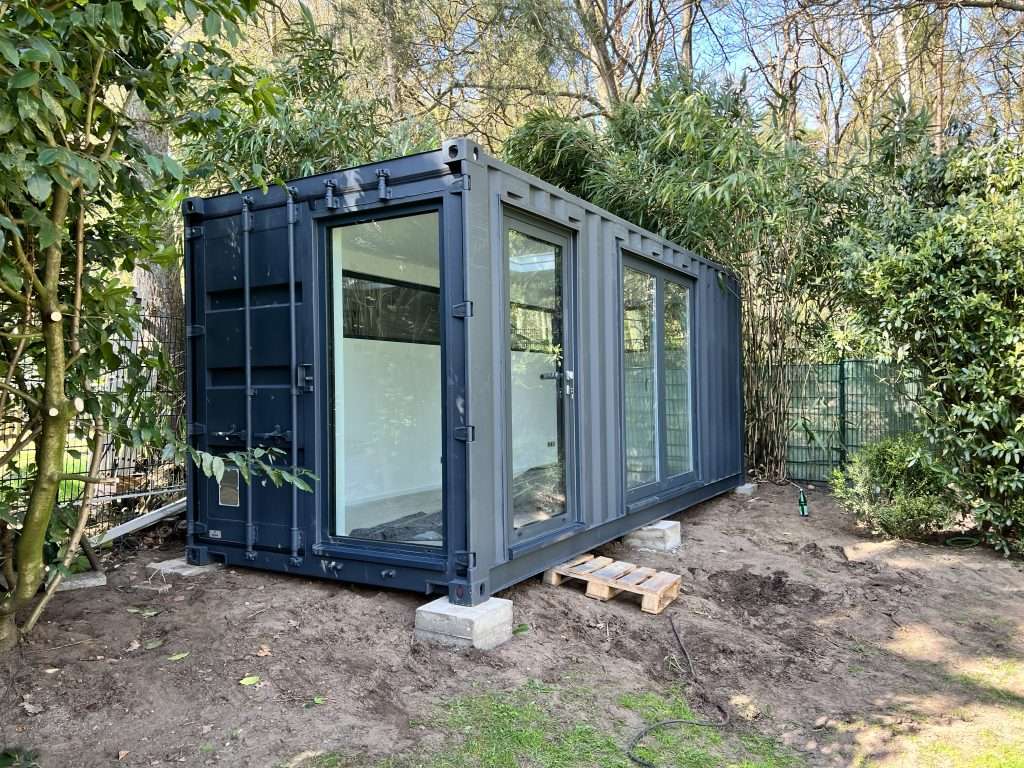
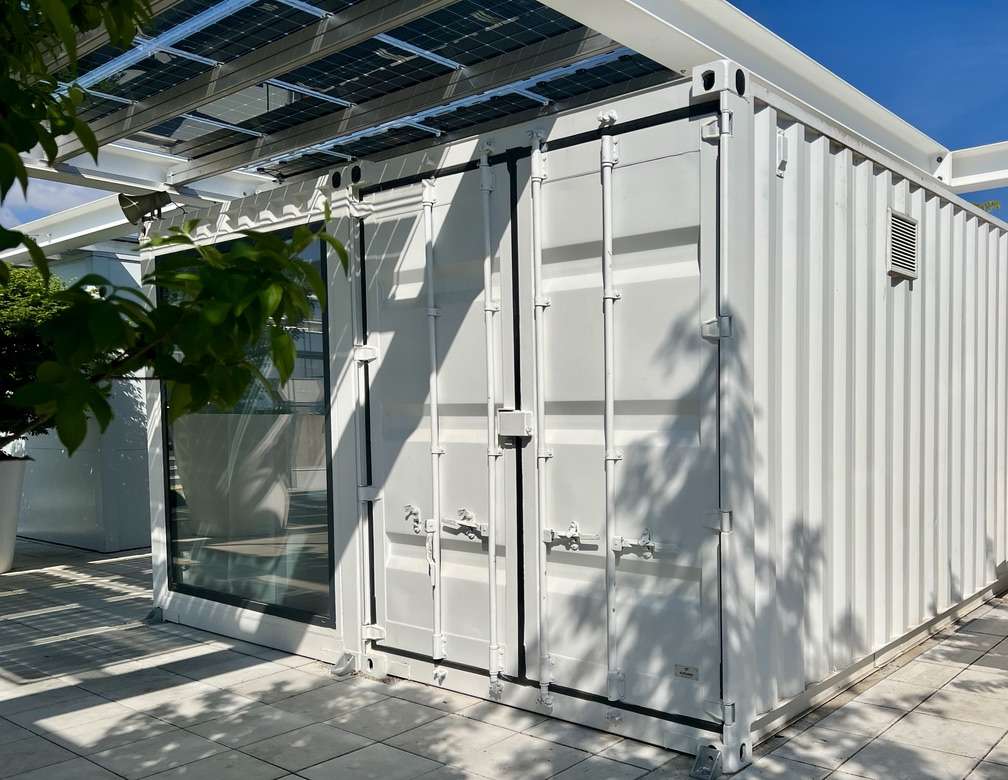
A 20ft high cube with glass doors or large windows makes a quiet, separate workspace a few steps from the house. No commute, and the door closes at the end of the day.
Sales office or reception
Car lots, storage facilities, event grounds and building sites use container offices as a sales or check-in point. Branded on the outside and finished inside, they look professional and can move when the business does.
Multi-container offices and meeting rooms
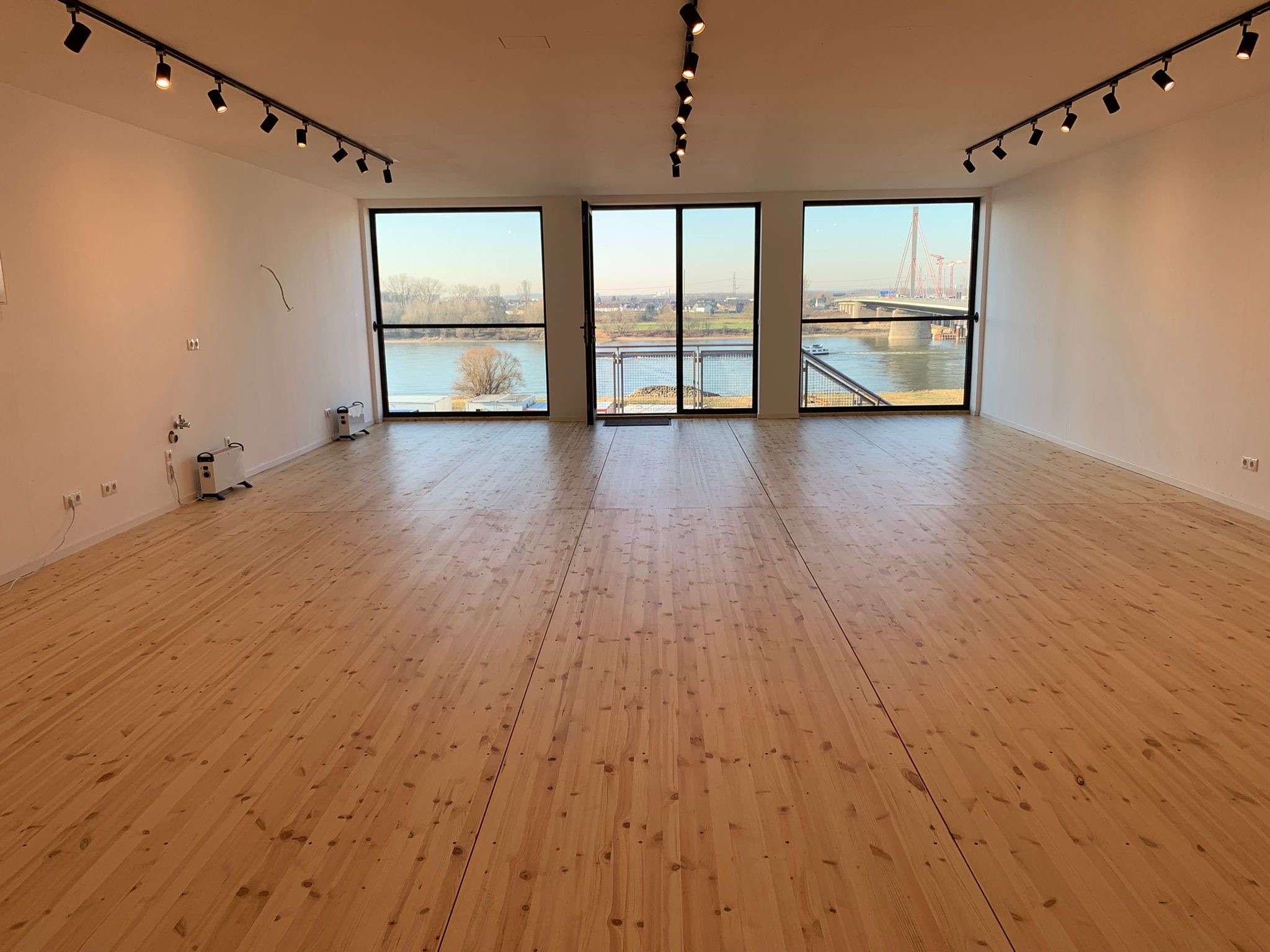
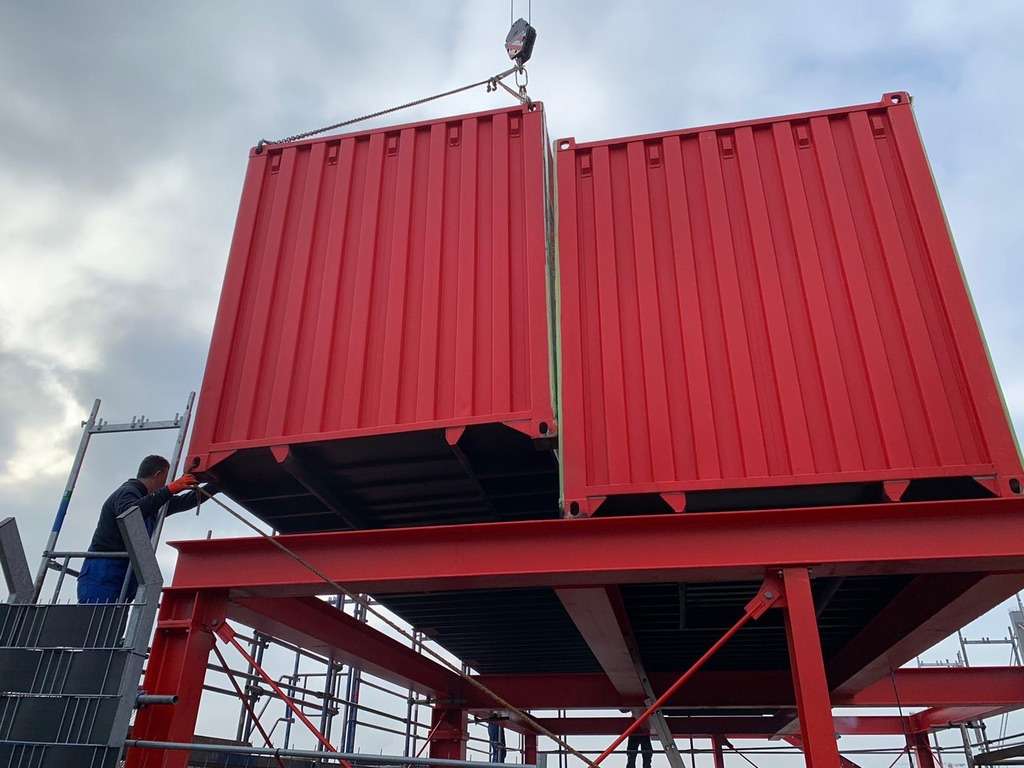
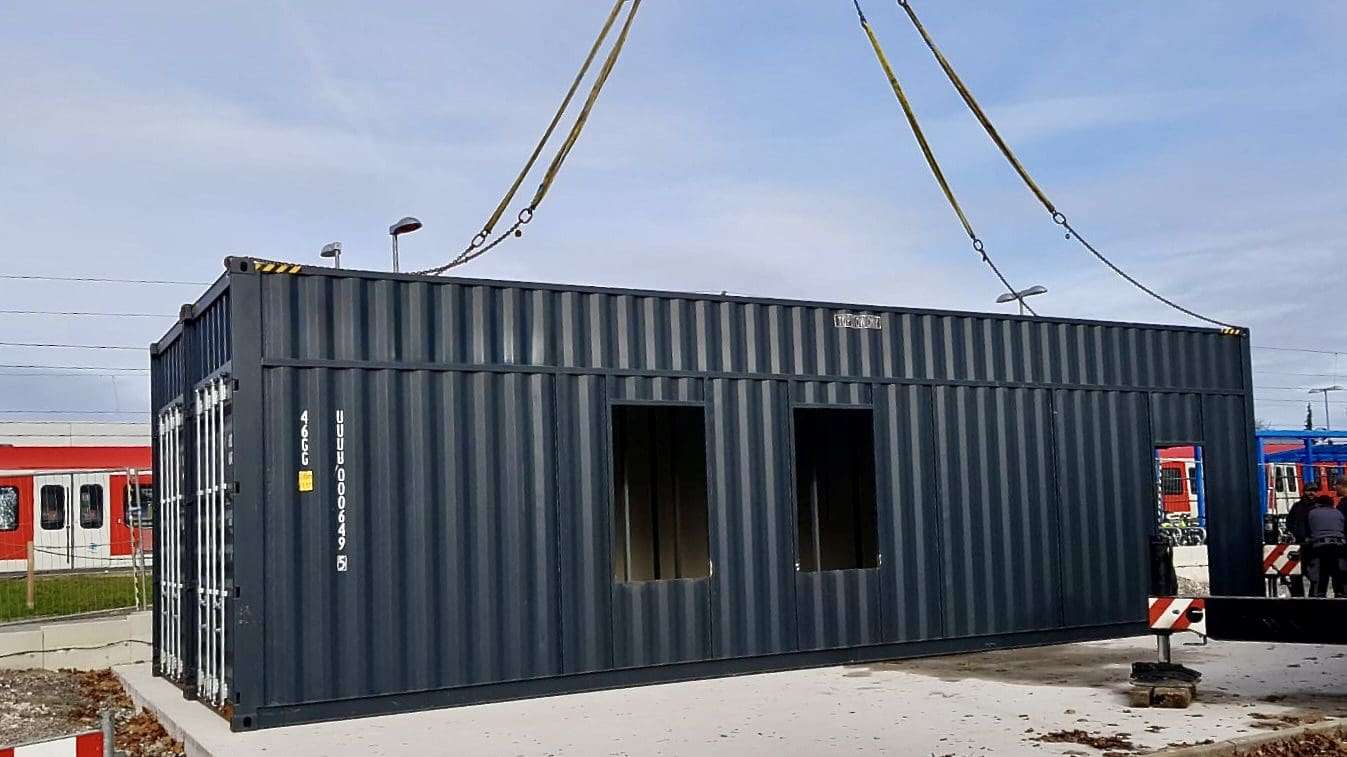
Two or more containers joined side by side create open rooms without posts in the middle. Our guide to joining two shipping containers explains how that works structurally. The meeting room below is built from three 40ft high cube containers.
Open office, a private office and a meeting area, or a small break room
4 to 8
Two or more joined 40ft
Open plan office, meeting rooms, restroom
8 and up
Insulation and wall lining take a few inches from every wall and the ceiling, so plan with the internal dimensions. Our guide on how to measure shipping container dimensions explains the difference. A 20ft high cube container is the most popular base for a one or two person office.
Fitting out a container office
Insulation
Without insulation, a steel container is too hot in summer, too cold in winter and drips condensation. Closed-cell spray foam is the most effective option because it also seals against moisture. Rigid foam boards or mineral wool behind a stud wall are the alternatives. Insulate the roof and walls, and the floor in cold climates.
Windows and doors
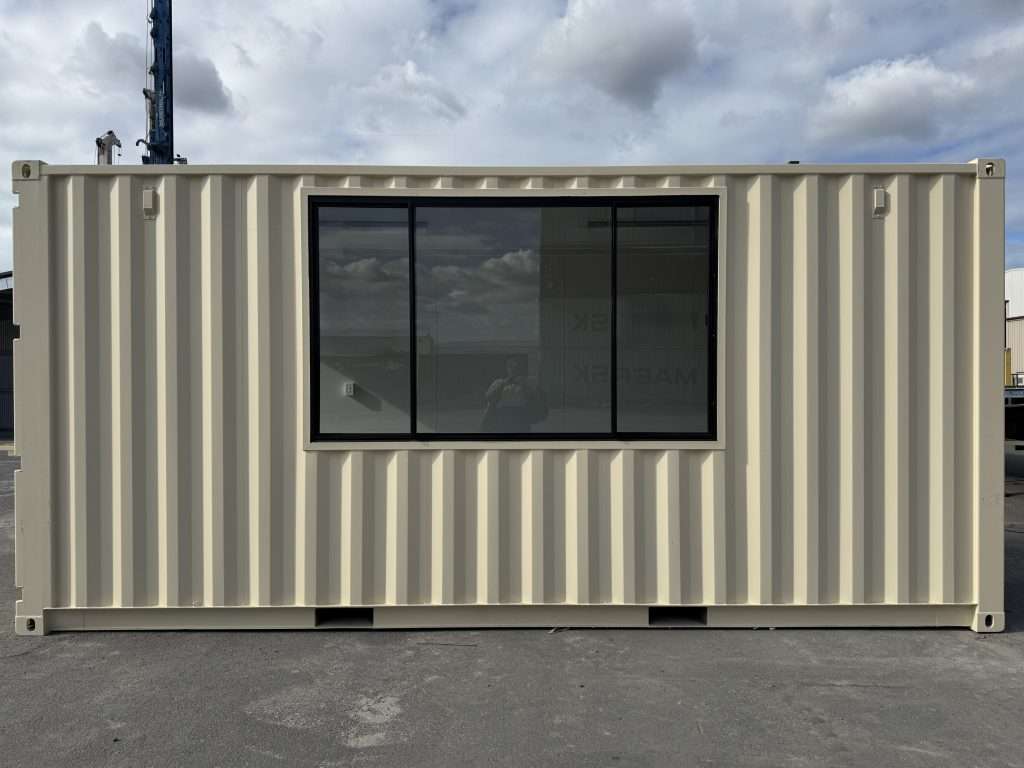
A personnel door, ideally with a glass panel, means you are not swinging the heavy cargo doors every day. Windows bring in daylight and fresh air, and in exposed locations security bars or shutters are worth adding. Every opening weakens the wall it is cut into, so larger openings need a reinforced steel frame.
Heating and cooling
A ductless mini-split heat pump is the go-to choice: efficient, quiet and able to both heat and cool. Size it for the insulated space and your climate, and place the outdoor unit where it is protected and easy to service.
Electrical, lighting and data
Plan outlets, LED lighting and data cabling before the walls are lined. An office connected to the grid needs a licensed electrician and, in most places, an inspection. Solar with batteries is an option for remote sites.
Interior finish
Plywood or drywall on a stud frame, vinyl or laminate flooring and a lined ceiling make the inside feel like any other office. Many builders cover or replace the original container floor, which is usually treated with pesticides for international shipping.
Permits and building codes
A container used as an office is generally treated as a building. In most US cities and counties that means a building permit, compliance with the local building code and, for commercial use, accessibility and fire safety requirements. The International Building Code, which most states adopt in some form, has included a section on intermodal shipping containers since its 2021 edition. Our guide to shipping container homes explains how the rules apply to living space.
Zoning decides where the office may sit on your lot. Talk to your local building department early, ideally with a simple floor plan, and work with a modification partner who has built permitted container offices before. Temporary site offices are sometimes handled differently, so ask whether a temporary use permit applies.
Buy or rent a container office?
Rent if you need the office for a project of a few months, want the supplier to handle maintenance and pickup, or need it delivered ready to use.
Buy if you will use it for a year or more, want to customize it or plan to keep it as a permanent backyard office. A new one-trip container gives the best finish. Browse shipping containers for sale to compare options.
Through our platform, some suppliers sell, others rent, and many also handle modifications, so one request covers all three.
Frequently asked questions
How much does a shipping container office cost?
It depends mostly on the fit-out. The container itself is only part of the total; insulation, windows, doors, heating and cooling and electrical make up much of the rest. See shipping container prices for container ranges, then request quotes that include the modifications you need.
Is a shipping container office comfortable in summer?
With proper insulation, ventilation and a mini-split, yes. Without them, no. Shade and a light roof color help as well.
Can I put a container office in my backyard?
Often, yes, but check zoning, setbacks and HOA rules first, and plan for a building permit if you will use it as a workspace.
Can I connect two containers into one office?
Yes. Two containers with their side walls removed and reinforced create a room just under 16 feet wide. Our guide to joining two shipping containers explains how.
shipping-containers.com is an independent platform, not a dealer. Tell us your ZIP code, the container you need and a few details about your site once, and vetted local suppliers respond with delivered prices. One request, multiple quotes, no fees.
Container prices for your city, rule changes in your state, Andy’s newest videos and stock deals when we have them. One email a month, unsubscribe any time.
Andreas Atrott is the founder of CUBX - shipping-containers.com and its sister sites shipping-containers.com.au in Australia and containerbasis.de in Germany. He has spent more than 15 years in the container industry, across sales, modifications, and custom builds, and shares what he has learned on his YouTube channel, Andy Knows Containers. That practical experience shapes how the platform helps US buyers match the right container to their project.
A shipping container is the ultimate blank canvas. The design is clever, but at its core a container is a big steel box you can adapt almost any way you...
A standard shipping container, but taller: the premise behind ‘high cube’ units might be simple, but it makes this type of container particularly well suited to a range of applications....
Shipping containers are good for far more than moving freight across oceans. With the right accessories, you can turn a plain steel box into a storage unit, a site office,...
February 17, 2026
About Us
shipping-containers.com is an independent platform that makes buying a shipping container simple and transparent. Tell us what you need once, and vetted local suppliers across the US send you their quotes. One request, multiple quotes, no fees.
Got questions? Let’s chat.
We are here to make container buying simple. Talk to a real expert, get advice, and find your perfect fit, fast.
Hi, I'm Andy. 15+ years in containers. How can I help?
Shipping Container Homes in New York: Codes, NYC ADUs and Local Bans
How New York handles shipping container homes: the 2025 Uniform Code, NYC ancillary dwelling units, container laws in Buffalo, Sweden and Coxsackie, Adirondack Park review, septic and modular approval.
Shipping Container Homes in California: Codes, ADUs and City Rules
How California handles shipping container homes: the 2025 state codes, the LADBS conversion bulletin, San Diego rules, state ADU law, HCD approval for factory-built units and counties that allow containers only for storage.
Shipping Container Homes in Washington: Codes, ADUs and L&I Rules
How Washington handles shipping container homes: the 2021 state codes, Pierce, King and Ferndale container rules, the two-ADU state law, the energy code wall U-factor and the L&I factory-assembled program.