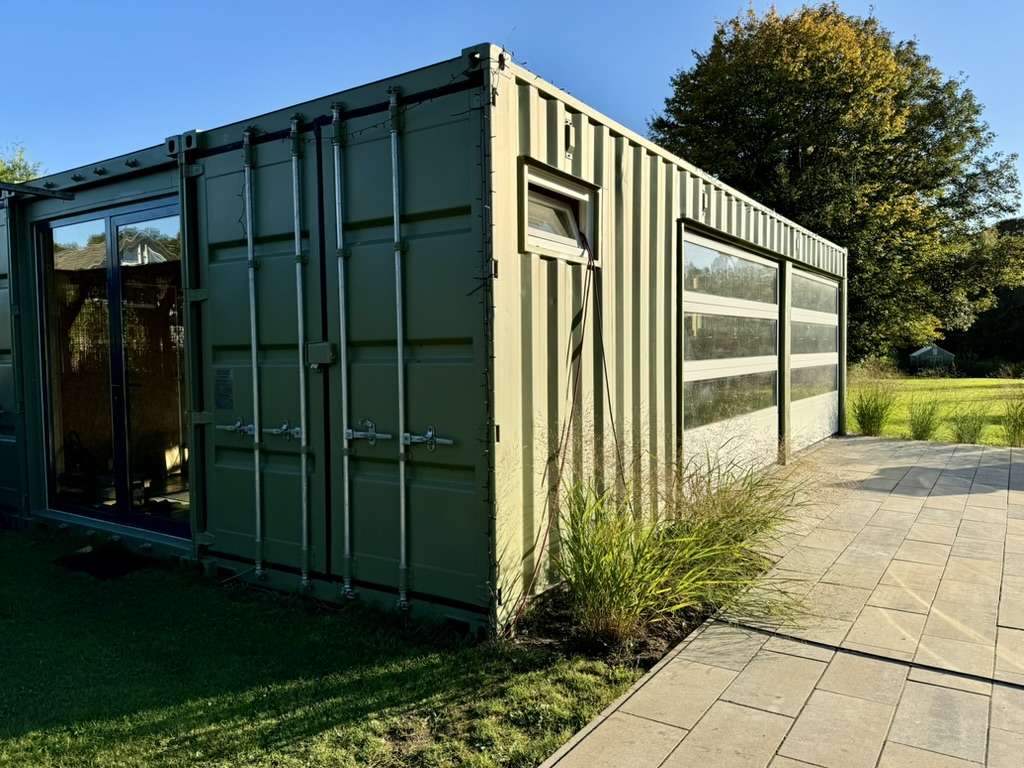
How Florida handles shipping container homes: one statewide building code, county rules in Hillsborough, Orange and Monroe, wind and flood design, septic permits and the ADU law.
Florida applies one building code on every lot, inside a city or out. The Florida Building Code covers unincorporated areas too, and counties and cities enforce it without choosing whether it applies. What changes from place to place is how the local building department handles a shipping container. Hillsborough County has written guidelines, Orange County asks for sealed plans, and Orlando keeps a separate container document.
The Florida Building Code, 8th Edition (2023), applies statewide, and a permit is governed by the edition in effect on the day you apply.
Hillsborough County has written guidelines for shipping containers used as homes. Orange County asks for engineered plans, and Orlando keeps a separate container document.
Wind and flood decide most designs. Miami-Dade and Broward form the High-Velocity Hurricane Zone, and floodplain rules can force a container up on piers.
Florida lets local governments allow ADUs but does not require it, and the statute asks for an affordable-rent affidavit.
A farm building exemption does not cover a residential dwelling.
One statewide code, a new edition on the way
The Florida Building Code, 8th Edition (2023), took effect on December 31, 2023, and its Building volume is built on the 2021 International Building Code. The Building Commission updates the code every three years, and a permit application is judged under the edition in force on the date it was submitted. A rule to adopt the 9th Edition (2026) was noticed in the Florida Administrative Register on September 23, 2026. Until that rule takes effect the 8th Edition is the one to design to, so check the date with your building department before you submit.
Local governments can add technical amendments only after a public hearing and with evidence of local need, and each amendment lapses when the next edition is adopted. It is unlawful to build or alter a building without a permit, and the building department may not issue one until the plans have been reviewed for code compliance.
How Florida counties treat containers
Place
What we found
Hillsborough County (Tampa area)
Published guidelines for shipping containers used as residential structures. Plans reviewed as an alternative design under FBC Section 104.11.
Orange County
Container plans sealed by a Florida structural engineer, with a site-specific anchoring or foundation plan. Termite treatment shown on the foundation plan.
City of Orlando
One ADU per lot. No separate rules for tiny or prefab homes. Container rules sit in a separate city document that applicants must request.
Monroe County (Keys)
Containers are not light metal construction in flood zones. No habitation below base flood elevation.
Miami-Dade County
A 2014 zoning ordinance for unincorporated Miami-Dade covers cargo storage containers ancillary to a business. We found no rule for containers as dwellings. Cities in the county have their own codes.
Jacksonville
The building division confirms the 2023 code and says nothing about containers.
Hillsborough is the most useful reference in the state because it wrote its rules down. Its guidelines, dated May 2023, let an applicant choose between a detailed structural analysis and a simplified method for a single stand-alone container on a foundation without alterations. A container used as a permanent structure has to sit on a foundation designed under the structural chapters of the building code and be anchored with a continuous load path, and new welds and connections have to be at least as strong as the original ones. Plans for residential accessory structures over 150 square feet must be signed and sealed by a Florida registered architect or engineer.
Orange County’s residential plan guide, last revised in February 2021 for the 7th Edition code, has a section on containers that asks for detailed plans sealed by a Florida-licensed structural engineer showing how the container is built, plus an anchoring or foundation plan for the site. Orlando’s ADU fact sheet sends applicants to its document titled Shipping Containers Architecture, which we could not read, so ask the city for it. In the Keys, a February 2021 Monroe County memo states that in a VE flood zone a container does not meet the breakaway wall requirement and has to be elevated, and that converting a container to any use beyond limited storage requires full building code compliance.
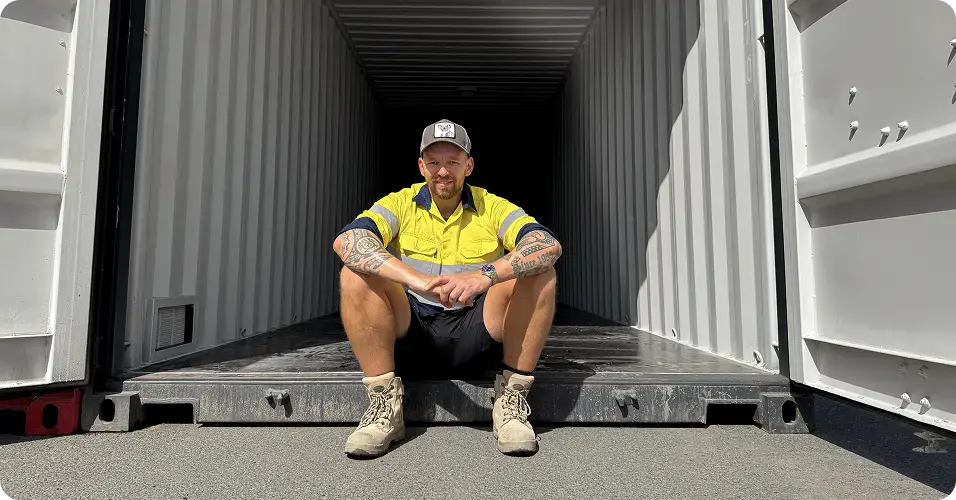
Andy explains why shipping containers get wet inside and how to stop condensation, a real issue in humid climates.
Wind, flood and the coast
Miami-Dade and Broward Counties make up the High-Velocity Hurricane Zone, where the code applies stricter wind-load and product-approval rules written after Hurricane Andrew. Statewide product approval covers windows, exterior doors, roofing, shutters and impact protective systems, and Miami-Dade runs its own Product Control section that reviews and approves building products. Hillsborough, for example, asks for the three-second gust wind speed, importance factor and exposure to be shown on the plans, and starts its wind-borne debris determination at a design wind speed of 140 mph.
For flood, the federal minimum in an A zone is that the lowest floor sits at or above the base flood level. In V zones the building has to be elevated on pilings or columns, and the space below can only be enclosed by breakaway walls. Local rules can ask for more. Putnam County, for instance, requires the lowest floor of enclosed spaces in a single-family home to be at least one foot above base flood elevation. On the coast, once a coastal construction control line is set for a stretch of shoreline, nobody may build seaward of it without a state permit.
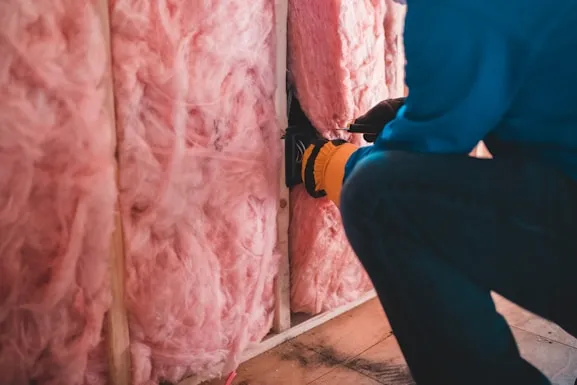
Termites, insulation and humidity
Orange County requires soil treatment for subterranean termite prevention under all exterior concrete, documented on the foundation plan. Orange County requires soil treatment for subterranean termite prevention under all exterior concrete, documented on the foundation plan. Ask your building department about termite protection for wood floors and framing. Our build guide walks through the order of work, and the foundation guide covers the options for sandy and wet sites.
Septic, owner-builders and rural land
Since July 1, 2021 the Department of Environmental Protection implements Florida’s septic law, while county health departments continue to issue permits and inspect systems. The rules now sit in Chapter 62-6 of the Administrative Code. A building that depends on a septic system cannot get a local building permit until the owner holds a septic construction permit, so start with the health department. Florida also bars local ordinances and deed restrictions from prohibiting solar collectors on buildings.
An owner can act as their own contractor on a one- or two-family home for their own occupancy, but must personally supervise all work not done by licensed contractors, and selling or leasing within a year of completion is presumed to defeat the exemption. Do not count on the agricultural exemption: a non-residential farm building on land used for bona fide agriculture is exempt from the building code, but a building intended as a dwelling does not qualify.
ADUs, rentals and the 2026 session
Section 163.31771 of the Florida Statutes lets a local government adopt an ADU ordinance in single-family zones, and nothing requires it to. A permit application for an ADU must include an affidavit that the unit will be rented at an affordable rate to income-qualified persons. Bills in the 2026 session that would have required every local government to adopt an ADU ordinance by December 1, 2026 died. The housing package that passed, CS/CS/HB 1389, does not amend that section and instead orders a study of tiny homes for affordable housing, with a report due December 31, 2027.
Tampa allows full ADUs only in Seminole Heights, the Lowry Park area, the East Tampa Overlay and the Tampa Heights Overlay, and elsewhere only as an extended family residence, and the main house must be owner-occupied. Orange County allows ADUs only on homestead property with the owner living in either the house or the ADU.
Factory-built container modules
Florida regulates modules built in a factory through the Department of Business and Professional Regulation. A manufactured building generally may not be installed unless the department has approved it and it carries the state insignia and a manufacturer’s data plate. A local government cannot require an additional approval or insignia for a building that already carries the state insignia. Foundation, site work and local permits still go through your building department. If you buy a finished container module, ask for the DBPR approval before the deposit.
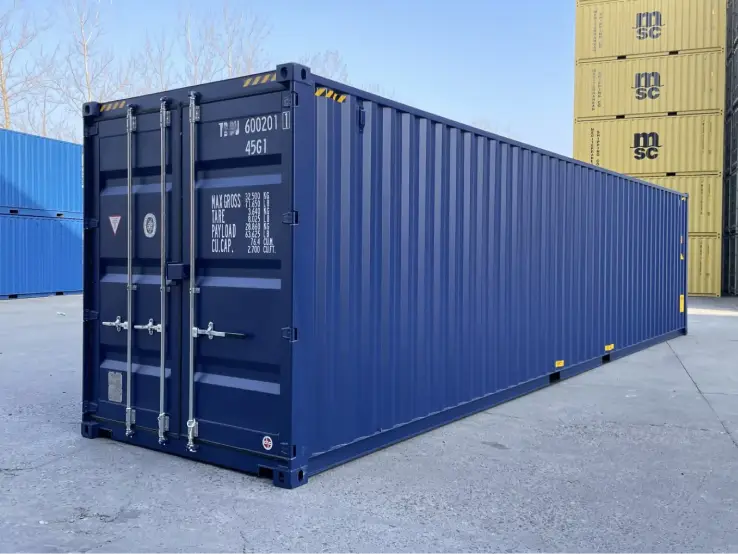
Container homes often start with high cube containers, new or in premium used condition. Starting prices come from current inventory at US depots. Pick a container and vetted local suppliers send delivered quotes for your ZIP code.
Starting prices at the depot, based on current inventory at major US container depots. Delivery, sales tax and local fees are extra and depend on your ZIP code. Your supplier confirms the final price in your quote.
Container prices for your city, rule changes in your state, Andy’s newest videos and stock deals when we have them. One email a month, unsubscribe any time.
FAQs
Container homes in Florida: frequently asked questions
01
Generally yes, with local review. We found no statewide ban, but each building department decides how it treats a container. The Florida Building Code applies statewide, including in unincorporated areas, and every home needs a permit with plans that show code compliance. Whether a container is accepted is decided by the local building department. Hillsborough County publishes guidelines for containers used as homes, Monroe County restricts how containers can be used in flood zones, and Orlando asks applicants to request its container document.
02
In practice, yes. Hillsborough County requires plans for residential accessory structures over 150 square feet to be signed and sealed by a Florida architect or engineer, and Orange County asks for plans sealed by a structural engineer for a container. Hillsborough County requires plans for residential accessory structures over 150 square feet to be signed and sealed by a Florida architect or engineer, and Orange County asks for plans sealed by a structural engineer for a container. Check with your own building department.
03
Sometimes. Under the federal flood rules the lowest floor in an A zone must be at or above the base flood level, and in V zones the structure has to sit on pilings or columns with only breakaway walls below. Monroe County says a container does not count as light metal construction in a flood zone and may not be used for habitation below base flood elevation. Local rules can add more elevation than the federal minimum.
04
Florida lets local governments allow them but does not require it. A 2026 bill that would have forced every local government to adopt an ADU ordinance died in the legislature. Tampa allows full ADUs only in a few areas and requires the owner to live on the property, and Orange County allows them only on homestead property.
05
Be careful. Under the state ADU statute, a permit application for an ADU must include an affidavit that the unit will be rented at an affordable rate to income-qualified persons. Local ADU rules, such as owner occupancy in Orange County and Tampa, come on top.
06
In the October 2026 price index, the median depot price for a used 20ft container was $1,300 in Miami, $1,572 in Jacksonville and $1,995 in Tampa. A new 40ft high cube was $3,800 in Miami and $3,845 in Tampa. Delivery is extra.
Andreas Atrott is the founder of CUBX - shipping-containers.com and its sister sites shipping-containers.com.au in Australia and containerbasis.de in Germany. He has spent more than 15 years in the container industry, across sales, modifications, and custom builds, and shares what he has learned on his YouTube channel, Andy Knows Containers. That practical experience shapes how the platform helps US buyers match the right container to their project.
A shipping container is the ultimate blank canvas. The design is clever, but at its core a container is a big steel box you can adapt almost any way you...
A standard shipping container, but taller: the premise behind ‘high cube’ units might be simple, but it makes this type of container particularly well suited to a range of applications....
Shipping containers are good for far more than moving freight across oceans. With the right accessories, you can turn a plain steel box into a storage unit, a site office,...
February 17, 2026
About Us
shipping-containers.com is an independent platform that makes buying a shipping container simple and transparent. Tell us what you need once, and vetted local suppliers across the US send you their quotes. One request, multiple quotes, no fees.
Got questions? Let’s chat.
We are here to make container buying simple. Talk to a real expert, get advice, and find your perfect fit, fast.
Hi, I'm Andy. 15+ years in containers. How can I help?
Shipping Container Homes in New York: Codes, NYC ADUs and Local Bans
How New York handles shipping container homes: the 2025 Uniform Code, NYC ancillary dwelling units, container laws in Buffalo, Sweden and Coxsackie, Adirondack Park review, septic and modular approval.
Shipping Container Homes in California: Codes, ADUs and City Rules
How California handles shipping container homes: the 2025 state codes, the LADBS conversion bulletin, San Diego rules, state ADU law, HCD approval for factory-built units and counties that allow containers only for storage.
Shipping Container Homes in Washington: Codes, ADUs and L&I Rules
How Washington handles shipping container homes: the 2021 state codes, Pierce, King and Ferndale container rules, the two-ADU state law, the energy code wall U-factor and the L&I factory-assembled program.