How Texas handles shipping container homes: the 2012 state baseline, city codes in Houston, Austin, Dallas and San Antonio, what counties can and cannot require, septic permits and the coastal wind rules.
Texas does not have one building code that follows you onto every lot. The state sets a baseline for cities, counties can only apply residential standards if they choose to, and the rest depends on where the land sits. That is why a container home is a simple permit in one place and a long conversation in another.
This page covers what we could confirm from state law and from the codes of Houston, Austin, Dallas and San Antonio. For costs, layouts and the build itself, start with our guide to shipping container homes, and see which states allow shipping container homes for the comparison with other states.
Key takeaways
The state baseline for city building codes is the 2012 International Residential Code, but the four cities covered here have moved to the 2021 or 2024 editions.
Houston has no zoning. Austin allows up to three units on lots in SF-1, SF-2 and SF-3. Dallas and San Antonio set owner-occupancy conditions for accessory dwellings.
Counties have no general zoning power, and residential building standards apply only in counties that have opted in.
Almost every septic system in Texas needs a permit before work starts.
We found no Texas statute or city code that treats shipping containers differently from other construction, so plan on plans that meet the code your city has adopted, and ask whether the city wants them sealed by an engineer.
What the state sets and what it leaves to cities
Under Local Government Code 214.212, the residential code that applies to a Texas municipality is the International Residential Code as it existed on May 1, 2012. A city may review later ICC editions and adopt them, with local amendments, after a public hearing and by ordinance. Houston, Dallas, Austin and San Antonio have done so.
The model codes from 2021 on include a section on intermodal shipping containers (Section 3115 in the 2021 IBC, renumbered 3114 in the 2024 edition, with a matching pointer in IRC R301.1.4). Because Houston and Dallas use 2021 editions and Austin and San Antonio use 2024 editions, ask the permit office whether the city amended that section. We did not find a Texas rule that does.
City
Residential code
What to know
Houston
2021 IRC with Houston amendments, effective January 1, 2024
No zoning. Floodplain rules in Chapter 19 of the city code.
Dallas
2021 codes, effective May 12, 2023
Rentable accessory units: Board of Adjustment special exception (Ordinance 30930) or ADU overlay.
Austin
2024 codes with local amendments, effective July 10, 2025
Up to three units on SF-1, SF-2 and SF-3 lots.
San Antonio
2024 ICC codes, adopted January 30, 2025
One ADU per lot, owner must live on the property.
Houston: no zoning, but plenty of rules
Houston says it has no zoning and that its codes do not address land use. That does not make it a free-for-all. The city regulates how land is subdivided, reviews site plans for lot size, building setbacks and parking.
Two details matter for a container on a slab or piers. Flood-resistant construction in Houston follows Chapter 19 of the city code, and the first-floor finish has to sit at least 12 inches above the nearest sanitary sewer manhole rim, or 4 inches above the street crown where there is no sewer, unless Chapter 19 asks for more. The design wind speed is looked up by the property address and printed on the plans. You can read more about buying locally on our Houston page.
Austin, Dallas and San Antonio
Austin’s HOME ordinance of December 7, 2023 allows up to three housing units, tiny homes included, on lots in the SF-1, SF-2 and SF-3 districts. A second ordinance in May 2024 created a small-lot single-family use for lots of at least 1,800 square feet. Austin defines a tiny home as 400 square feet or less, loft excluded. An accessory unit built after October 1, 2015 cannot be a short-term rental for more than 30 days a year.
Dallas Ordinance 30930 of 2018 lets the Board of Adjustment grant a special exception for a rentable accessory unit, and the city also has an ADU overlay option, so ask the city which applies to your lot. The property has to be deed restricted to owner occupancy and the owner registers the rental each year. San Antonio allows one accessory dwelling on lots in its single-family and multifamily districts, up to 800 square feet or 50 percent of the main house, whichever is larger, with a cap of 1,600 square feet, and the owner has to live on the property. Our pages for Dallas and San Antonio cover buying and delivery in those markets.
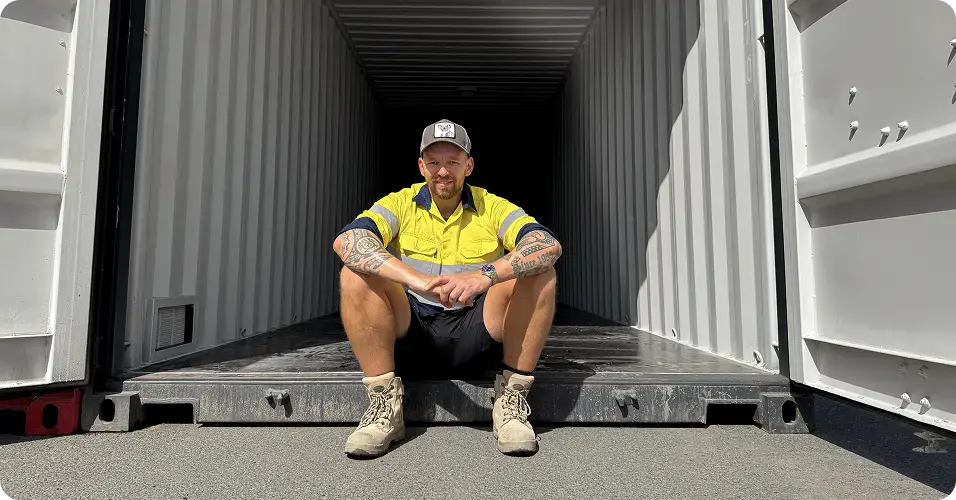
Andy explains when a shipping container needs a permit in the US and what inspectors look at.
Counties and rural land
Texas counties do not have general zoning power. Chapter 231 of the Local Government Code gives them zoning authority only for named places and purposes, such as certain lakes and recreation areas. Residential building standards in unincorporated areas come from Subchapter F of Chapter 233, and they apply only to a county that has adopted a resolution or order requiring them and that meets the eligibility conditions in Section 233.152, which include being within 50 miles of an international border. Ask the county whether it has opted in. Where a county has opted in, a new single-family house or duplex must follow the 2008 IRC or the code of the county seat, and it needs at least three inspections: foundation, framing and mechanical, and a final. Homes built under the state industrialized housing law are outside that subchapter.
Read that as a reason to ask, not as a reason to skip the paperwork. The county may still handle floodplain permits and septic approval. Travis County, for example, runs floodplain management, subdivision review and septic permitting for its unincorporated area. Travis County, for example, runs floodplain management, subdivision review and septic permitting for its unincorporated area.
The coast and the 2024 wind code
On the Texas coast the Texas Department of Insurance sets the building requirements for structures that want catastrophe property insurance. For structures built, repaired or added to on or after April 1, 2026 in the designated catastrophe area, that means the 2024 IRC and IBC. The area has three parts: the zone seaward of the intracoastal canal, Inland I about 25 miles from the coast, and Inland II further inland. The designated catastrophe area is a separate map that also reaches inland and includes certain Harris County areas, so check your address with TDI. The 14 first-tier coastal counties named in the Insurance Code are Aransas, Brazoria, Calhoun, Cameron, Chambers, Galveston, Jefferson, Kenedy, Kleberg, Matagorda, Nueces, Refugio, San Patricio and Willacy. Ask the building department whether openings and anchoring need an engineer’s design for the local wind speed.
Septic, water and utilities
Almost every on-site sewage facility in Texas needs a permit before any construction, repair or extension. The permit is usually issued by a local government acting as an authorized agent of the Texas Commission on Environmental Quality, which reviews plans and inspects the installation. Start this early on rural land, because a site evaluation can rule out a conventional system and push you toward an alternative treatment system.
Rainwater collection is common on rural lots. Texas exempts rainwater harvesting equipment from state sales tax, and a homeowners association cannot ban it.
Modular container homes
Texas regulates modular homes and buildings, called industrialized housing, through the Department of Licensing and Regulation. Industrialized housing built since July 1, 2024 has to meet the 2021 I-codes and the 2015 IECC, carries a state decal and is inspected in the plant and again at the building site. A container module built by a manufacturer in that program is a different permit path from a container converted on your own land. Ask the manufacturer for its state registration before you pay a deposit. Our guide to how to build a shipping container home explains the other steps from permit to inspection.
2025 laws that change less than you might expect
Senate Bill 15 and Senate Bill 840 were signed on June 20, 2025 and took effect on September 1, 2025. They apply only to cities with more than 150,000 residents in counties with more than 300,000. Senate Bill 15 limits minimum lot sizes and setbacks for small lots, and Senate Bill 840 lets housing be built in commercial and office zones. Senate Bill 15 does not address accessory dwellings. A statewide ADU bill, Senate Bill 673, passed the Senate but stopped in the House.
What containers cost in Texas
These are median depot prices from our October 2026 price index. Each figure comes from at least three independent suppliers in that metro. Delivery is not included, and transport cost depends on the distance from the depot to your site.
Metro
Used 20ft
Used 40ft high cube
New 20ft
Houston
$1,274
$1,993
$2,378
Dallas Fort Worth
$1,600
$2,000
$2,600
El Paso
$2,250
$2,550
$3,490
Container homes often start from high cube units because of the extra interior height, see standard vs high cube. Cutting large openings in the walls changes how the box carries load, which is why the engineer comes before the torch, as in our joining and cutting guide.
Listings
Containers for Texas home builds available now
Container homes often start with high cube containers, new or in premium used condition. Starting prices come from current inventory at US depots. Pick a container and vetted local suppliers send delivered quotes for your ZIP code.
Starting prices at the depot, based on current inventory at major US container depots. Delivery, sales tax and local fees are extra and depend on your ZIP code. Your supplier confirms the final price in your quote.
Container prices for your city, rule changes in your state, Andy’s newest videos and stock deals when we have them. One email a month, unsubscribe any time.
FAQs
Container homes in Texas: frequently asked questions
01
In Houston, Dallas, Austin and San Antonio, yes: each enforces an adopted residential code and issues building permits. For any other city, ask its building department. Outside city limits it depends on the county. Counties have no general zoning power, and the residential building standards in Local Government Code Chapter 233 apply only in counties that have adopted them. Ask the county before you assume nothing is required, and plan on a septic permit if the lot is not on city sewer.
02
Houston has no zoning, and the city says its codes do not address land use. A container home there is governed by the building code, platting, building lines and the floodplain rules in Chapter 19 of the city code, not by a use district. That makes the permit review the real test, so ask the city how it treats a container before you buy one.
03
Austin allows up to three units on lots in the SF-1, SF-2 and SF-3 districts since its HOME ordinance of December 2023, and tiny homes count as units. Whether a container qualifies comes down to the building permit, so the plans have to meet the 2024 codes with Austin’s local amendments, which took effect on July 10, 2025.
04
No. Senate Bill 673 would have created one in 2025, but it stopped in the House. Senate Bills 15 and 840 took effect on September 1, 2025, and they change small-lot and commercial-zone rules for large cities, but Senate Bill 15 does not address accessory dwellings.
05
In the October 2026 price index, the median depot price for a used 20ft container was $1,274 in Houston and $1,600 in the Dallas Fort Worth area. A new 40ft high cube was $3,604 in Houston and $3,845 in Dallas Fort Worth. Delivery is extra and depends on distance.
06
The Texas Department of Insurance requires the 2024 IRC and IBC for structures built or added to on or after April 1, 2026 in the designated catastrophe area, which is a condition for catastrophe property insurance. The 2024 IRC and IBC apply there, and a container home has to meet them. Ask the building department and your insurer whether the design needs an engineer’s wind design.
Andreas Atrott is the founder of CUBX - shipping-containers.com and its sister sites shipping-containers.com.au in Australia and containerbasis.de in Germany. He has spent more than 15 years in the container industry, across sales, modifications, and custom builds, and shares what he has learned on his YouTube channel, Andy Knows Containers. That practical experience shapes how the platform helps US buyers match the right container to their project.
A shipping container is the ultimate blank canvas. The design is clever, but at its core a container is a big steel box you can adapt almost any way you...
A standard shipping container, but taller: the premise behind ‘high cube’ units might be simple, but it makes this type of container particularly well suited to a range of applications....
Shipping containers are good for far more than moving freight across oceans. With the right accessories, you can turn a plain steel box into a storage unit, a site office,...
February 17, 2026
About Us
shipping-containers.com is an independent platform that makes buying a shipping container simple and transparent. Tell us what you need once, and vetted local suppliers across the US send you their quotes. One request, multiple quotes, no fees.
Got questions? Let’s chat.
We are here to make container buying simple. Talk to a real expert, get advice, and find your perfect fit, fast.
Hi, I'm Andy. 15+ years in containers. How can I help?
Shipping Container Homes in New York: Codes, NYC ADUs and Local Bans
How New York handles shipping container homes: the 2025 Uniform Code, NYC ancillary dwelling units, container laws in Buffalo, Sweden and Coxsackie, Adirondack Park review, septic and modular approval.
Shipping Container Homes in California: Codes, ADUs and City Rules
How California handles shipping container homes: the 2025 state codes, the LADBS conversion bulletin, San Diego rules, state ADU law, HCD approval for factory-built units and counties that allow containers only for storage.
Shipping Container Homes in Washington: Codes, ADUs and L&I Rules
How Washington handles shipping container homes: the 2021 state codes, Pierce, King and Ferndale container rules, the two-ADU state law, the energy code wall U-factor and the L&I factory-assembled program.