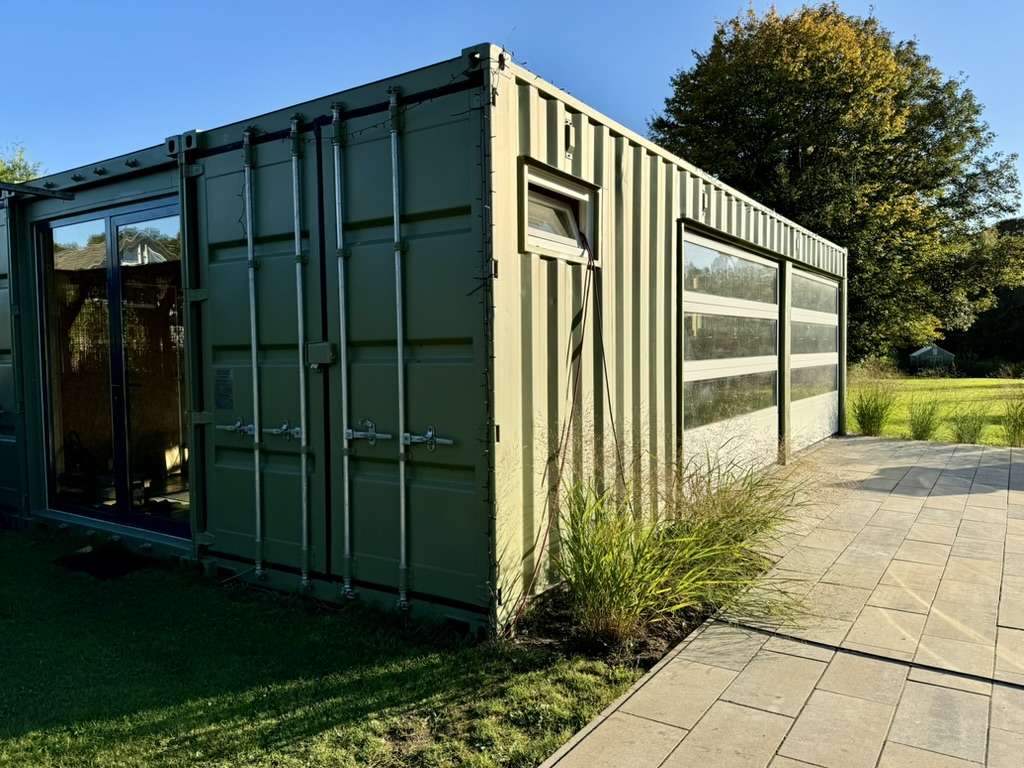
How Colorado handles shipping container homes: no statewide building code, local rules from Denver to El Paso and Larimer County, the HB24-1152 ADU law, snow loads, wildfire code and septic.
Colorado has no statewide building code. Cities and counties adopt their own, which means the same container can face the 2021 codes in one county and the 2024 codes the next valley over. Add ground snow loads that run from 35 psf as a Fort Collins default to 160 psf at 9,000 feet in Larimer County, and a wildfire code that the state adopted in 2025 and that local governments had to match by July 1, 2026, and you can see why the local building department is the first call to make.
There is no statewide building code. Denver, Fort Collins, Larimer County and Summit County apply the 2024 codes, though Denver keeps the 2021 energy code. Boulder County, El Paso County and Eagle County are on the 2021 codes.
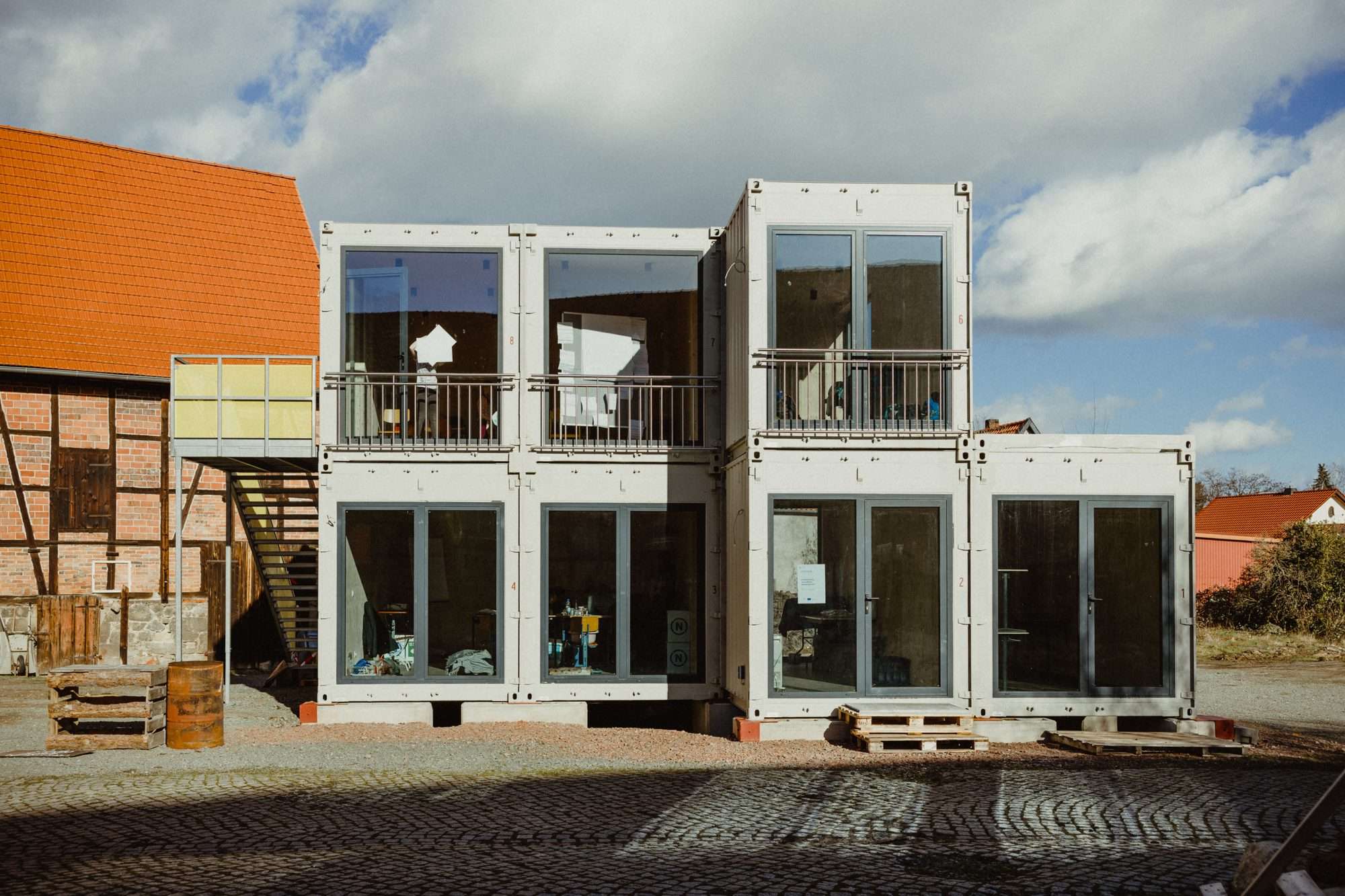
Jefferson County states that containers can be the building blocks of a home if they meet code, setback and height rules.
Since June 30, 2025, municipalities of 1,000 or more people inside a metropolitan planning organization area must approve one ADU administratively. Rural and mountain counties outside those areas are not covered.
Gunnison County lists 45 psf of ground snow in one town and 125 psf in another, so the roof design follows your site.
Mapped wildfire areas follow the Colorado Wildfire Resiliency Code. Septic permits are issued by the county, and wells are permitted by the state Division of Water Resources.
Codes by place
Colorado does not set one residential code for the state, so you need the edition your own jurisdiction enforces. The ones we confirmed from official pages are in the table. Where a jurisdiction has recently moved to a new edition, the effective or submission date decides which code applies. Fort Collins and Summit County use the submission date.
Place
Code and container rules
Denver
2025 Denver Building and Fire Codes, effective December 31, 2025, based on the 2024 I-Codes. The energy code stays on the 2021 IECC.
Colorado Springs and El Paso County
Pikes Peak Regional Building Department lists the 2021 IBC and IRC. Colorado Springs does not allow stacked storage containers. El Paso County requires containers in residential, forestry and agricultural zones to match nearby buildings or be screened, and not to be stacked.
Fort Collins
2024 IBC, IRC and IECC with city amendments for permits submitted on or after April 1, 2026.
Larimer County (unincorporated)
2024 county building codes, effective January 1, 2026. County cargo container sheet (dated February 2022): engineered foundation if over 400 square feet or used for anything but private storage.
Boulder County (unincorporated)
Local amendments from March 31, 2025, written against the 2021 codes, with energy and electrification rules.
Jefferson County (unincorporated)
Containers allowed as the building blocks of a home when they meet code, setback and height rules.
Summit County (unincorporated)
2024 I-Codes for plans submitted on or after July 1, 2026. Every ADU carries a deed restriction.
Several places say something specific about containers. Jefferson County’s guide, revised July 1, 2026, states that shipping containers or conex boxes can be the building blocks of a home when they meet building code, setback and height rules. In residential zones a container used as an accessory structure needs a wood, brick or similar-looking exterior and a pitched roof. Larimer County has a cargo container sheet, last updated February 2022, which requires a building permit for container units over 200 square feet, an engineered foundation and anchorage design for units over 400 square feet or used for anything other than private storage, and keeps cargo containers out of flood hazard areas. El Paso County requires containers in residential, forestry and agricultural zones to match nearby buildings in color or be screened, to meet setbacks, to sit on a level base and not to be stacked. It limits temporary container use to 30 consecutive days a year unless the planning director approves an extension, and its FAQ does not address a container as a dwelling.
Colorado Springs allows shipping containers as outdoor accessory storage and says they shall not be stacked. Its code also lets an ADU include a tiny house of 400 square feet or less that meets the regional building code for long-term occupancy. Pueblo’s zoning code allows temporary containers in commercial districts for construction storage and lets its Zoning Board of Appeals grant variances for permanent containers in commercial districts. Boulder County exempts only small storage-type buildings of 120 square feet or less with no utilities, 12 feet tall at most, so a container home needs a permit there.
Andy explains why shipping containers get wet inside and how to prevent condensation.
ADUs: HB24-1152
HB24-1152, signed in 2024, requires a covered jurisdiction to allow one accessory dwelling unit through an administrative approval wherever single-unit detached homes are allowed, from June 30, 2025. Covered jurisdictions are municipalities of 1,000 or more people within a metropolitan planning organization area, plus the part of a county inside a census designated place of 40,000 or more people and an MPO area. Rural and mountain counties outside those areas are not covered. The law does not apply to exempt parcels, which include parcels without adequate water and sewage service, certain historic properties, and parcels in a floodway or 100-year floodplain.
A covered jurisdiction cannot require owner occupancy of an ADU or of another dwelling on the lot, but it may ask the owner to show residence on the parcel when applying to build or convert an ADU, unless the ADU is built together with a new primary home. It treats as restrictive any standard that does not allow ADU sizes between 500 and 750 square feet. The state also created a grant program that can pay for pre-approved ADU plans, technical help or fee relief.
Local rules still matter. Denver requires a licensed contractor to build an ADU and does not let homeowners apply for the ADU building permit themselves. It does not accept mobile homes, RVs or tiny homes on wheels as ADUs. Colorado Springs allows one ADU per lot, caps a detached ADU at 16 feet in height, or 25 feet for a converted garage, and applies its owner-residency rule except to an ADU built together with a primary home. Summit County does not use the term ADU, regulates accessory apartments, and requires a deed restriction limiting occupancy to a qualified local worker or a relative of the owner. Pueblo County allows one accessory dwelling per lot in most residential and rural zones.
Snow, wind and frost
Design values change fast with elevation, so the table lists what each jurisdiction publishes. Ask your building department for the sheet that applies to your parcel.
Place
Ground snow
Wind
Frost depth
Pikes Peak region
43 psf below 7,000 ft, 57 psf at or above
130 mph Risk Category I and II
not listed
Larimer County
55 psf at 5,000 ft to 160 psf at 9,000 ft
115 to 225 mph depending on site
30 inches
Gunnison County
45 psf in Gunnison, 125 psf at Crested Butte
115 mph
36 inches
Eagle County
from the 2016 Colorado snow map
115 mph
48 inches
Jefferson County
varies by location, table in the county sheet
129 mph
36 inches
Fort Collins
35 psf default for residential
not listed
30 inches
Cutting openings in container walls and adding snow load on the roof both change how the structure carries load, so have an engineer design it for your site. Our foundation guide explains why frost depth matters for piers and pads, and the build guide covers insulation, which matters in cold climates.
Wildfire and energy code
The Colorado Wildfire Resiliency Code is a statewide minimum for new construction and significant exterior alterations in fire-prone areas. The Department of Local Affairs says July 1, 2026 was the deadline for local governing bodies with wildland-urban interface jurisdiction to adopt a code that meets the minimum, and that the code does not address land use. It requires ignition-resistant materials tested to a flame spread index of 25 or less for the parts of the building it covers. Local adoption differs. Gunnison County combined its 2021 wildland-urban interface code with the state code, and Larimer County treats its entire unincorporated area as a wildfire risk area. Ask whether your parcel sits in a mapped area before you order anything.
Energy rules also differ by jurisdiction. Since July 1, 2026, a jurisdiction that adopts or updates a building code must adopt the Colorado Model Low Energy and Carbon Code or an equivalent or more stringent one. Because the requirement bites when a county updates its code, older local codes stay in force until their next update.
Water and septic
Septic systems in Colorado are governed by Regulation 43, which the state health department administers. For flows of 2,000 gallons per day or less, permitting is done by the local county, and counties may add to the state minimum. Gilpin County, for example, added local requirements on top of Regulation 43 in March 2026. Wells are permitted by the Division of Water Resources. A household exempt well is limited to 15 gallons per minute and to ordinary household use in not more than three single-family dwellings. Ask the Division of Water Resources which category your lot falls into.
Collecting rain is limited. Without a well permit a homeowner may collect roof runoff in two rain barrels totalling up to 110 gallons, for outdoor use only. A home on an exempt well can collect roof precipitation with a rooftop precipitation collection permit.
Factory-built and modular
The Division of Housing regulates factory-built residential and nonresidential structures and reviews their plans before construction. Its modular FAQ states that factory-built structures do not include un-improved shipping containers. A container converted into a finished module in a factory is a different question, so ask the division before you commission one. Where a destination has no local building department, the foundation must be designed by a Colorado registered design professional and be reviewed through the division.
What containers cost in Colorado
These are median depot prices from our October 2026 price index. Denver is the only Colorado metro with at least two independent suppliers, so we show Denver. Delivery is not included, and transport cost depends on how far the depot is from your site.
Container (Denver)
Median price
Used 20ft
$2,700
Used 40ft high cube
$3,090
New 20ft
$3,999
New 40ft high cube
$4,290
Listings
Containers for Colorado builds available now
Most container homes start with high cube containers, new or in premium used condition. Starting prices come from current inventory at US depots. Pick a container and vetted local suppliers send delivered quotes for your ZIP code.
Starting prices at the depot, based on current inventory at major US container depots. Delivery, sales tax and local fees are extra and depend on your ZIP code. Your supplier confirms the final price in your quote.
Container prices for your city, rule changes in your state, Andy’s newest videos and stock deals when we have them. One email a month, unsubscribe any time.
FAQs
Container homes in Colorado: frequently asked questions
01
Colorado has no statewide building code, so each city and county decides. Jefferson County states that shipping containers can be the building blocks of a home if they meet building code, setback and height rules. Larimer County’s cargo container sheet, last updated in February 2022, requires a permit for units over 200 square feet and an engineered foundation for units over 400 square feet or used for anything other than private storage. Where a county has no container-specific rule, ask the building department which code sections apply.
02
Usually yes for a home. Larimer County requires a permit for container units over 200 square feet, and for any detached structure used as a dwelling. El Paso County says a permit may be required before a container is placed, as decided by the Pikes Peak Regional Building Department. Boulder County only exempts small storage-type buildings of 120 square feet or less with no utilities.
03
Where HB24-1152 applies, yes, but a container ADU still has to meet the local building code. Since June 30, 2025, HB24-1152 requires municipalities of 1,000 or more people in a metropolitan planning organization area to allow one ADU through an administrative approval wherever a single detached home is allowed. Rural and mountain counties outside those areas are not covered, and Summit County, for example, requires a deed restriction to local workers or relatives.
04
It depends entirely on the elevation. Pikes Peak region sets 43 psf of ground snow below 7,000 feet and 57 psf above. Gunnison County lists 45 psf in the town of Gunnison and 125 psf at Crested Butte. Larimer County runs from 55 psf at 5,000 feet to 160 psf at 9,000 feet. The roof structure has to be designed for your site, not for a state average.
05
If you build in a wildland-urban interface area that your county has mapped, yes. The Colorado Wildfire Resiliency Code is a statewide minimum for new construction and significant exterior alterations, and local governments with WUI areas had to adopt a matching code by July 1, 2026. It requires ignition-resistant materials tested to a flame spread index of 25 or less for the parts of the building it covers, so check the map with your building department.
06
Septic systems up to 2,000 gallons per day are permitted by the local county under Regulation 43. Wells are permitted by the Division of Water Resources. A household exempt well is limited to 15 gallons per minute, so check what your lot allows before you buy.
Andreas Atrott is the founder of CUBX - shipping-containers.com and its sister sites shipping-containers.com.au in Australia and containerbasis.de in Germany. He has spent more than 15 years in the container industry, across sales, modifications, and custom builds, and shares what he has learned on his YouTube channel, Andy Knows Containers. That practical experience shapes how the platform helps US buyers match the right container to their project.
A shipping container is the ultimate blank canvas. The design is clever, but at its core a container is a big steel box you can adapt almost any way you...
A standard shipping container, but taller: the premise behind ‘high cube’ units might be simple, but it makes this type of container particularly well suited to a range of applications....
Shipping containers are good for far more than moving freight across oceans. With the right accessories, you can turn a plain steel box into a storage unit, a site office,...
February 17, 2026
About Us
shipping-containers.com is an independent platform that makes buying a shipping container simple and transparent. Tell us what you need once, and vetted local suppliers across the US send you their quotes. One request, multiple quotes, no fees.
Got questions? Let’s chat.
We are here to make container buying simple. Talk to a real expert, get advice, and find your perfect fit, fast.
Hi, I'm Andy. 15+ years in containers. How can I help?
Shipping Container Homes in New York: Codes, NYC ADUs and Local Bans
How New York handles shipping container homes: the 2025 Uniform Code, NYC ancillary dwelling units, container laws in Buffalo, Sweden and Coxsackie, Adirondack Park review, septic and modular approval.
Shipping Container Homes in California: Codes, ADUs and City Rules
How California handles shipping container homes: the 2025 state codes, the LADBS conversion bulletin, San Diego rules, state ADU law, HCD approval for factory-built units and counties that allow containers only for storage.
Shipping Container Homes in Washington: Codes, ADUs and L&I Rules
How Washington handles shipping container homes: the 2021 state codes, Pierce, King and Ferndale container rules, the two-ADU state law, the energy code wall U-factor and the L&I factory-assembled program.